The most common mistake new fishkeepers make is picking fish by how they look and hoping everyone gets along. Some combinations live together quietly for years. Others end with a shredded fin or a missing tetra by morning. The good news is that compatibility is not guesswork. It comes down to a short list of things you can check before you ever pay for a fish: the water a species needs, how it behaves toward other fish, how big it grows, and where in the tank it likes to spend its time. Walk through those four and you can tell most good pairings from bad ones on the spot.
| Fish | Temperament | Adult size | Swim zone | Keep in mind |
|---|---|---|---|---|
| Corydoras catfish | Peaceful | ~2–3 in | Bottom | Great starter; keep a group of 6+ |
| Platy & livebearers | Peaceful | ~2–3 in | Top–mid | Easy community fish; breed readily |
| Small tetras & rasboras | Peaceful | ~1–2 in | Mid | School of 6+; can be nipped by bullies |
| Tiger barb | Semi-aggressive | ~3 in | Mid | Fin-nipper — keep off long-finned fish; group of 6+ |
| Serpae tetra | Semi-aggressive | ~1.5 in | Mid | Fin-nipper; same rule as tiger barbs |
| Betta | Peaceful, solo-leaning | ~2.5 in | Top–mid | Long fins make it a nipper target; gentle tankmates only |
| Angelfish | Semi-aggressive | tall, ~6 in | Mid | Trailing fins; will eat fish small enough to fit its mouth |
| Common pleco | Peaceful | 18+ in | Bottom | Grows huge — needs a big tank, not a community 20 |
| Bala shark | Peaceful, shoaling | ~12 in | Mid | Needs a 6-ft tank and a group; not a nano fish |
| Goldfish | Peaceful | 8+ in | All | Cool water — don't mix with tropical fish |
| Shrimp & small snails | Peaceful cleanup | under 1–2 in | Bottom | Wonderful crew, but food to anything big enough |
Start with the water a fish actually needs
This is the line you can never cross: freshwater fish and saltwater fish cannot share a tank. They are built for completely different water and putting them together kills one side fast. Once you are inside the right water type, the details still matter. Temperature is the big one. A goldfish wants cool water while a betta wants it warm, so the two make poor roommates even though both are freshwater. pH and hardness come next. Soft, acidic blackwater fish like many tetras are happiest in conditions that rift-lake cichlids would hate. When two fish want the same temperature and similar pH, you have cleared the first hurdle. When they do not, no amount of good temperament will make the pairing work.
Read the temperament before you read the price tag
Every fish sits somewhere on a scale from peaceful to aggressive. Peaceful community fish mind their own business. Semi-aggressive fish are mostly fine but will defend a territory or chase at feeding time. Aggressive fish treat the whole tank as theirs. The trick is to keep your stock inside one band. A peaceful schooling fish housed with an aggressive tankmate lives in constant stress even if it never gets bitten, and stressed fish get sick. If you love a feisty species, build the rest of the tank around fish that can hold their own at a similar size. If you want a calm community, keep everyone in the peaceful range and the tank mostly runs itself.
Plan for the size a fish grows into
Almost every fish you see for sale is a juvenile. The inch-long common pleco stuck to the glass today grows past a foot and a half and needs a tank to match. A bala shark looks like a tidy little community fish at three inches and turns into a foot-long shoaling fish that needs a six-foot tank. The single rule that saves the most fish is this: if a tankmate is small enough to fit inside another fish's mouth, sooner or later it will end up there. Judge a pairing by the sizes these fish reach as adults. The babies in the store tank tell you almost nothing. A fish that grows to two inches is a snack for one that grows to eight, no matter how peaceful that bigger fish is on paper.
Spread your fish across the swimming zones
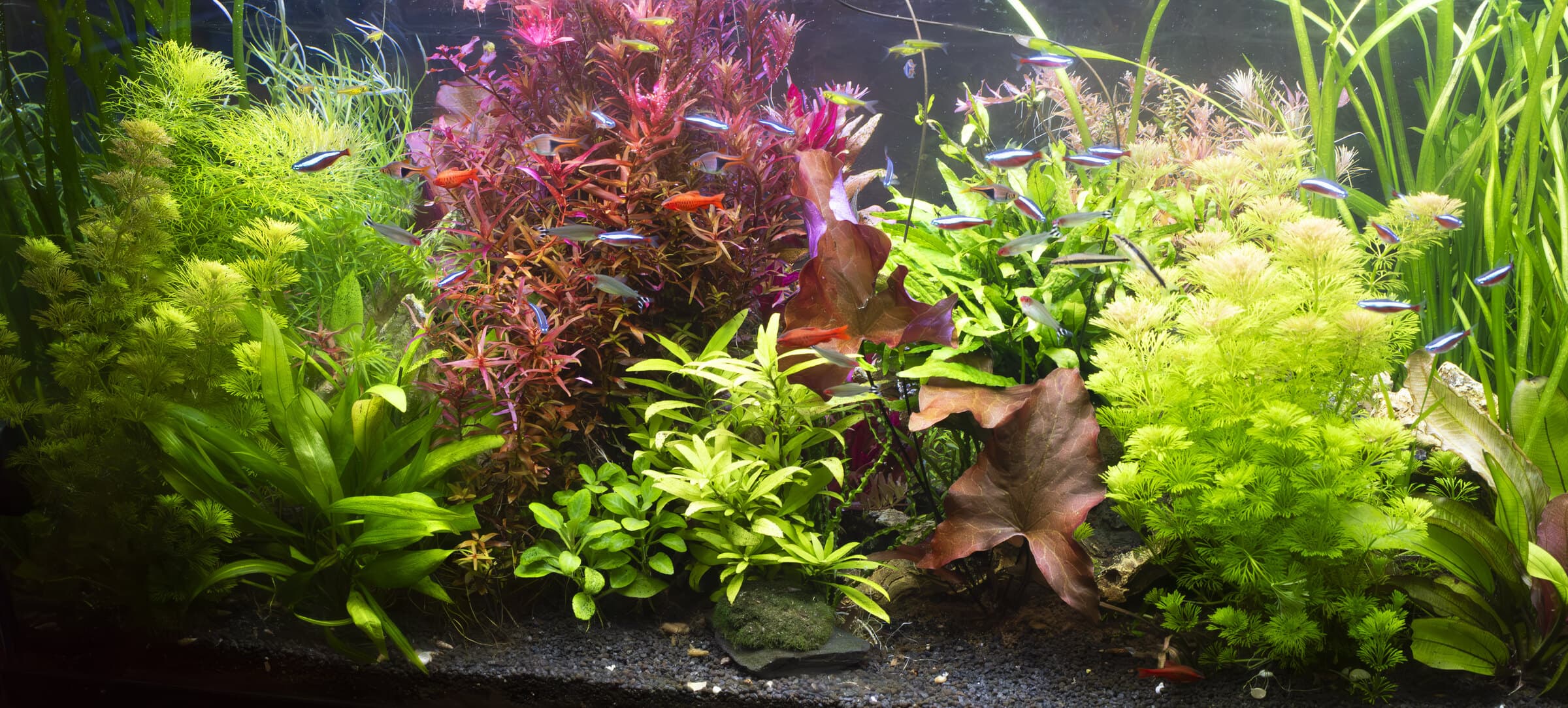
Fish naturally split a tank into three layers. Hatchetfish and many livebearers cruise the top. The middle belongs to most tetras and barbs, with rainbowfish darting through. Down on the floor you find the catfish and the loaches, and plecos working the same ground. Stocking across all three layers does two useful things. It makes the tank look full and active at every level, and it cuts down on squabbles because fish are not all crammed into the same water fighting for the same space. If you put six bottom-dwellers in a tank and nothing else, they compete with each other for territory. Mix in some mid-water schoolers and a couple of top swimmers and everyone has somewhere to be.
Watch for the usual troublemakers
A few patterns cause most of the fin damage in home tanks. Known fin-nippers such as tiger barbs and serpae tetras will harass slow fish that trail long flowing fins, the kind you see on a betta or an angelfish or a fancy guppy. Keep nippers away from anything that trails fins. Schooling fish bought in twos and threes get nervous and turn nippy, while the same species in a group of six or more relaxes and behaves, so buy schoolers in proper numbers. Small shrimp and tiny snails round out the list. They are wonderful cleanup crew in a peaceful tank, but they read as food to anything with a big enough mouth, so only pair them with small, gentle fish.
Some fish are happiest on their own
Not every fish wants company, and there is nothing wrong with a tank built for one species. African clawed frogs eat anything they can catch and are best kept alone or with their own kind. Many large cichlids, some pufferfish, and a number of predatory species are the same way. A single-species setup is often the most relaxed tank in the house because nobody is being chased and nobody is being eaten. If a fish you love comes with a reputation for living solo, believe it and give it a tank of its own rather than fighting its nature.
Let the species page do the homework for you
Every livestock listing on our site shows the tankmates we would actually keep with that fish, with a plain reason for each pairing drawn from published care sources, plus the fish's adult size and temperament and the minimum tank it needs. Start there to build a shortlist that already fits together. Then call us at (814) 456-9445 or stop by the shop in Erie and tell us your tank size and what you already have. We will sanity-check the plan against your specific water and stocking before you spend a cent, which is a lot cheaper than learning the hard way.
Common questions
- Can freshwater and saltwater fish live together?
No. Freshwater and saltwater fish are built for entirely different water chemistry, and putting them in the same tank is fatal to one side quickly. Pick one water type and stock within it.
- What fish get along with a betta?
Bettas do best with calm, short-finned tankmates that will not nip those long fins. Small peaceful bottom-dwellers and gentle snails are usually safe in a tank of reasonable size. Keep bettas away from fin-nippers like tiger barbs and away from other male bettas entirely. When in doubt, a betta is perfectly happy on its own.
- How many fish can I put in my tank?
It depends on the adult size of the fish and the volume of your tank far more than on any single rule of thumb. Stock for the size your fish will reach as adults, treat the size in the store as a starting point, and add them in stages so your filter can keep pace. Call us with your tank size and we will give you an honest number.
- Do I really need to buy schooling fish in groups?
Yes. Tetras and barbs, rasboras and danios, and most other schoolers feel safe in numbers. Kept in a group of six or more they relax and show their best color, while the same fish in a pair or trio gets stressed and often turns into a fin-nipper. Buying a proper group is the single easiest way to keep a peaceful tank.
- What is a good peaceful fish for a first community tank?
Hardy livebearers such as platies, peaceful schoolers like rasboras and many tetras, and small armored catfish such as corydoras all make easygoing starter fish that tolerate beginner mistakes. Check each species page for its adult size and tank needs, then build a group that shares the same water.
Questions?
Talk it through with our team.
Bring your tank size and what you're keeping — we'll help you sort it out at the shop, 660 East 14th Street in Erie, or over the phone.