What this covers
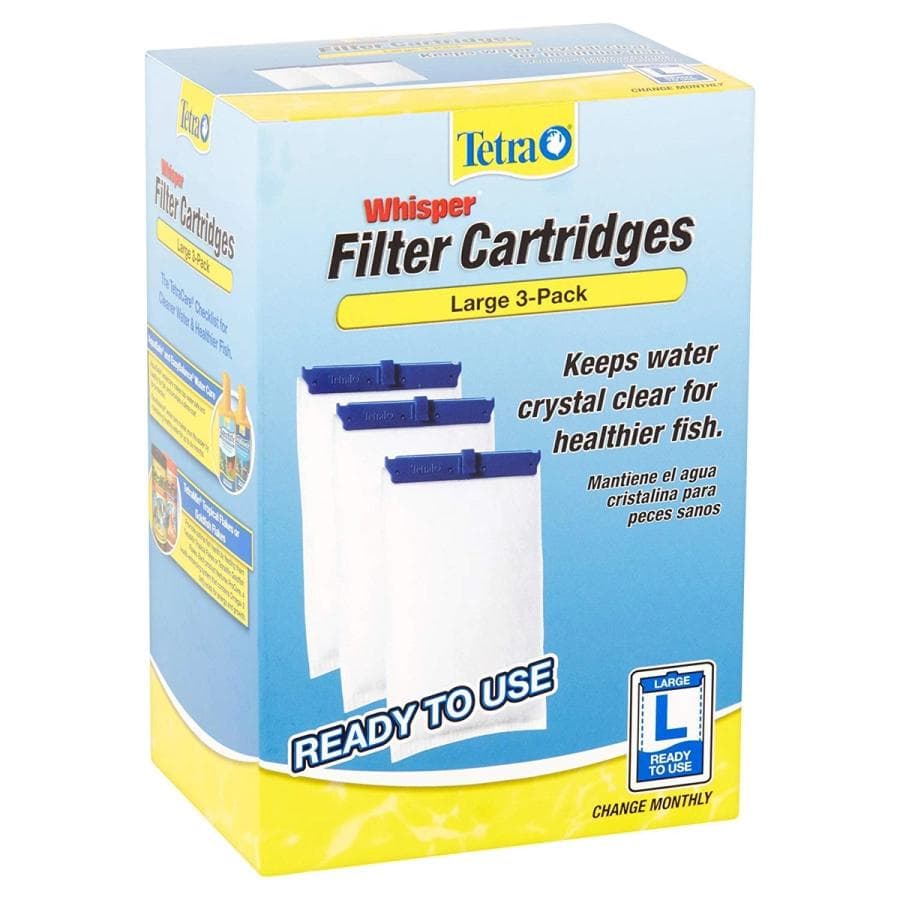
Mechanical filtration
Straining waste, uneaten food and debris out of the water before it breaks down.
27 in the shop
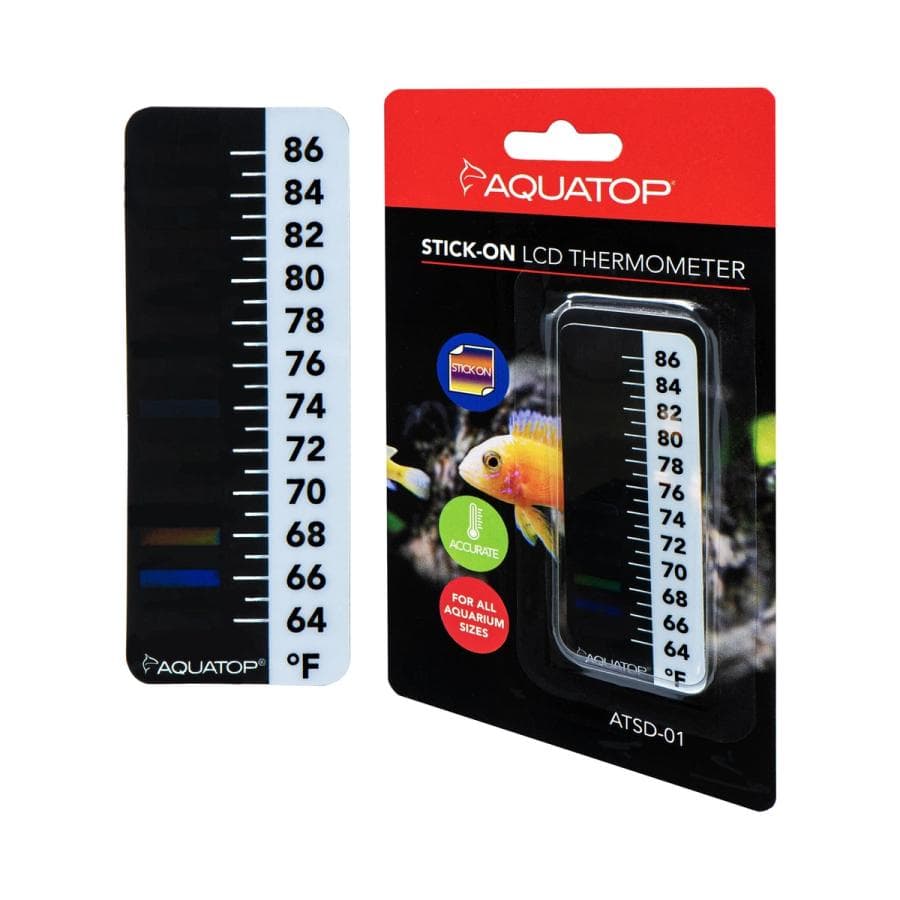
Heating & temperature
Holding a steady temperature. Stability matters more than the exact number.
21 in the shop
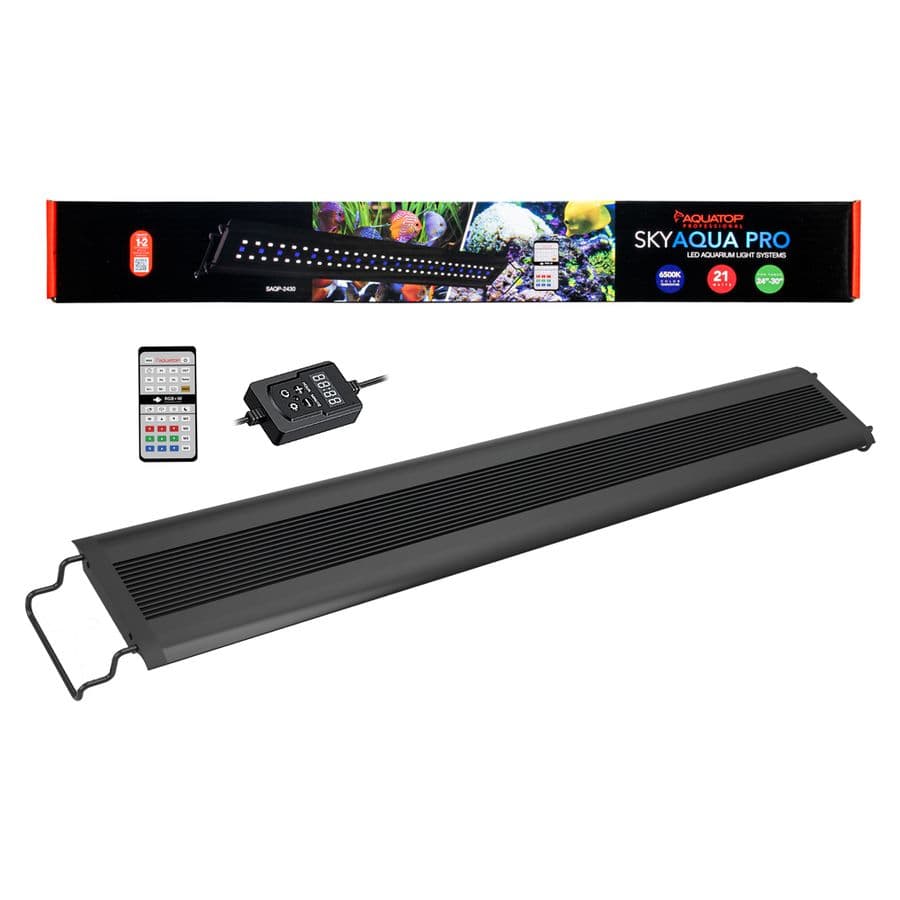
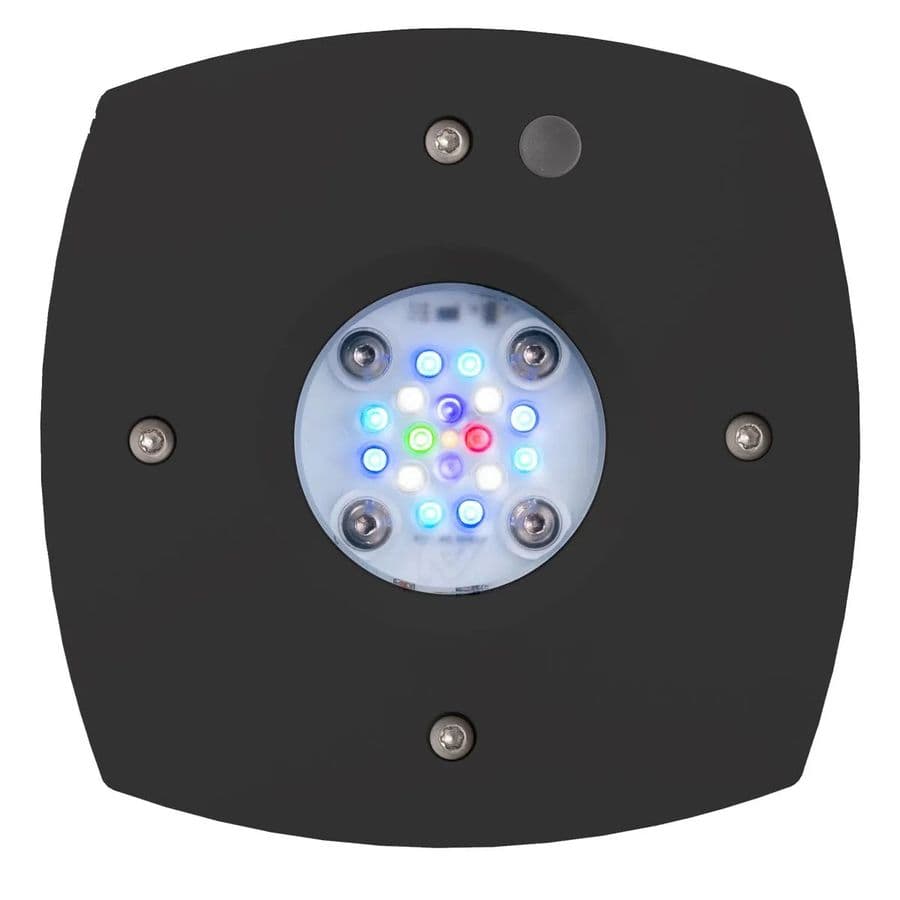
Lighting
How much light, what color, and for how long. Drives plants, corals and algae alike.
34 in the shop
Walk into any aquarium aisle and the boxes all promise they're rated "for your tank size." That rating is the friction here, because it's the one number that tells you the least. A filter rated "up to 40 gallons" might turn your water over too slowly for the fish you actually keep. A heater sized off the box can come up short in a cold Erie basement. And a light that grows nothing but algae was probably sold to someone who wanted live plants.
The real question isn't what fits a 40-gallon tank. It's what THIS tank needs: your gallons, your room temperature, and what you're trying to grow. Get those three pieces right and the tank mostly runs itself. Get them wrong and you're fighting cloudy water, chilly fish, and algae for months.
This is the rule-of-thumb version we'd give you at the counter, from a 5-gallon nano up to a 125-plus reef. None of it is fussy math. And the single best thing you can do is the last line of this guide: bring your tank's dimensions in and we'll spec the whole stack with you in person.
| Tank size | Filter | Heater | Light |
|---|---|---|---|
| Nano — 5–10 gal | Small HOB rated for the size, or a sponge filter | 25–50 W | Basic full-spectrum LED |
| Small — 20–29 gal | HOB around 150–200 GPH | 75–150 W (a cold basement takes the higher end) | LED matched to your goal |
| Medium — 40–55 gal | A larger HOB, or your first canister | 150–275 W | A proper planted light if you're going planted |
| Large — 75–125+ gal | Canister or a sump | Two heaters split to target (~300–375 W for a 75) | By your goal, sized to the tank's length |
Start with one number: your true gallons
Every spec below keys off your actual water volume, and that's almost always less than the number on the box. A tank loses gallons to substrate, rock and decor, plus the inch or two of air you leave at the top. A "29-gallon" planted tank with a couple inches of gravel and driftwood is really holding closer to 24.
So before you shop, get the real figure. Length times width times height in inches, divided by 231, gives you gallons to the brim. Then knock 10 to 15 percent off for substrate and hardscape. If that's more arithmetic than you want to do, bring us your tank's three dimensions and we'll do it on the spot. Every part below gets sized off that one honest number.
Filter: aim for 4-6x your volume per hour
Filters are rated in gallons per hour (GPH), which is how much water they push. The target most freshwater tanks want is four to six times the tank's true volume turned over every hour. A 40-gallon tank wants roughly 160 to 240 GPH. Go higher for messy, heavy-eating fish like goldfish or large cichlids, and ease off for a calm, lightly-stocked planted tank or shy fish that hate current.
One thing the box won't tell you: real-world flow is always lower than the printed number, because media clogs as it does its job and lift height (head) cuts a pump's output. So buy a filter rated above your minimum turnover rather than right at it. One that's a touch oversized and dialed back beats one that's maxed out and still falling behind. An oversized filter is rarely a problem; an undersized one is the one that lets the tank slide.
Filter type: HOB (hang-on-back), canister, or sump
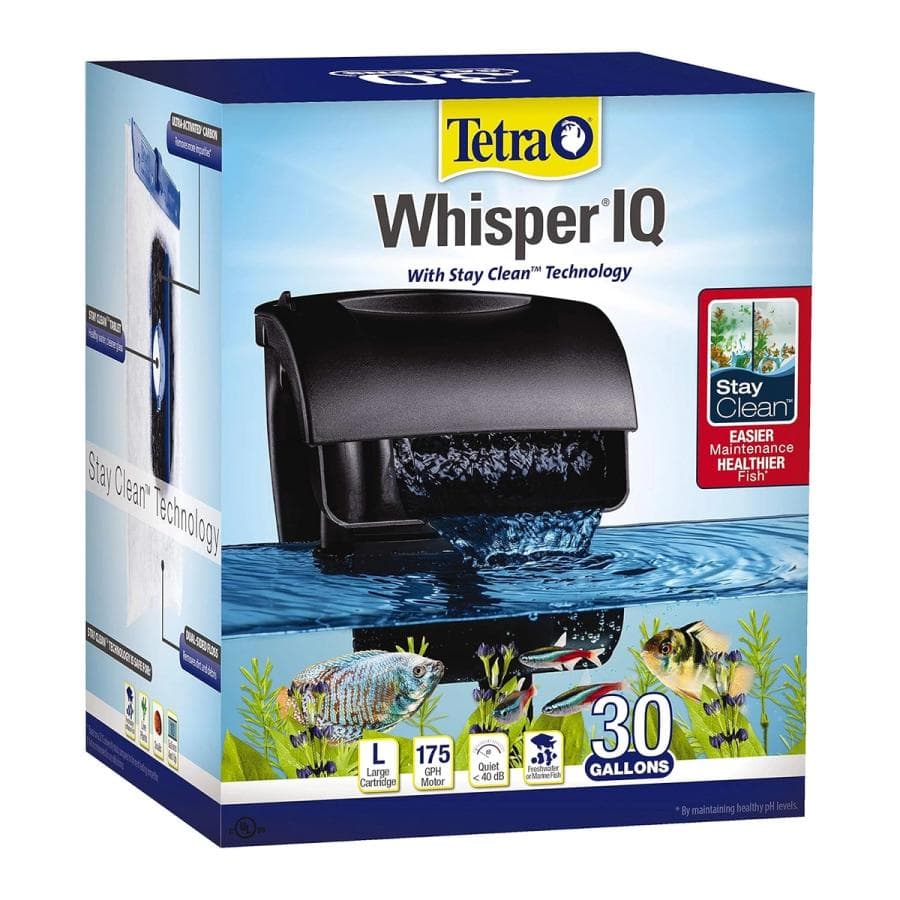
Turnover tells you how much flow; the tank tells you which kind of filter. For nano up through medium tanks (roughly 5 to 55 gallons), a hang-on-back (HOB) power filter is the easy answer. It clips on the rim, it's cheap, and it's simple to service. We stock HOBs from little 10-gallon units up to ones rated for 70-plus.
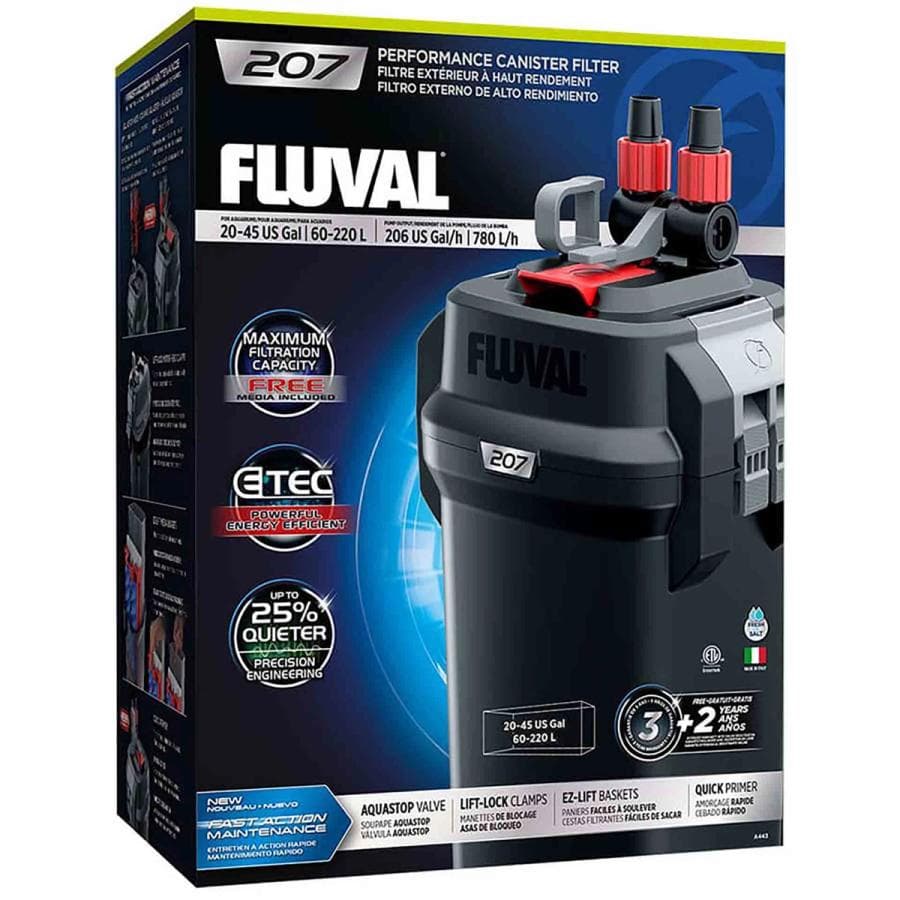
For medium-to-large tanks, heavily planted setups, or anyone who wants their gear out of sight, a canister filter is the upgrade. It sits in the cabinet, holds far more media than a HOB, and runs near-silent, which makes it the standard choice for a planted 55 or 75. For big tanks and any reef, you graduate to a sump: a second tank under the stand that adds water volume and room for a protein skimmer. We've written both of those builds up. See our freshwater sump guide for a no-drill 20-to-75-gallon version, and our saltwater sump guide for a full 125 reef build.
Heater: about 3-5 watts per gallon
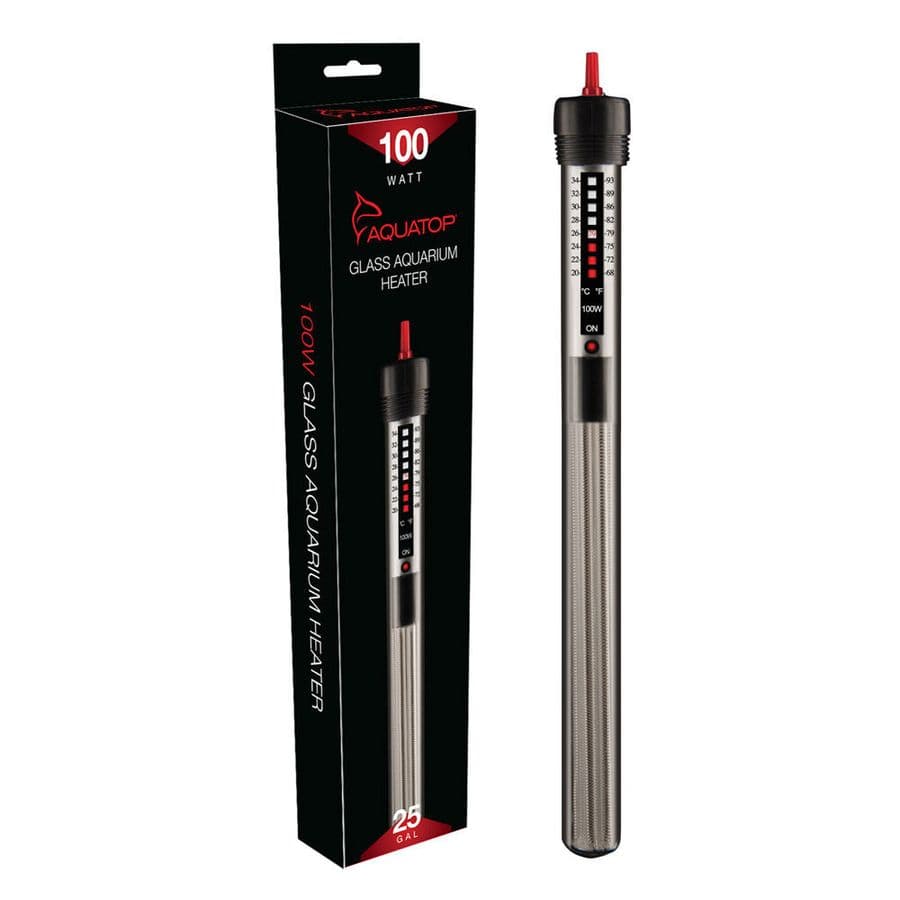
Heater wattage scales with volume. Figure roughly three to five watts per gallon to hold a normal 76 to 78°F. The reason it's a range and not one number is your room. A tank in a warm living room sits near the low end, around 3 watts per gallon; a tank in a cold Erie basement, a drafty back room, or near a winter window needs the high end, closer to 5, just to keep up. The bigger the gap between room temperature and tank temperature, the more wattage you need.
So a 20-gallon in a heated room is happy on a 75-watt heater, while that same 20 in a chilly basement wants 100. A 55 lands around 200 to 275 watts depending on the room. Always round up to the next size made. An oversized heater barely runs; an undersized one runs constantly trying to catch up and burns out early.
On big tanks, split into two heaters
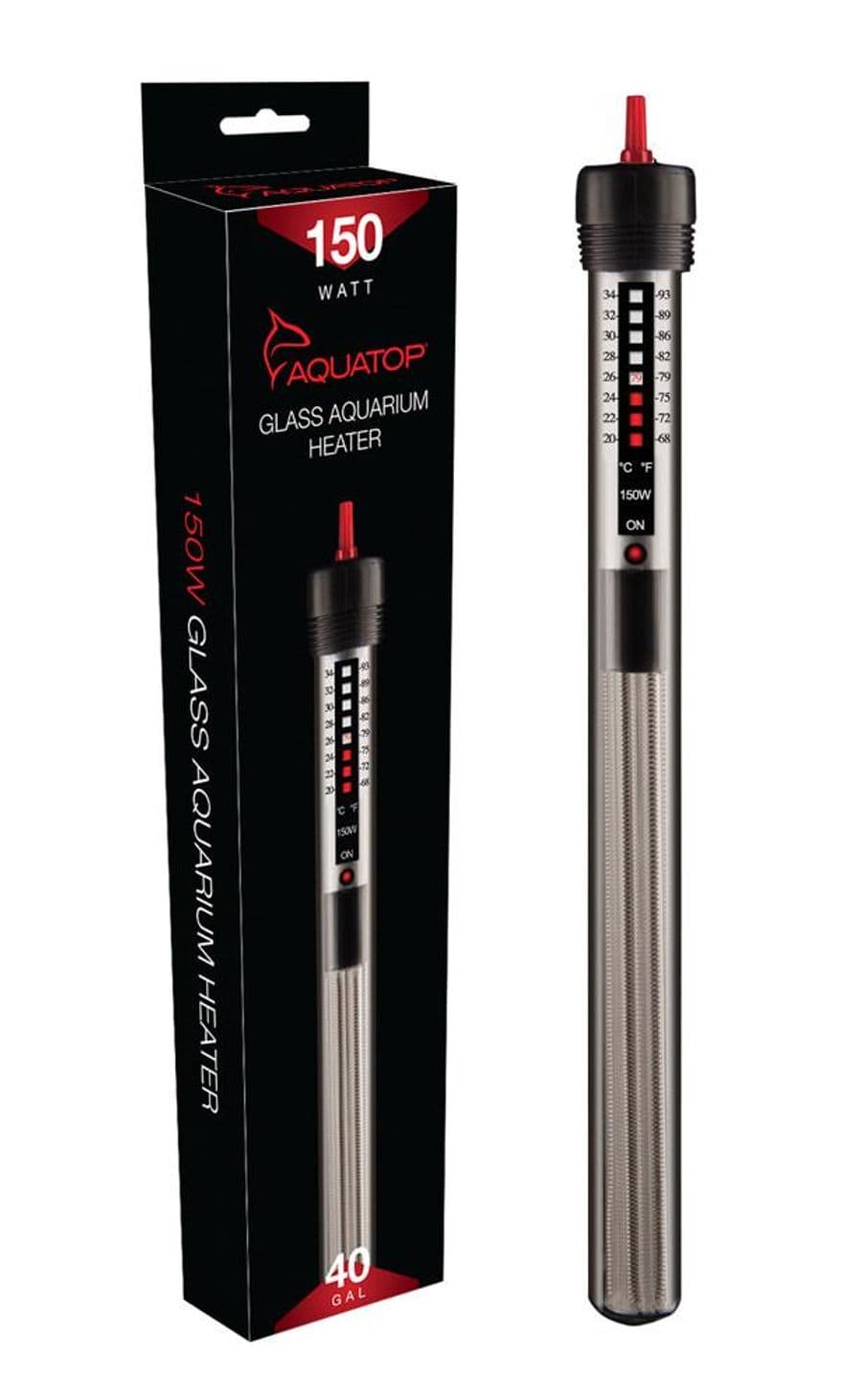
Once you're past about 50 gallons, don't run one giant heater. Run two smaller ones that add up to your target wattage, placed at opposite ends of the tank. A 75-gallon needs somewhere around 300 watts in a warm room and closer to 375 in a cold one, so two 150-to-200-watt heaters cover either case better than a single big unit.
There are two reasons for the split. First, a single stuck-on heater on a big tank can cook everything before you notice. Split the wattage across two, and neither one alone has the power to do that, while a stuck-off failure only drops you halfway instead of all the way. Second, two heaters at opposite ends spread the warmth evenly instead of leaving a cold corner. On any tank you care about, we'd also put the heaters on a separate temperature controller so a failed thermostat can't run away with the tank.
Lighting: pick by what you want to grow
Light is the one spec where gallons matter least and your goal matters most. There are three honest tiers, and buying above your tier just grows algae.
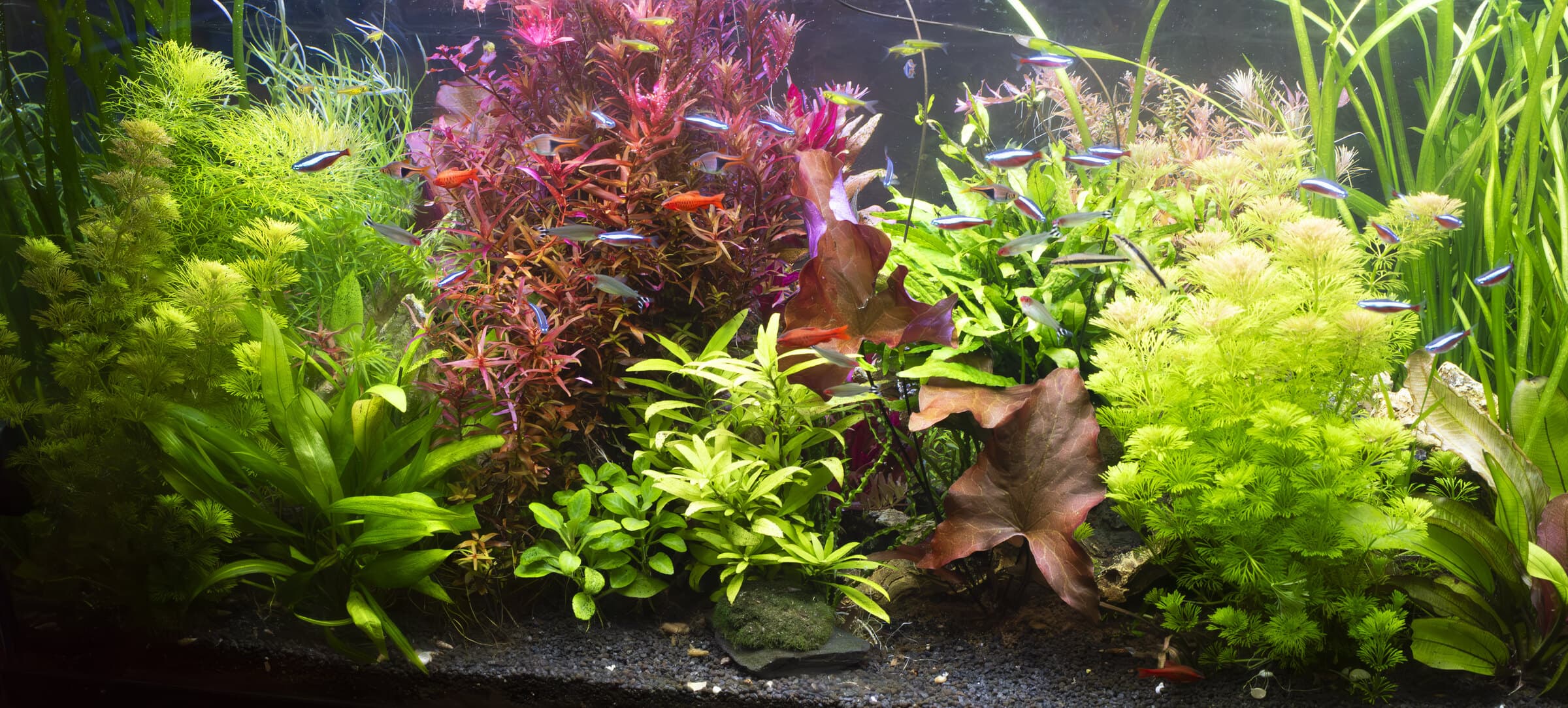
If you keep fish and maybe a few hardy low-light plants like anubias and java fern, a basic full-spectrum LED is all you need: enough to see the fish and show their color, nothing more. If you want a real planted tank with stems and a carpet, you need a plant light with usable PAR (the light intensity plants actually photosynthesize with), sized to your tank's length and run on a timer. That's the difference between thriving stems and a melting mess, and our low-tech planted guide covers the rest. Growing coral is a different world again. Corals demand high-PAR reef lighting heavy on the blue and violet wavelengths their symbiotic algae use to photosynthesize, and the light is one of the most important and most expensive pieces in the build. We carry all three tiers; tell us your goal and we'll point you to the right one.
The quick size-bracket cheat sheet
Here's the whole thing at a glance, by bracket. NANO (5-10 gal): a small HOB rated for the size or a sponge filter, a 25-to-50-watt heater, and a basic LED. Keep it simple; nano tanks swing fast, so don't over-gear them. SMALL (20-29 gal): an HOB around 150-200 GPH, a 75-to-150-watt heater (basement tanks take the higher number), and a light matched to your goal.
MEDIUM (40-55 gal): step up to a larger HOB or your first canister, a 150-to-275-watt heater, and a proper planted light if you're going planted. LARGE (75-125+ gal): a canister or a sump, and now you split heaters into two units totaling 300-to-450-plus watts, plus a light sized to your full tank length, and reef lighting if there's coral in the plan. Treat these as starting points and adjust from there. Stocking, room temperature, and your goals all nudge them, which is exactly why we'd rather size it with you than have you guess off a chart.
Bring your dimensions, we'll spec it
None of this sizing is hard, but it's easy to get a little wrong in a way that costs you months of algae or a chilly tank. The fastest fix is to skip the guessing.
Bring your tank's length, width and height in to the shop at 660 East 14th Street, or call us at (814) 456-9445, and we'll work out your true gallons and match the filter, the heater and the light to your stock and your room, right down to whether your spot in the house needs that extra wattage. Once the tank's running, call anytime with your test readings and we'll help you make sense of them. We'd rather spend ten minutes getting it right than sell you a box that says the right number on the front.
Common questions
- What size filter do I need for my aquarium?
Aim for a filter that turns over four to six times your tank's true water volume every hour, so a 40-gallon tank wants roughly 160 to 240 GPH. Buy a bit above that minimum rather than right at it, since real flow drops as media clogs and the pump lifts water. Messy fish like goldfish want the high end; calm or planted tanks can run lower.
- How many watts does my aquarium heater need?
Figure roughly three to five watts per gallon, leaning toward five if the tank sits in a cold room, basement, or near a winter window. A 20-gallon in a warm room is fine on 75 watts; the same tank in a cold basement wants 100. Always round up to the next size made and pair it with a temperature controller.
- HOB, canister, or sump: which filter is right for my tank?
Hang-on-back filters suit nano through medium tanks (about 5 to 55 gallons) and are cheap and simple. Canister filters are the upgrade for medium-to-large or planted tanks, holding more media and hiding in the cabinet. Sumps are for big tanks and any reef, adding water volume and room for a skimmer.
- Do I need a special light to grow live plants?
Yes. A basic LED that came with a kit will show your fish but rarely grows much beyond hardy plants like anubias or java fern. For a real planted tank you want a plant light with usable PAR, sized to your tank's length and run on a timer. Coral needs a step beyond that: high-PAR reef lighting heavy on the blue and violet wavelengths corals use.
- Should I use one big heater or two smaller ones?
On tanks over about 50 gallons, run two smaller heaters that add up to your target wattage, placed at opposite ends. If one sticks on, neither alone can cook the tank, and a stuck-off failure only drops you halfway. Two heaters also spread the warmth more evenly than a single large one.
- Is it bad to use a filter that's too big for my tank?
Almost never. An oversized filter just means more flow and more media, and you can dial the flow back if it's too strong for shy fish or a planted scape. An undersized filter is the real problem, because it can't keep up with the bioload. When in doubt, the bigger filter is the safer buy.
- How do I figure out my aquarium's real gallons?
Multiply length by width by height in inches and divide by 231 for gallons to the brim, then subtract 10 to 15 percent for substrate, rock, and the air gap at the top. The real number is almost always less than the box claims. Bring your three dimensions to the shop and we'll work it out for you.