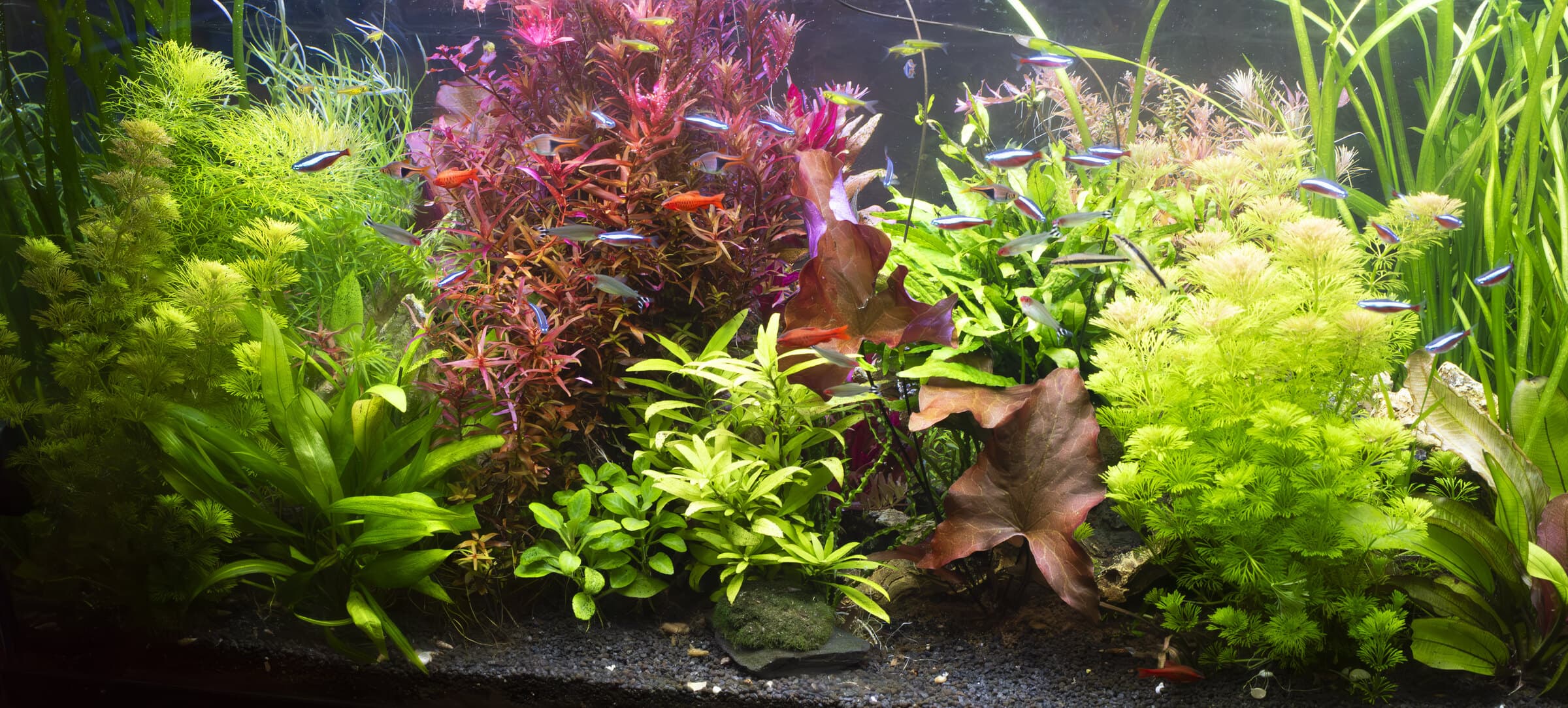
What this covers
Decoration & aquascaping
Rock, wood and ornaments. Structure and hiding places for fish, as much as scenery.
39 in the shop
Live plant care
Keeping live plants growing on light, nutrients in the water and food at the roots.
31 in the shop
Lighting
How much light, what color, and for how long. Drives plants, corals and algae alike.
34 in the shop
Almost everyone who wants live plants in their aquarium eventually reads that "real" planted tanks need pressurized CO2. They look up the gear, see a CO2 cylinder, a regulator, a solenoid, a diffuser, and a drop checker, and quietly decide live plants are an advanced-hobbyist thing they'll get to "someday." That's the friction, and it's also wrong.
A low-tech planted tank skips all of that. You choose plants that grow fine in regular tap-water tanks under a modest light, you keep the light on a timer, and you feed the plants with a nutrient substrate or root tabs plus a little liquid fertilizer. Here's what you give up: low-tech plants grow slower than the high-tech showpieces you see in contest photos. But slower growth also means less pruning, far less algae to fight, and no gas cylinder sitting under your stand.
This works in anything from a 10 to a 40 gallon, and the plants do real work for you. They pull nitrate out of the water between water changes, give shy fish cover, and compete with algae for nutrients. We'll point you at beginner-proof species and tell you what to skip. Bring your tank dimensions and your light in to us in Erie and we'll pick plants that will actually thrive under what you've got.
Skip the CO2: here's why low-tech works
Plants build tissue from carbon, and pressurized CO2 injection floods the water with it so fast-growing plants can run wide open. That's the whole appeal of a high-tech tank. It's also why those tanks demand strong light, heavy fertilizing, and constant trimming to stay balanced. Get any one of those three out of sync and you get an algae bloom.
Low-tech works differently. The plants we recommend pull the carbon they need from the small amount already dissolved in your water and from fish respiration. They grow at a relaxed pace, so they don't out-demand a modest light, and the tank stays in balance with very little input from you. No cylinder, no regulator, no drop checker, no leak-check routine. If you ever catch the bug and want to go high-tech later, none of this is wasted. The plants, substrate, and light all carry over.
Beginner-proof plants: the short list
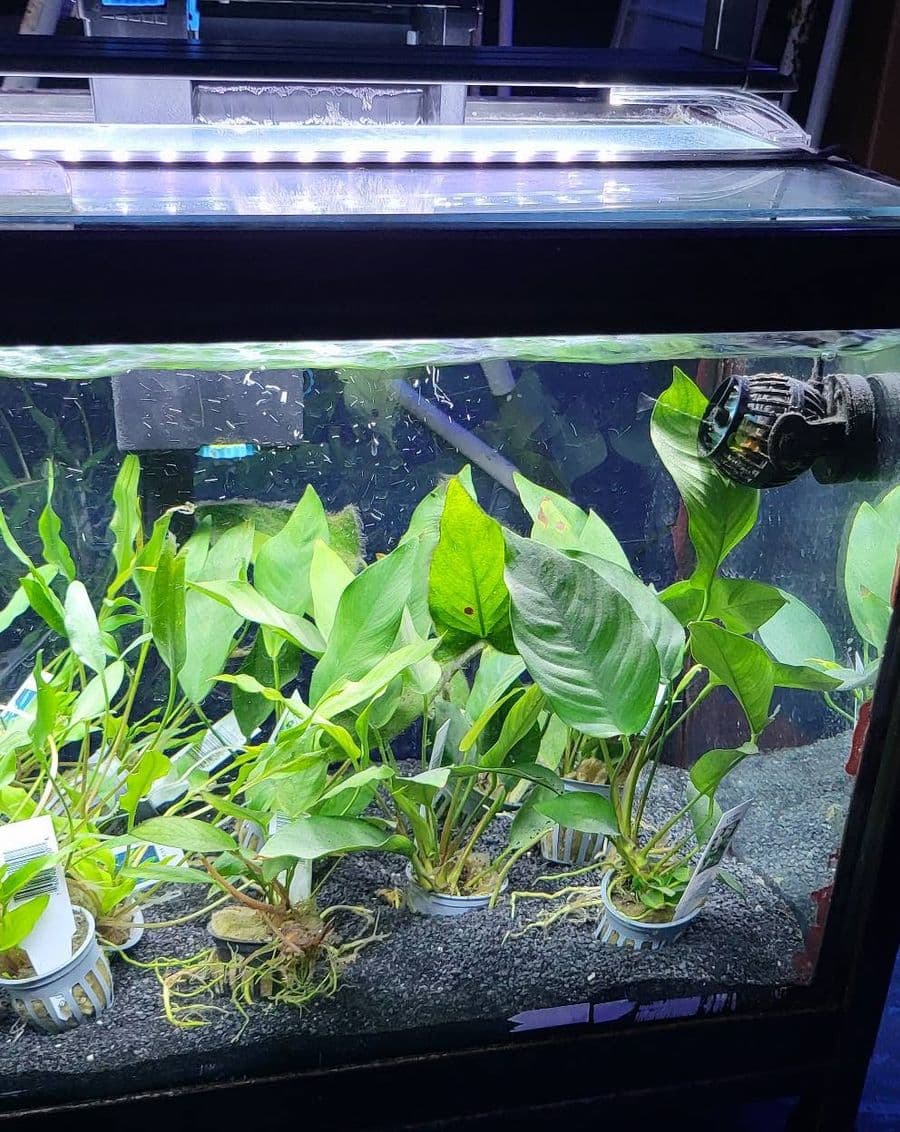
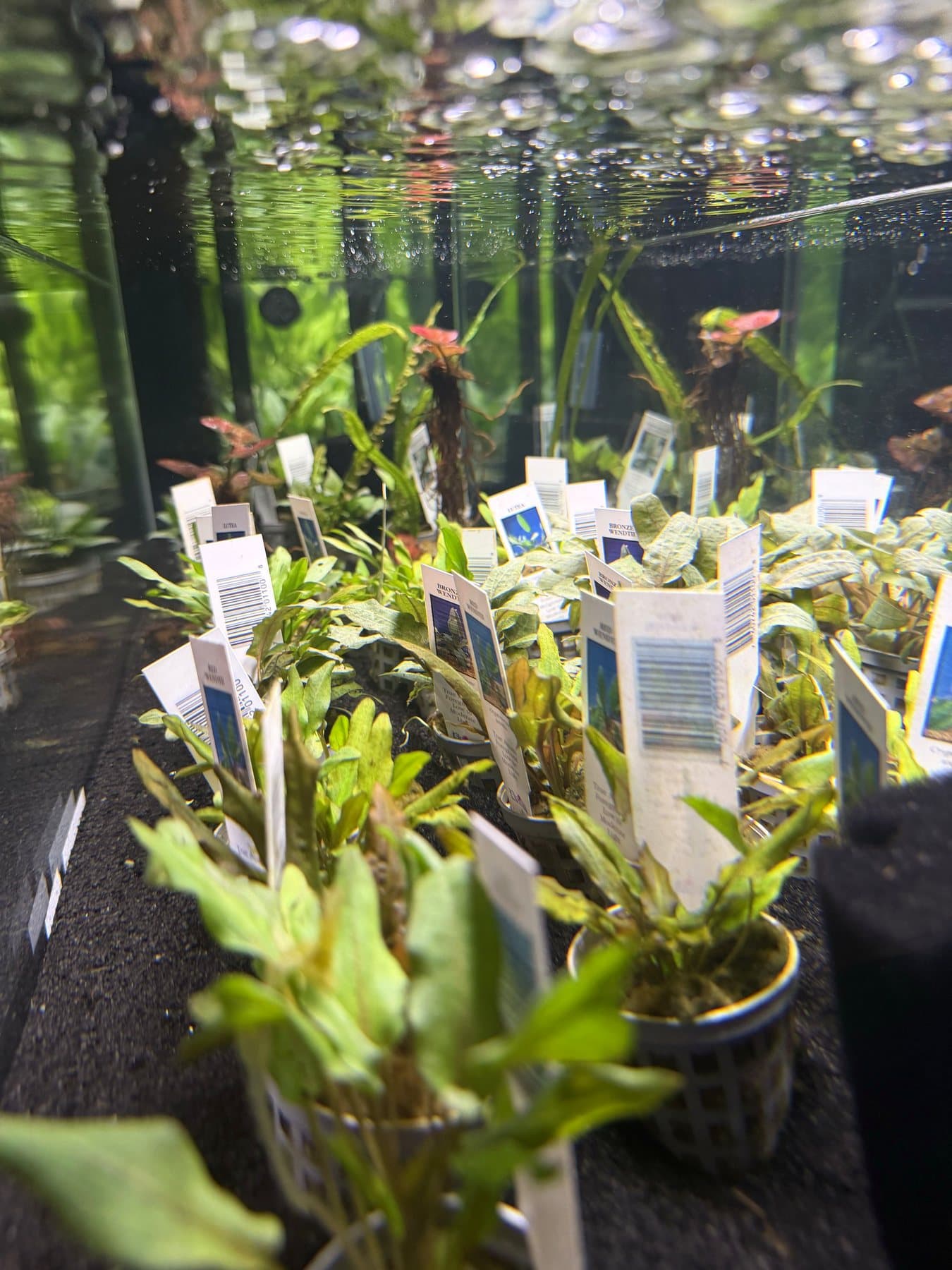
Stick to these five and you'll have a planted tank that's hard to kill. Anubias (often sold as anubias barteri or nana) and java fern are the bulletproof ones: slow, tough, and happy in low light. Java moss is a forgiving accent and cover plant that attaches to anything. Cryptocoryne ("crypts") are great rooted plants for the midground, though expect them to melt back and regrow when you first plant them. That's normal and not your fault. Vallisneria sends up tall grassy blades and is the classic low-tech background plant.
The one rule that trips people up: anubias and java fern grow from a rhizome, the thick horizontal stem the leaves and roots sprout from. That rhizome must stay ABOVE the substrate. Bury it and it rots, and the plant dies from the middle out. So instead of planting these two, you tie or glue them to a piece of driftwood or rock (more on that below). Crypts and vallisneria are different. Those get their roots planted down into the substrate, with the crown left at the surface.
We carry these as our regular planted stock, though exact species and sizes rotate with what comes in healthy. If you want a specific look, ask us what's in this week before you set your heart on one variety.
Tie and glue, don't bury
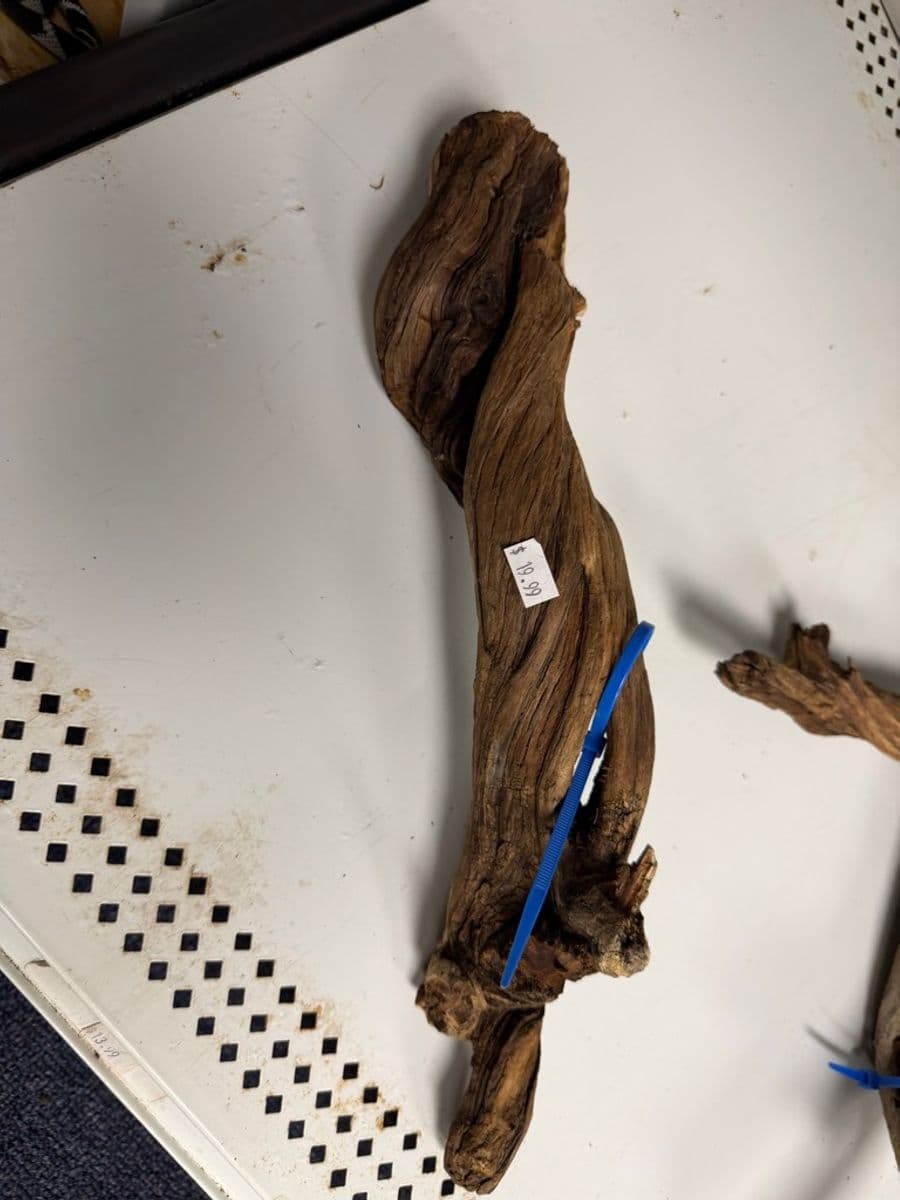
For anubias and java fern, the easiest method is to set the plant on a piece of driftwood or a rock and lash the rhizome down with a few wraps of cotton thread or a couple loops of fishing line. The roots will grab the wood over a few weeks and you can snip the thread once it's anchored (cotton just dissolves on its own). Aim the rhizome flat against the surface and let the roots dangle. They'll find their way down.
The faster route is cyanoacrylate gel, plain super glue gel of the kind labeled safe for aquariums or reef use. A dab on the bottom of the rhizome, press it to the wood for ten seconds, done. It cures instantly even underwater and is inert once set. Tack only the underside of the rhizome, never the roots, and don't glob it on.
Java moss is the easy one: spread a thin layer over wood or rock and tie it down with thread, or wedge it into a crevice. A thin layer attaches and fills in far better than a thick clump, which tends to brown out in the middle from no light.
Feeding the plants: substrate, root tabs, and a little liquid
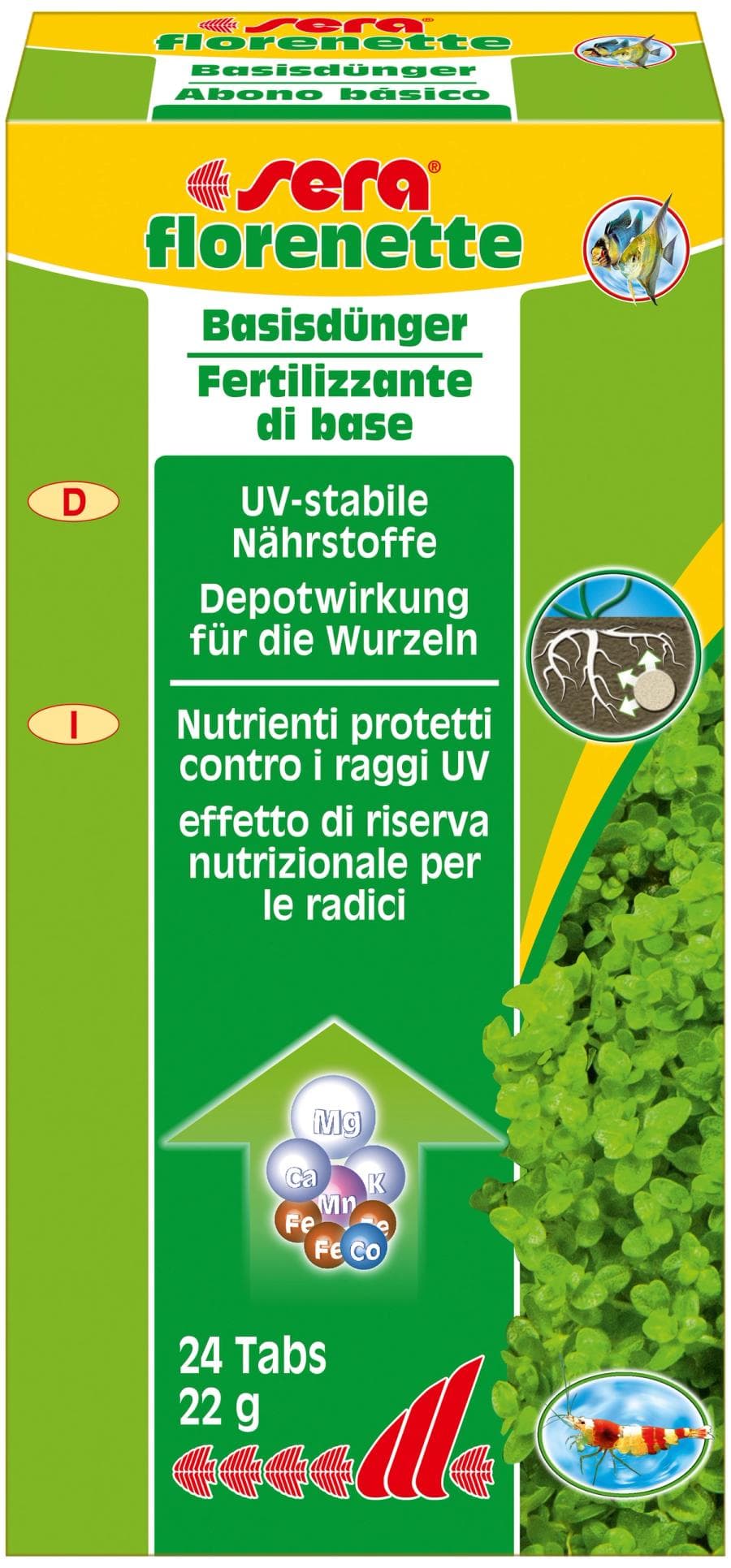
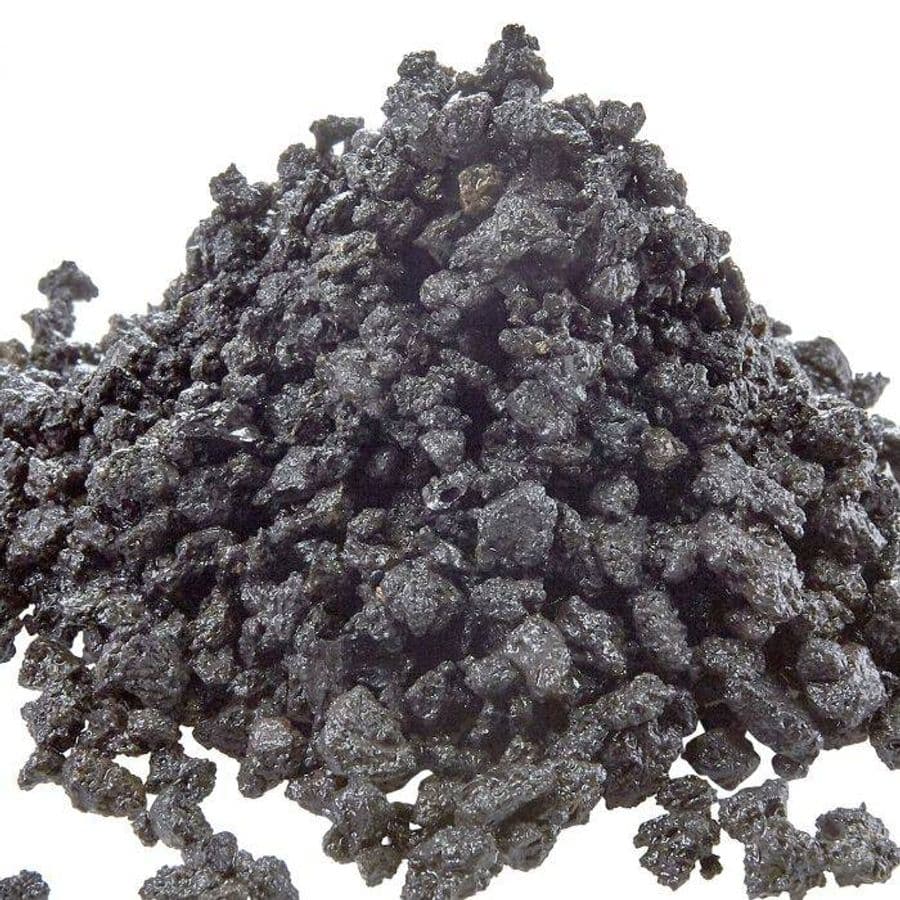
Plants eat in two places: through their roots and through their leaves. Rooted plants like crypts and vallisneria are heavy root feeders, so they do best in either a dedicated nutrient ("aquasoil") substrate or in plain gravel or sand with root tabs pushed down near their roots every few months. Anubias, java fern, and moss feed mostly through their leaves from the water column, so they don't care what your substrate is.
For the water column, a modest all-in-one liquid fertilizer once a week covers the rest. "All-in-one" means it includes both the macronutrients (nitrogen, phosphorus, potassium) and the trace elements in one bottle, so you're not juggling separate solutions. Read the label carefully here. Many popular liquid "plant supplements" are trace and micronutrient products only and contain little to no nitrogen or phosphorus. Those are useful as an add-on, but on their own they won't cover a tank's macro needs. Go a little light on dosing in a slow-growing setup. Dose to the label for your tank size, or slightly under. Overdose fertilizer when plants grow slowly and you just feed algae, since the plants can't use the surplus fast enough.
If you're not sure whether your tank is light- or nutrient-limited, bring your test numbers and tank details in and we'll help you sort it out. Often the answer for a struggling planted tank is simply more light or more time.
Light: enough is plenty, and put it on a timer
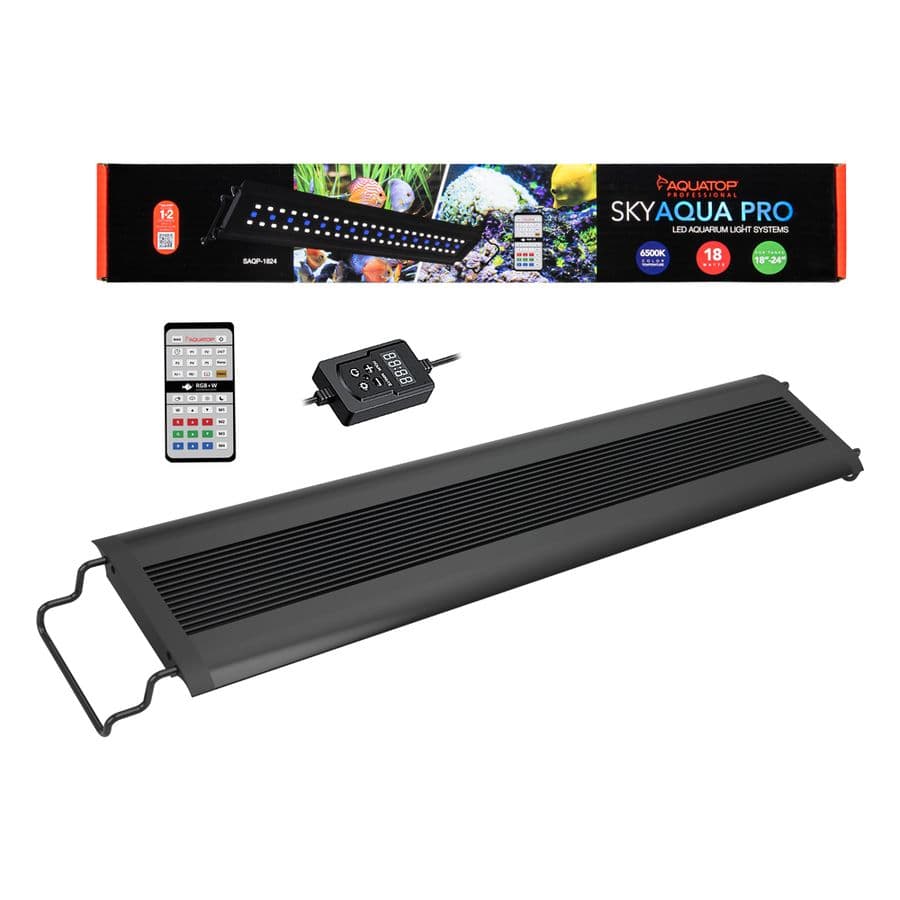
Low-light plants don't need a blinding fixture. A decent LED plant light, one actually sold for growing plants rather than a basic blue-white "shimmer" hood, is plenty over a 10 to 40 gallon. What matters more than raw output is consistency, which is where a timer comes in.
Run the light about 6 to 8 hours a day on an outlet timer, the same hours every day. That's the single biggest algae-prevention move you can make. Plants do fine on a shorter, regular photoperiod; algae loves long or erratic lighting, and it loves sunlight, so keep the tank out of direct window light. If you start seeing algae creep in, shorten the photoperiod toward the low end before you change anything else.
A quick word on light sizing: many fixtures are rated by the tank LENGTH in inches they span rather than by gallons, so a light listed for an "18 to 24" tank means it fits tanks roughly 18 to 24 inches long. A standard 10 gallon is about 20 inches long and a 40-breeder is about 36 inches, so check your tank's length, not just its volume, when matching a fixture. If you want help with this, our guide on sizing your filter, heater and lighting walks through it, or just bring your tank dimensions in and we'll point you at a fixture that fits without being overkill.
Plants and your water chemistry
Live plants are quietly one of the best things you can do for water quality. As they grow they take up nitrate, the end product of your tank's nitrogen cycle, which means the number creeps up slower between water changes. A well-planted tank is a more stable tank. Plants don't replace water changes or a proper cycle, but they take pressure off both.
That said, plants only draw nitrogen down while they're healthy and growing well. A new tank with small plants that are still settling in won't do much for a few weeks, so don't lean on them to carry an uncycled tank. If you're setting up fresh, get the nitrogen cycle established first (see our guide on cycling a new aquarium), then add livestock once your numbers are stable.
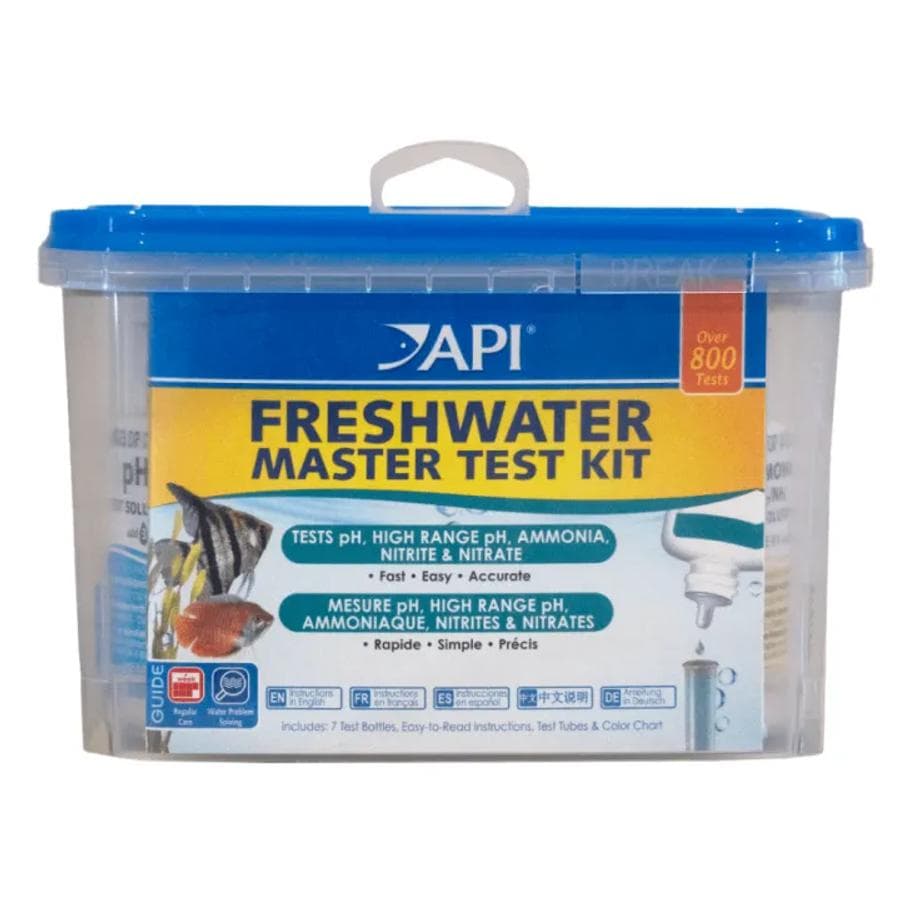
You'll still want a basic test kit on hand to watch ammonia, nitrite, and nitrate, especially early on. Bring your numbers in and we'll read them with you.
What to skip
You don't need CO2, and you don't need root tabs for anubias, java fern, or moss. Those feed through their leaves, so tabs near them are wasted. You also don't need a separate macro and micro fertilizer regimen; that's a high-tech habit. One genuine all-in-one bottle is plenty for a low-light setup.
Skip the "plant grow" liquid carbon additives too, at least to start. People reach for them as a CO2 substitute, but they're unnecessary when the tank is built around plants that don't need extra carbon, and some species, vallisneria especially, react badly to them. Build the tank right and you won't miss it.
And skip the urge to over-plant on day one. Start with a handful of healthy plants, let them establish and grow in, and fill the gaps from your own trimmings later. It's cheaper, and the plants that grew in your water are the ones that will keep thriving in it.
Common questions
- Do you really not need CO2 for a planted tank?
Correct, not for a low-tech setup. The plants we recommend (anubias, java fern, java moss, cryptocoryne, and vallisneria) get the carbon they need from your water and from fish respiration. CO2 injection is for fast-growing, high-light tanks. It grows plants faster but also demands stronger light, more fertilizer, and constant trimming. Skip it for your first planted tank.
- What are the easiest aquarium plants for beginners?
Anubias, java fern, and java moss are the most forgiving. They're slow, tough, happy in low light, and they attach to wood or rock instead of being planted. Cryptocoryne and vallisneria are easy rooted plants for the substrate. Start with those five and you'll have a planted tank that's very hard to kill.
- Why is my anubias or java fern rotting?
Almost always because the rhizome, the thick horizontal stem the leaves grow from, got buried in the substrate. That part has to stay above the gravel or it rots and the plant dies from the middle out. Tie or glue the rhizome to driftwood or rock and let only the roots reach down.
- How many hours a day should I run my aquarium light for plants?
Around 6 to 8 hours a day, on a timer, at the same time every day. Plants grow fine on a shorter, regular photoperiod, and that consistency is your best defense against algae. If algae starts showing up, shorten toward the low end before changing anything else, and keep the tank out of direct sunlight.
- Do live plants help keep aquarium water clean?
Yes. Growing plants take up nitrate, the end product of the nitrogen cycle, so it builds up more slowly between water changes and your tank stays more stable. They don't replace water changes or a proper cycle, and they only help while healthy and growing well, so a brand-new tank with small plants won't do much for the first few weeks.
- Do I need special substrate for a planted tank?
Not necessarily. A nutrient (aquasoil) substrate helps rooted plants like crypts and vallisneria, but you can get the same result with plain gravel or sand plus root tabs pushed in near the roots every few months. Anubias, java fern, and moss feed through their leaves, so they don't care what's on the bottom at all.
- Can I superglue aquarium plants to wood?
Yes. Cyanoacrylate gel (super glue gel) is the standard way to attach anubias, java fern, and moss to driftwood or rock. It's inert once cured and bonds instantly, even underwater. Put a dab on the underside of the rhizome, press it to the wood for ten seconds, and keep it off the roots and the top of the rhizome.
- What kind of liquid fertilizer should I use for a low-tech tank?
A genuine all-in-one that includes both macronutrients (nitrogen, phosphorus, potassium) and trace elements in one bottle, dosed weekly with a light hand. Watch the label, because many popular bottles are trace and micronutrient supplements only and contain little to no nitrogen or phosphorus. Those are a fine add-on but won't cover macros by themselves, so heavy root-feeders like crypts will still want root tabs. Bring your bottle in and we'll tell you what it actually contains.