
Saltwater Fish
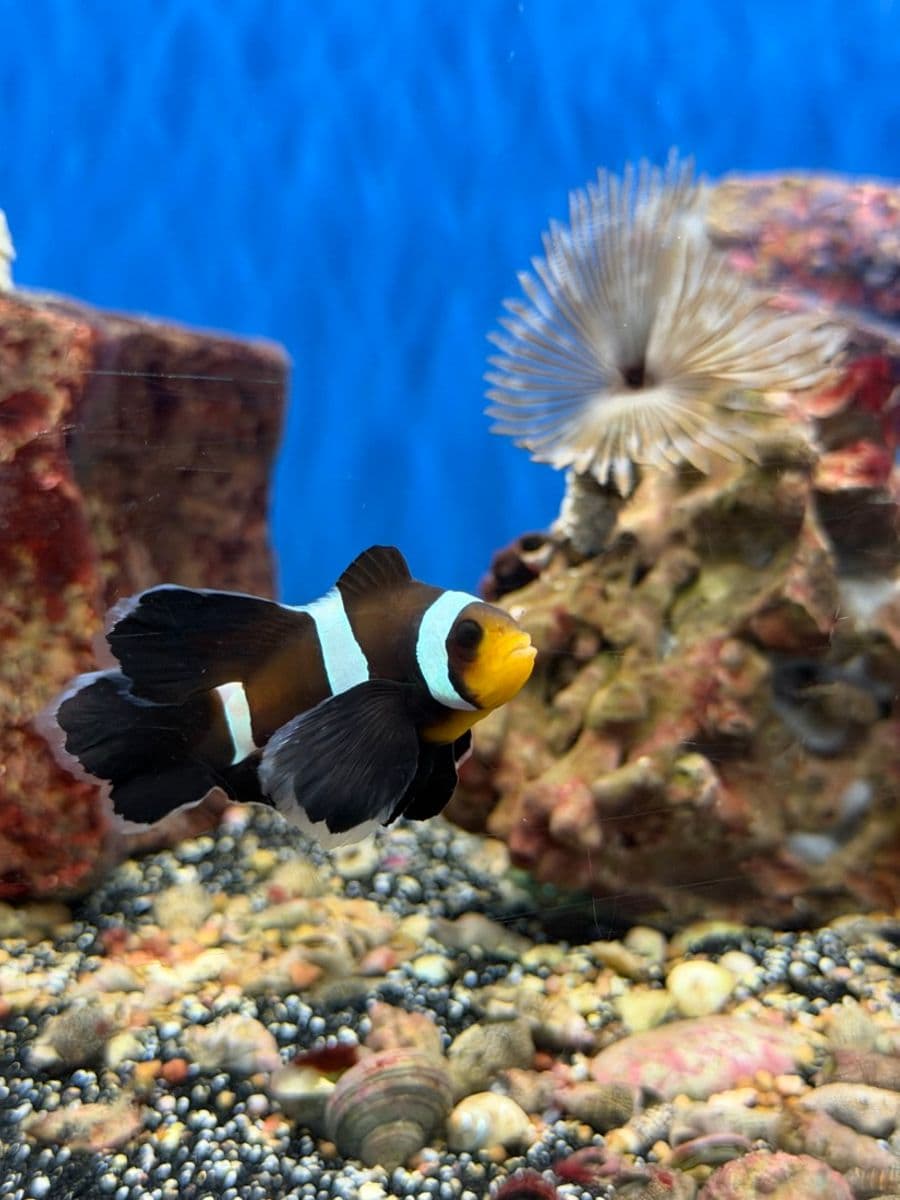
Longfin Black Ocellaris.
A black-and-white ocellaris clownfish carrying elegant long, flowing fins. Beginner-friendly and reef-safe, with all the hardiness and personality of the classic clown; it'll happily settle into an anemone or soft coral.
In-store purchase only. Live fish, coral, and invertebrates are sold at our Erie store only. They cannot be bought online, and we do not ship live animals under any circumstances.
Live fish are priced per supplier batch — prices may vary. Call to confirm current pricing.
- Condition
- new
- Fulfillment
- Local pickup — Erie, PA
Live animals are sold in store only — we do not ship fish, coral, or invertebrates. Every animal is acclimated and health-checked in-house before it reaches the sales floor. This is a species we carry — it's most likely in the tanks around delivery days, but live stock changes daily. Please call (814) 456-9445 to confirm availability before you drive in.
Care at a glance
What to know before you take one home.
- Care level
- Beginner
- Temperament
- Peaceful
- Adult size
- 3"
- Min tank size
- 20 gallons
- Diet
- Omnivore
- Scientific name
- Amphiprion ocellaris
Good tank mates
A peaceful clownfish that does well in reef and fish-only saltwater communities alongside other calm reef dwellers like firefish, small gobies, cardinalfish, and dwarf angels. Keep only one clownfish or a single bonded pair per tank, since two unpaired adults will fight, and avoid large aggressive predators such as lionfish, big groupers, or eels that may eat or harass it. Its trailing fins can make it a slightly slower swimmer, so steer clear of known fin-nippers.
Good to know
All clownfish hatch undifferentiated and the largest individual in a group becomes the dominant female, so a clownfish can change sex from male to female as it matures.
Stock and individual temperament vary — call (814) 456-9445 for pairing advice before you buy.
Good tankmates
Plays well with.
Species we’d keep in the same tank, with why each pairing works. Stock and individual temperament vary — call (814) 456-9445 to confirm before you buy.
New to stocking a tank? Read our guide on which fish live together.
Firefish Goby
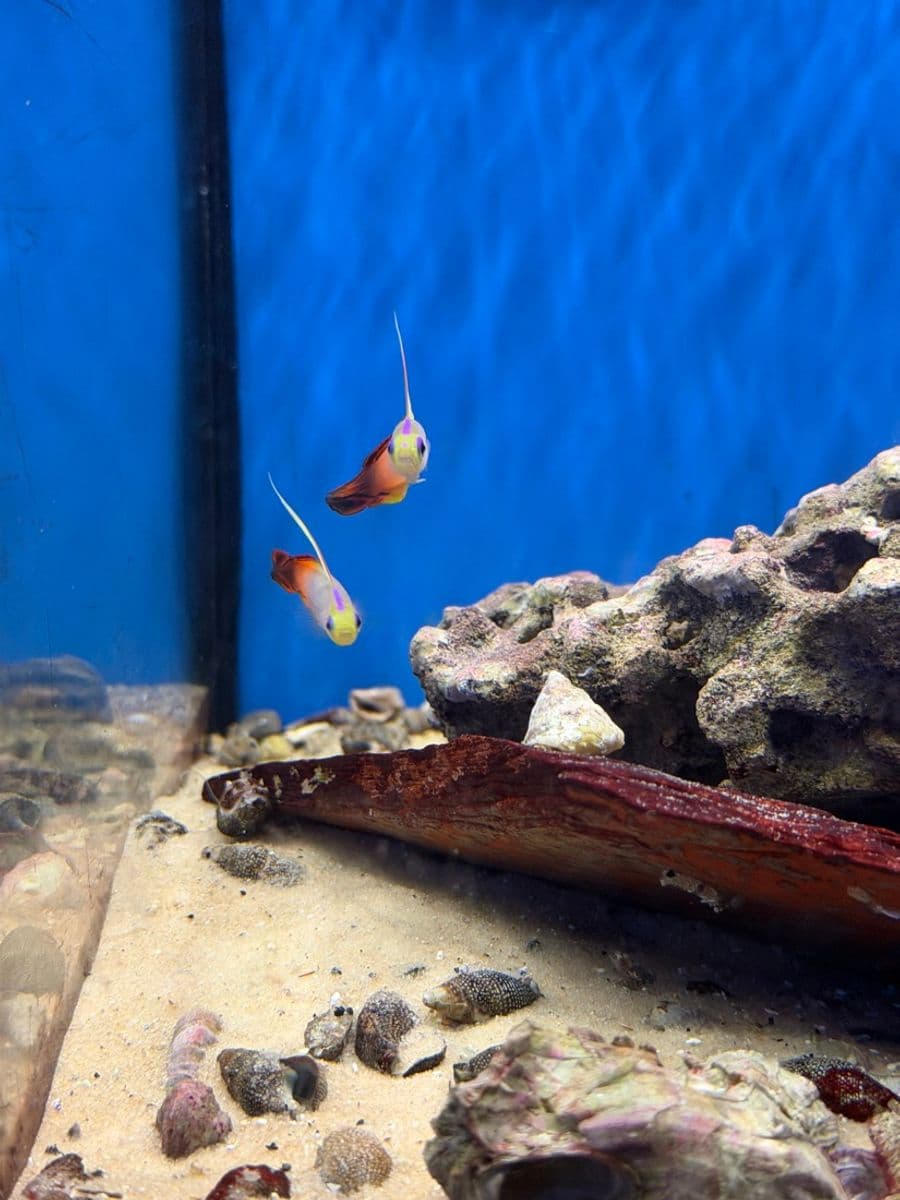
Genuinely peaceful and reef-safe. Occupies the mid-to-upper column near a burrow entrance and has no documented aggression toward clownfish. Territories do not overlap: Firefish defend a burrow hole; clownfish defend an anemone or host coral. No fin-nipping history. Only meaningful husbandry note is they are strong jumpers and require a tight-fitting lid — not a compatibility issue with the clownfish.
Royal Gramma
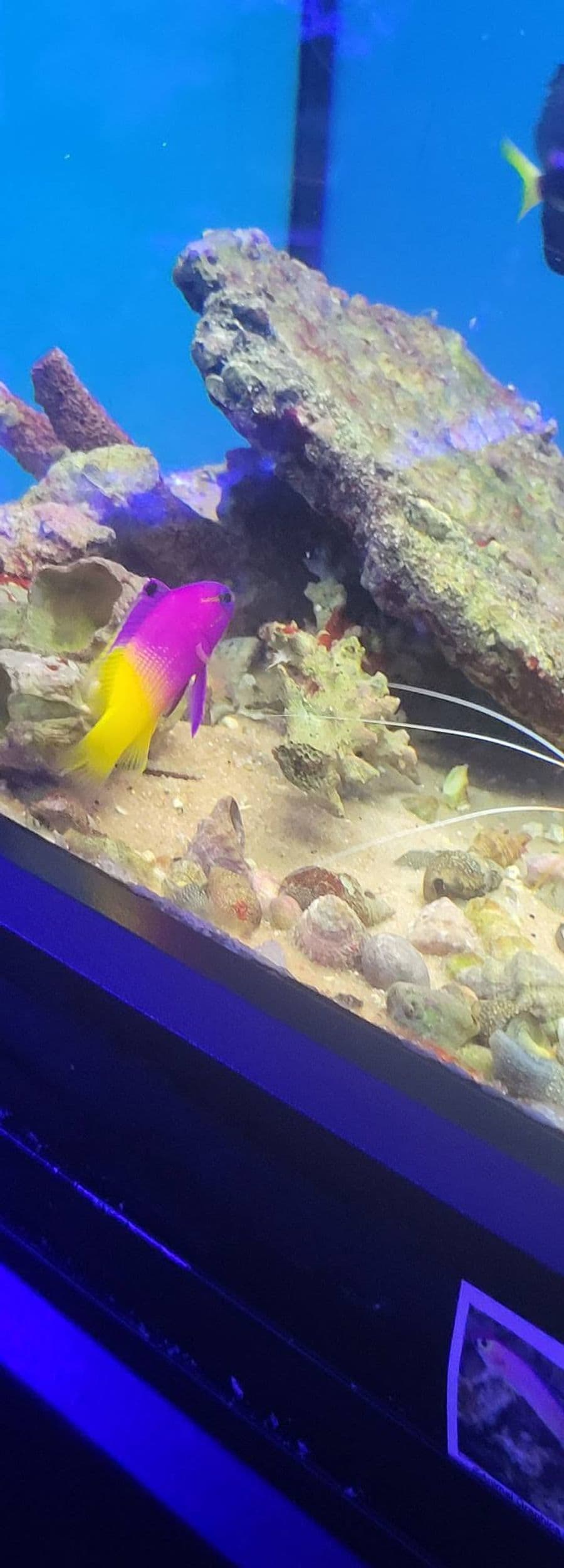
Well-documented clownfish companion across the hobby. Territorial behavior is tightly focused on a single rock crevice; clownfish territory centers on a host anemone or coral — the two zones do not compete. Gramma aggression (brief dashes, open-mouth displays) is directed at fish entering its specific cave, not at free-swimming neighbors. No fin-nipping toward other species reported. Widely listed as a primary clownfish tankmate recommendation.
Pajama Cardinalfish
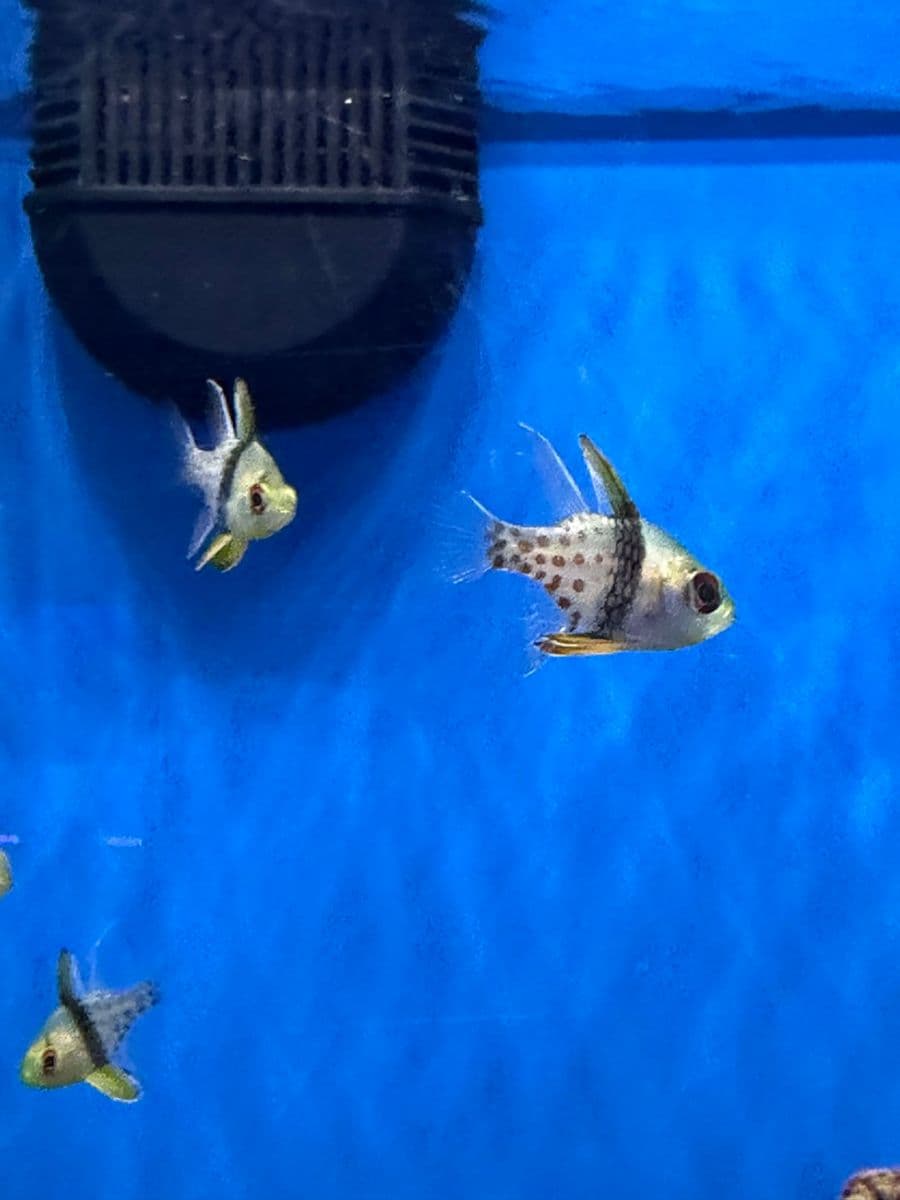
Consistently rated one of the safest clownfish companions — slow-moving, docile, and fully reef-safe. Poses zero predation risk (similar size, 3 inches), no territorial overlap with clownfish, and no fin-nipping behavior. Multiple independent sources confirm successful mixed-reef cohabitation with clownfish.
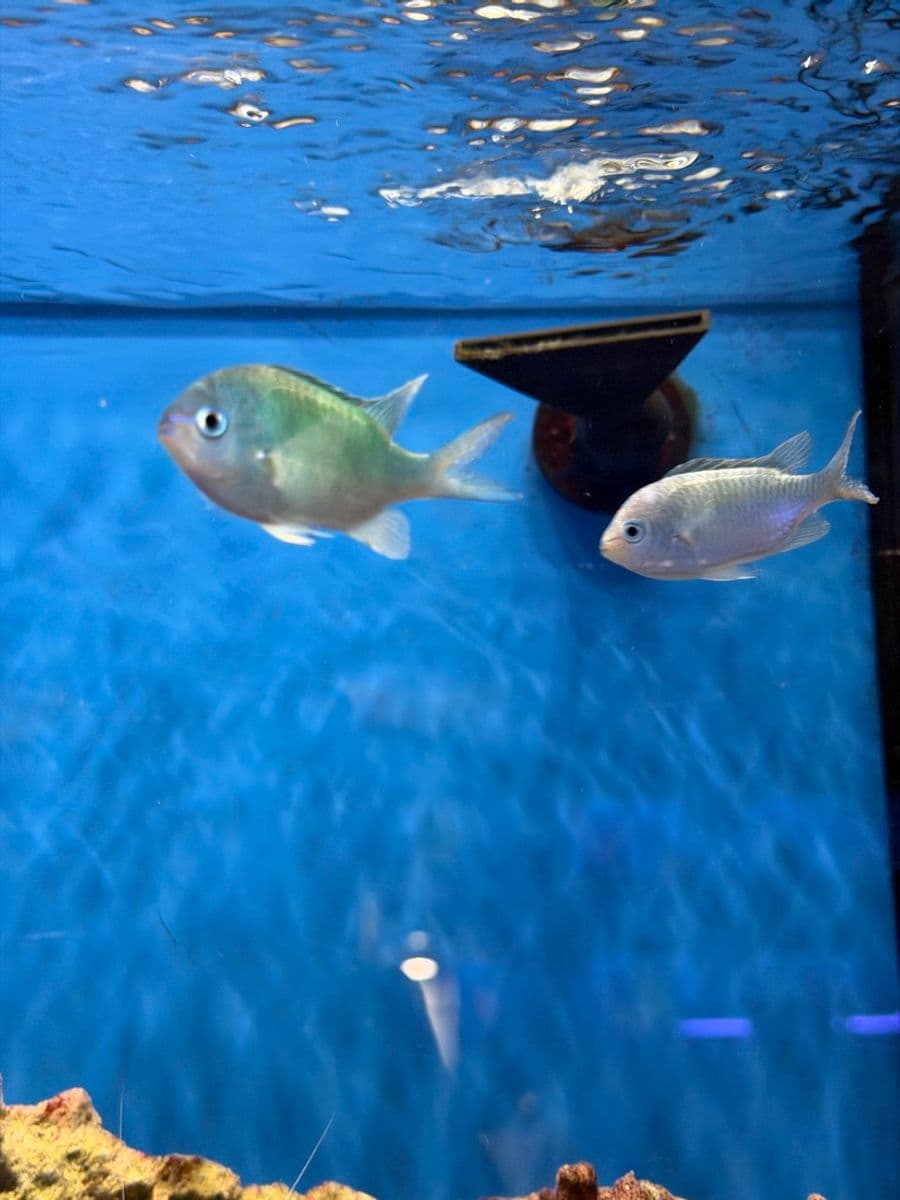
Green Chromis
The standout peaceful exception among damselfish. Multiple sources confirm they are compatible with clownfish and do not bother other community species. Explicitly listed as a safe longfin clownfish tankmate. Note: intra-group hierarchy can thin small groups over time (keep 6+ in 55+ gallons to distribute aggression within the school); this is a Chromis management concern, not a clownfish compatibility issue.
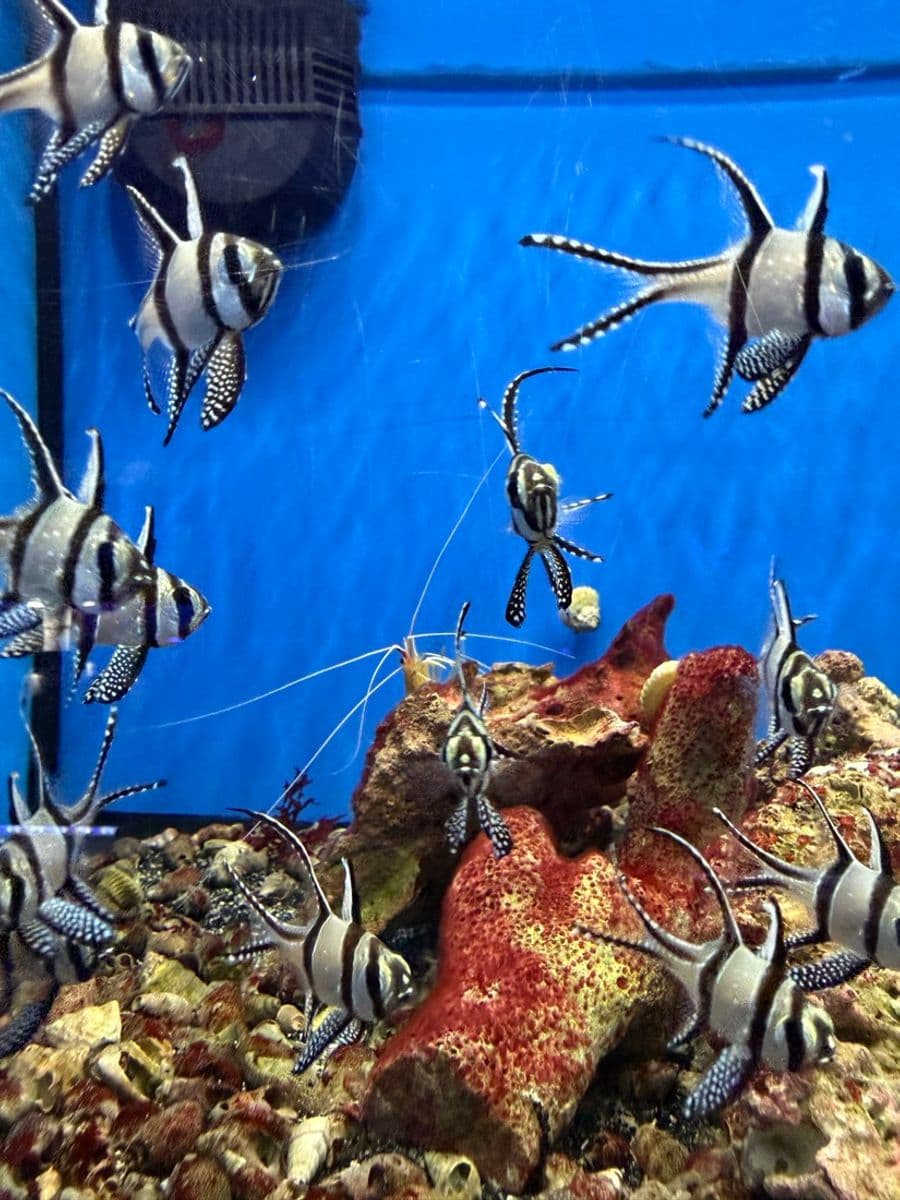
Banggai Cardinalfish
Peaceful, slow-swimming, and one of the most commonly recommended clownfish tankmates in reef systems. Intraspecific male-male aggression is the primary concern (keep singly, as a bonded pair, or in a simultaneously introduced group with ample hides) — the species shows no aggression toward clownfish. Reef-safe with no fin-nipping history.
- T
Tailspot Blenny
Peaceful, herbivorous, and graze-focused on algae on rockwork. No documented fin-nipping toward other fish; sources explicitly state the species is not known for fin-nipping behavior — important given the Longfin Black Ocellaris's elongated fins. Clownfish and blennies occupy different microhabitats (host coral vs. rock perches) and rarely interact. Occasional SPS (small-polyp stony) coral grazing has been reported in some individuals, but that is a coral-stocking concern, not a clownfish compatibility issue.
Visit the store
660 East 14th Street,
Erie, PA.
Mon–Fri 12–6 · Sat 11–4 · Sun closed. Call ahead on livestock — what's on the floor rotates.