
Invertebrates
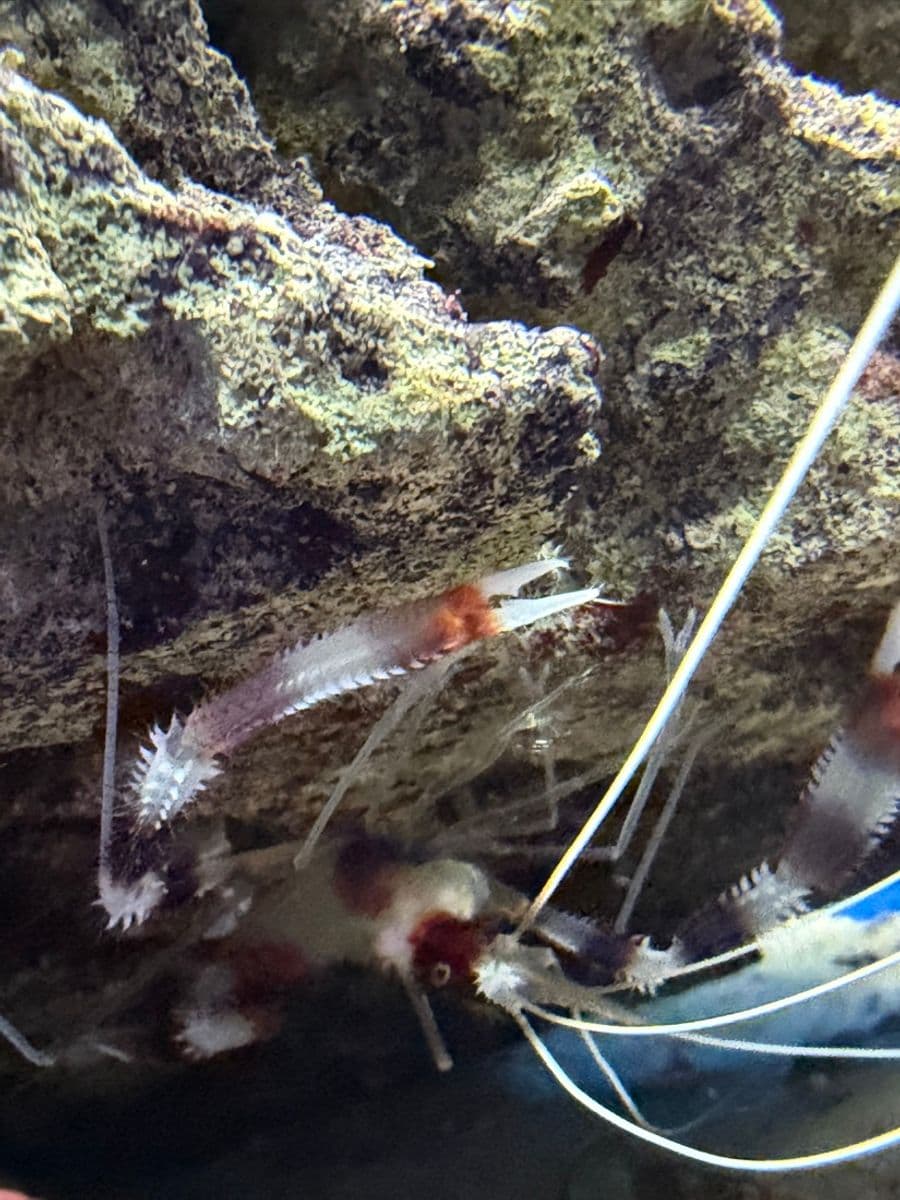
Banded Coral Shrimp.
A striking red-and-white shrimp with long white antennae and boxing-glove claws — a cleaner that sets up shop in a cave. Reef-safe and entertaining, but territorial toward other shrimp; keep one per 30-gallon-plus tank with rockwork.
In-store purchase only. Live fish, coral, and invertebrates are sold at our Erie store only. They cannot be bought online, and we do not ship live animals under any circumstances.
Live fish are priced per supplier batch — prices may vary. Call to confirm current pricing.
- Condition
- new
- Fulfillment
- Local pickup — Erie, PA
Live animals are sold in store only — we do not ship fish, coral, or invertebrates. Every animal is acclimated and health-checked in-house before it reaches the sales floor. This is a species we carry — it's most likely in the tanks around delivery days, but live stock changes daily. Please call (814) 456-9445 to confirm availability before you drive in.
Care at a glance
What to know before you take one home.
- Care level
- Intermediate
- Temperament
- Semi aggressive
- Community
- Semi community
- Adult size
- 2.5"
- Min tank size
- 30 gallons
- Diet
- Carnivore
- Scientific name
- Stenopus hispidus
Good tank mates
The banded coral shrimp (boxing shrimp) is reef-safe with corals but is semi-aggressive and notably territorial toward other shrimp, so keep only one or a bonded male-female pair per tank and never mix it with peppermint, cleaner, or other banded shrimp, which it will fight and kill. It usually ignores larger fish, but it can grab and eat very small, slow, or sleeping fish, so don't pair it with tiny nano fish; it should also be kept away from large predators like triggers and big wrasses that may eat it. It coexists well with snails, crabs, and a sturdy peaceful community.
Good to know
It is a cleaner shrimp that sets up a station and waves its long white antennae to advertise its services, picking parasites and dead tissue off fish that visit.
Stock and individual temperament vary — call (814) 456-9445 for pairing advice before you buy.
Good tankmates
Plays well with.
Species we’d keep in the same tank, with why each pairing works. Stock and individual temperament vary — call (814) 456-9445 to confirm before you buy.
New to stocking a tank? Read our guide on which fish live together.
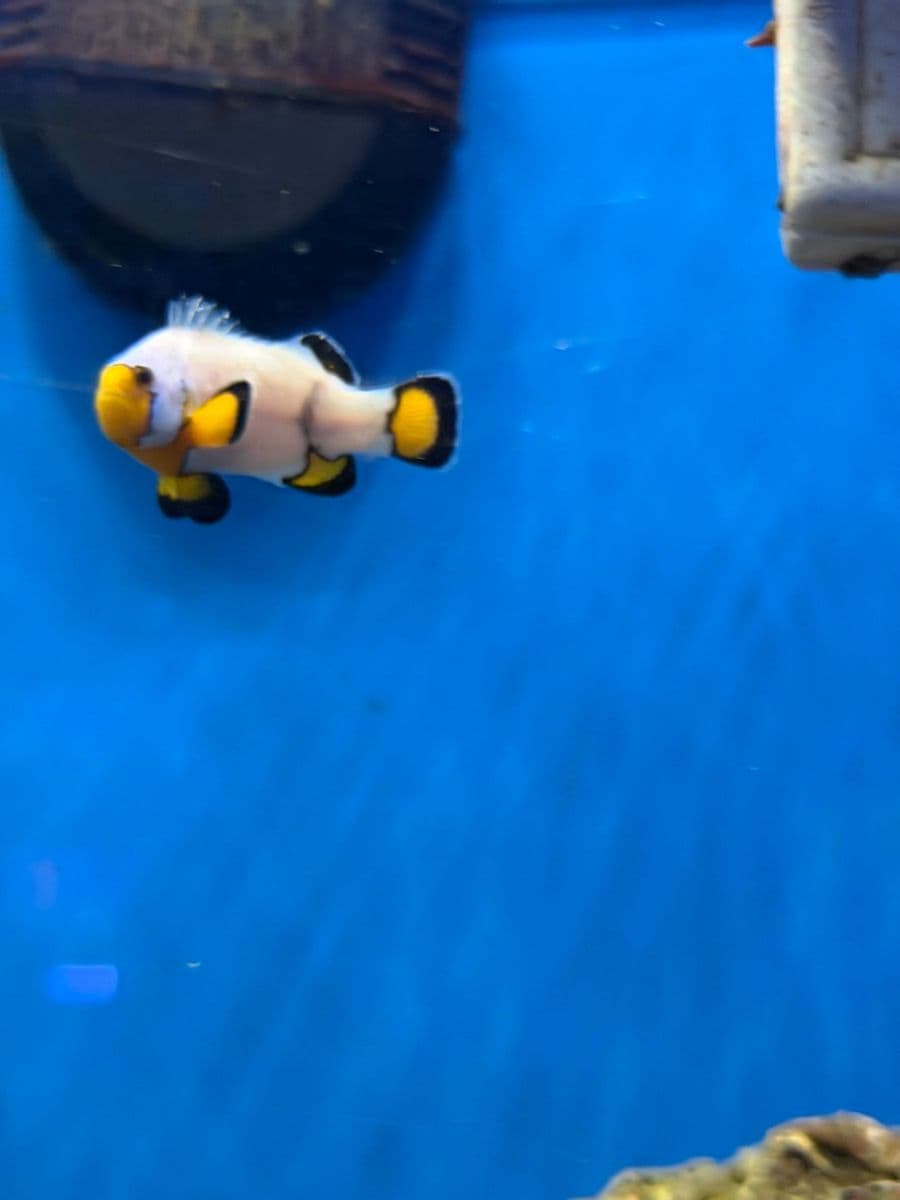
Ultra Black Ice
Small (3 in.), fast-swimming pelagic reef fish that neither preys on Stenopus hispidus nor is threatened by it. Clownfish stay near anemone territory well away from the shrimp's rockwork cleaning station. Explicitly confirmed compatible across multiple care guides. No aggression vector in either direction.
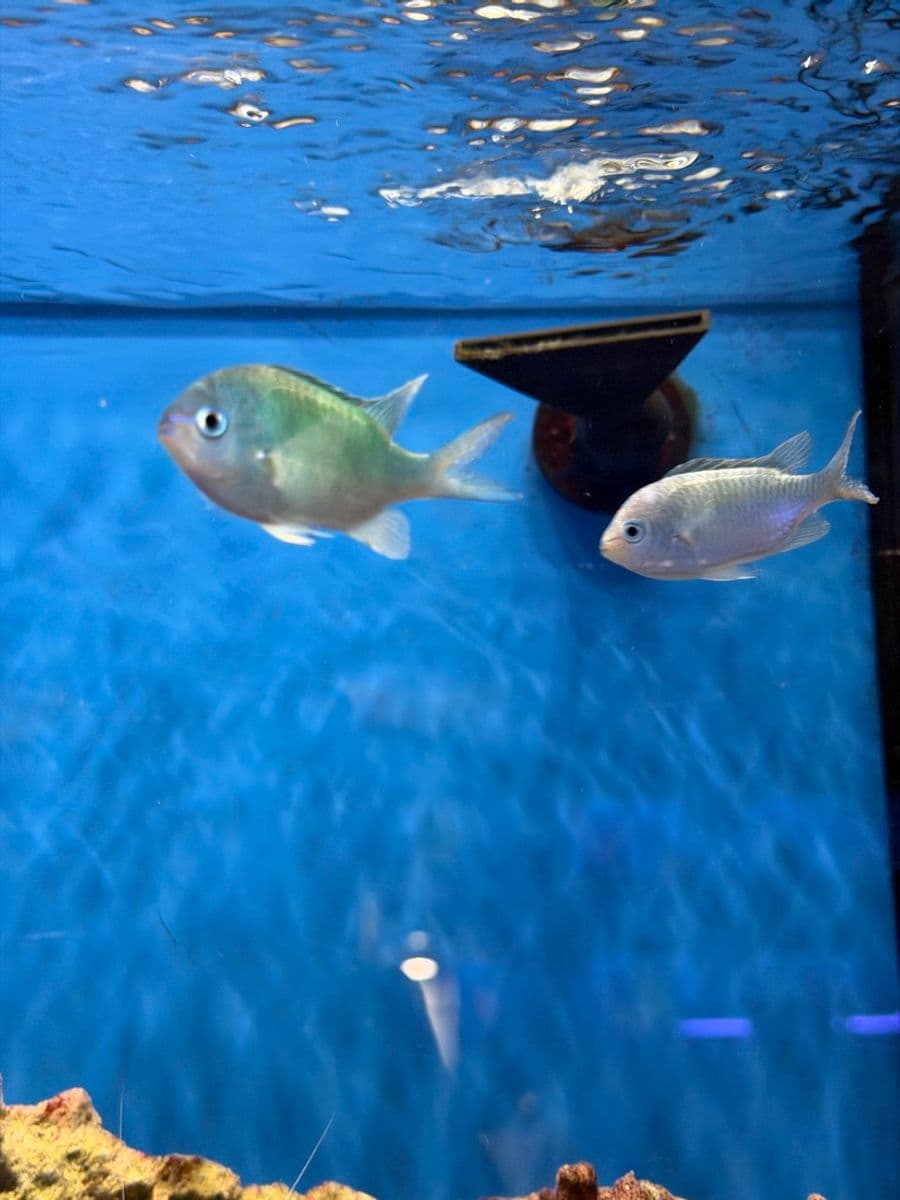
Green Chromis
Mid-water planktivore that never occupies the Stenopus's benthic crevice territory. At 3.5 in. it is too large and fast to be taken by the shrimp, and its diet of zooplankton poses zero predation risk toward invertebrates. Among the safest possible reef fish pairings with Stenopus.
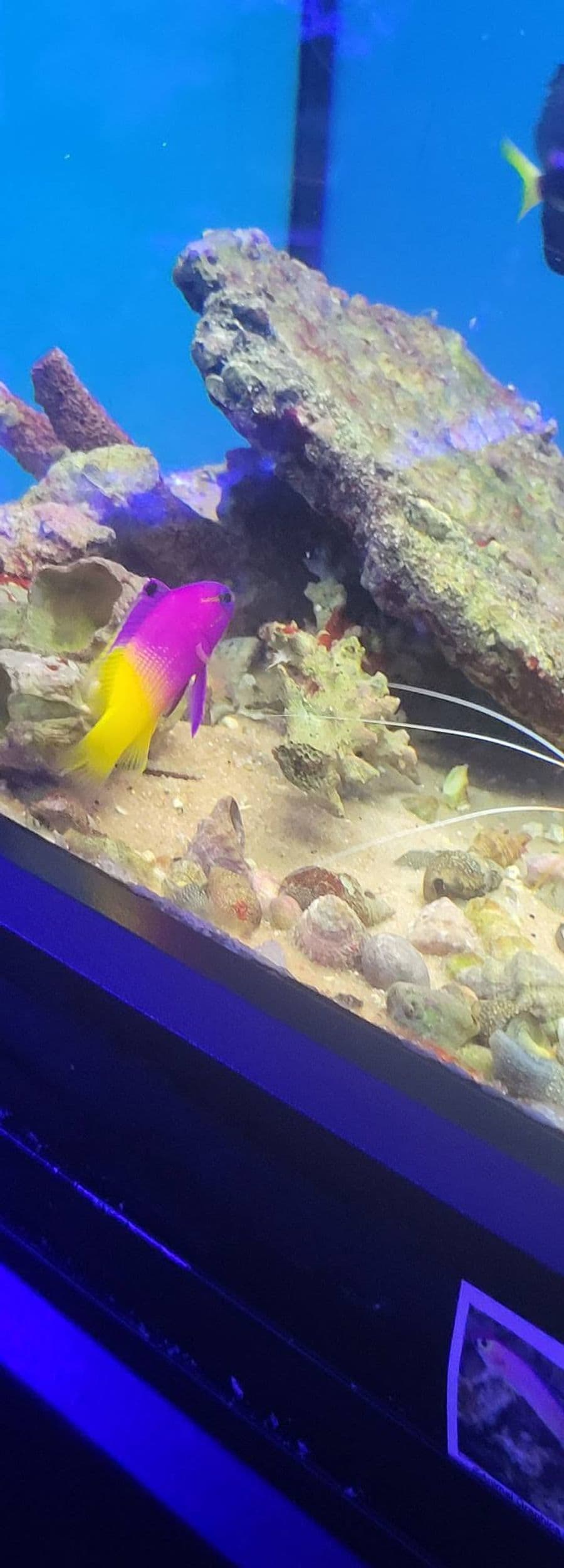
Royal Gramma
Confirmed reef-safe with larger invertebrates; research shows it consumes only micro-invertebrates (copepods, amphipods) and leaves shrimp at the size of Stenopus entirely alone. A 3 in. Gramma cannot overpower a healthy adult Stenopus, and the shrimp's claws deter casual harassment. Multiple authoritative sources list this as a clean compatible pairing.
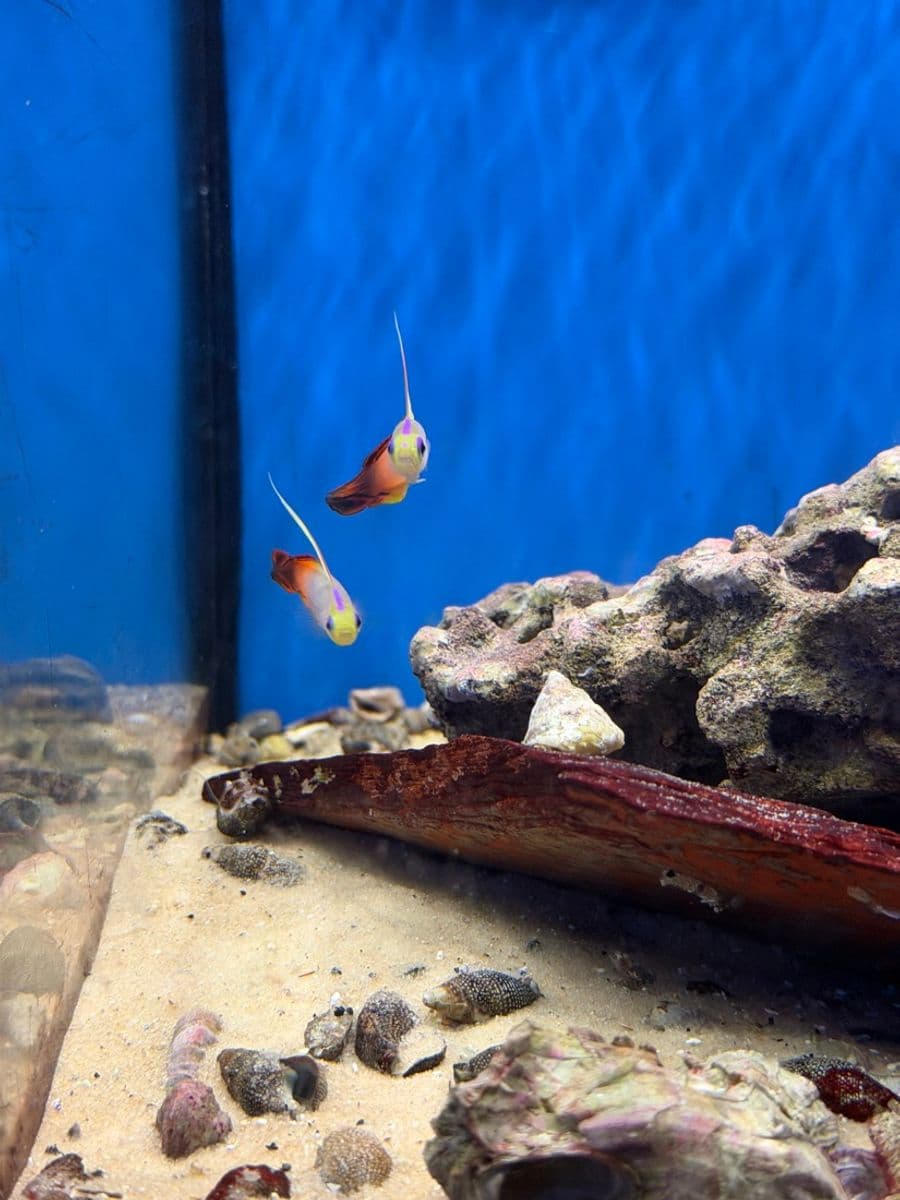
Firefish Goby
Timid dartfish that does not bother corals or invertebrates. At 3 in. and with extremely fast dart-to-burrow reflexes, it is not realistically prey for Stenopus hispidus (which tends to threaten fish under ~1 in. or moribund individuals). The Firefish hugs the water column just above the substrate rather than wedging into the tight crevices the shrimp defends.
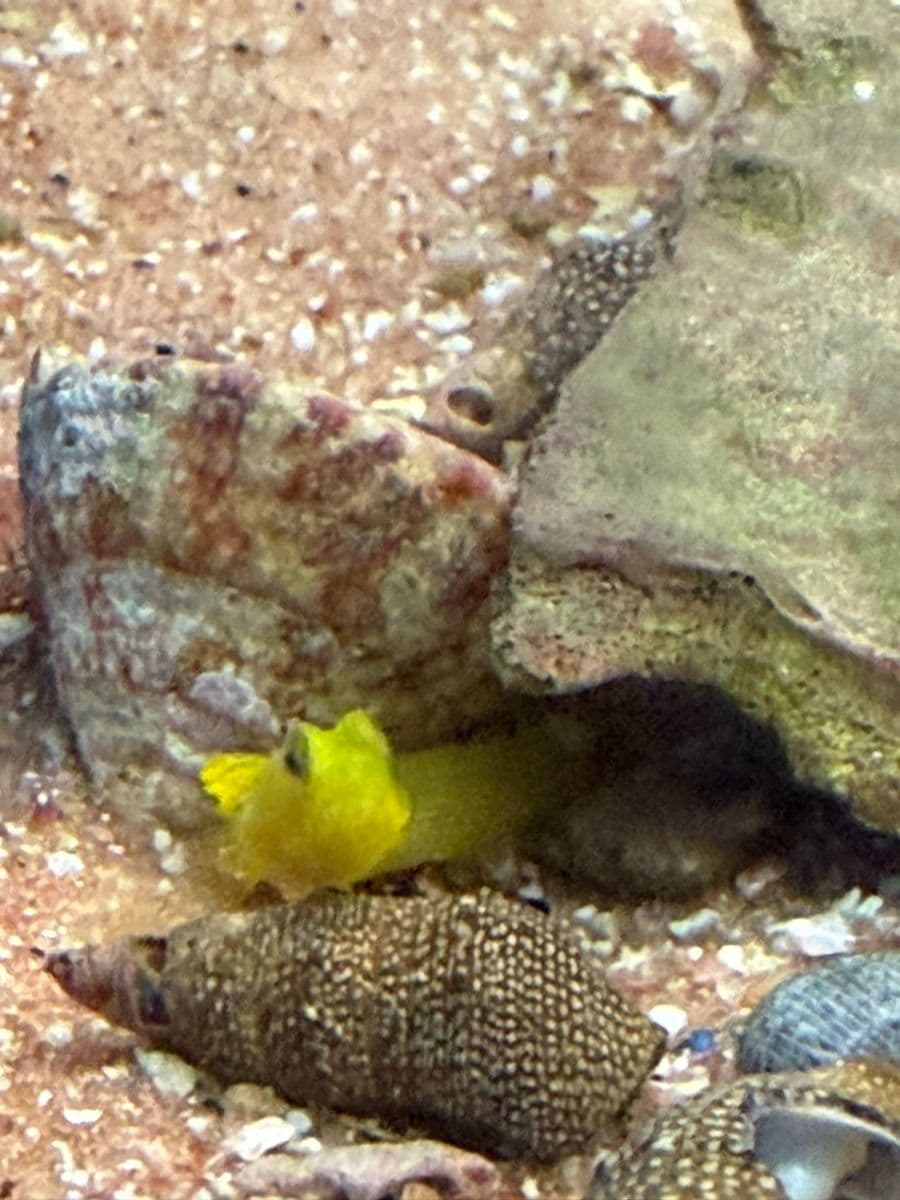
Yellow Watchman Goby
Peaceful bottom dweller confirmed reef-safe with cleaner shrimp and other invertebrates; Reef2Reef and published reef care guides both note cleaner shrimp are safe in the same tank. The Watchman Goby excavates sand-bed burrows while Stenopus occupies hard rockwork, so territorial overlap is minimal. At 3-4 in. the goby is not viable prey for the shrimp, and the shrimp's substantial claws dissuade the goby from investigating it.
- T
Tailspot Blenny
Explicitly confirmed invertebrate-safe and reef-safe; multiple sources (Saltwater Aquarium Blog, Aquariadise, SeaFishPool) state it will not bother corals or invertebrates. Its diet is algae and biofilm scraped from rock surfaces, presenting no predation risk toward Stenopus. At 2.4 in. it is the smallest fish on this list and does rest in crevices, but blennies are quick and Stenopus's primary prey risk is sub-1 in. or slow/sick animals — a healthy blenny is not in that category.
Visit the store
660 East 14th Street,
Erie, PA.
Mon–Fri 12–6 · Sat 11–4 · Sun closed. Call ahead on livestock — what's on the floor rotates.