What this covers
Coral & reef chemistry
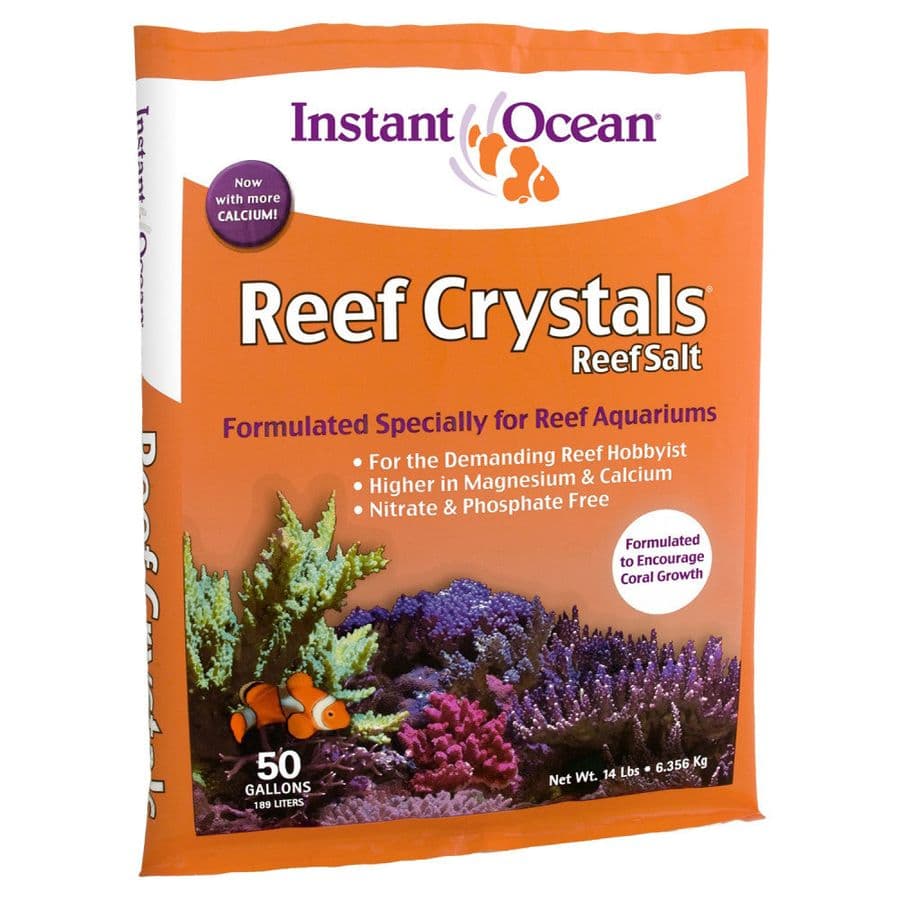
Corals build their skeleton out of calcium, alkalinity, magnesium and trace elements.
37 in the shop
Lighting
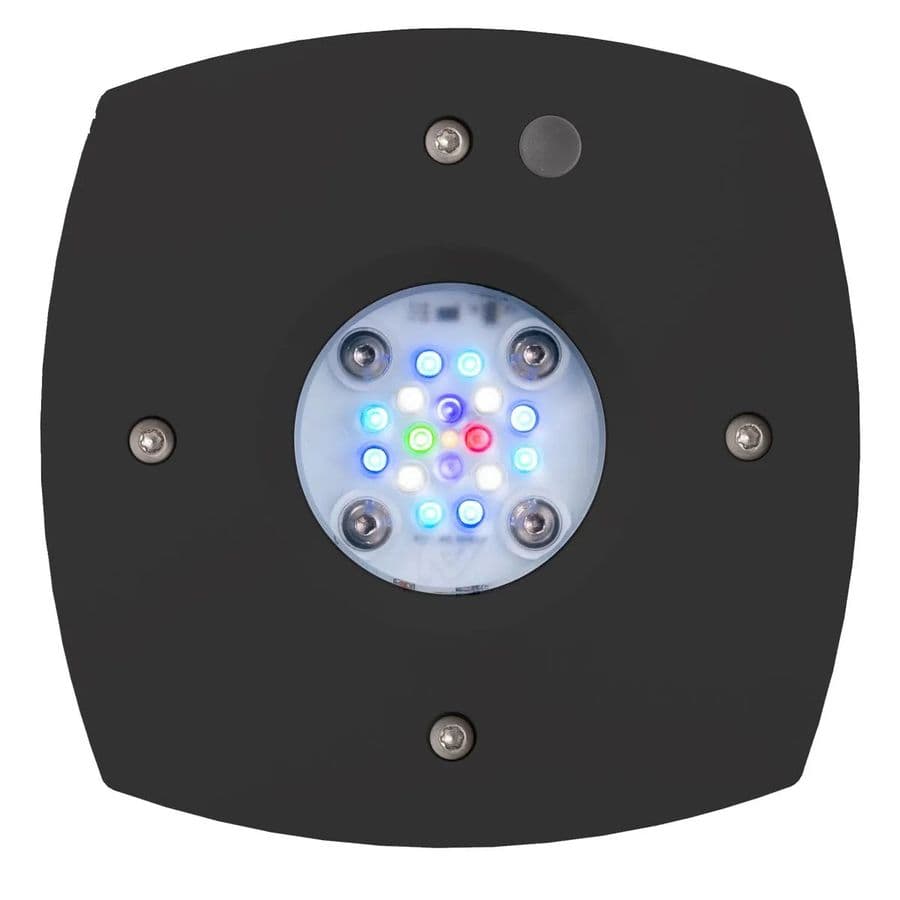
How much light, what color, and for how long. Drives plants, corals and algae alike.
34 in the shop
Acclimation & quarantine
Getting new arrivals home safely, and not importing disease with them.
Almost everyone who gets into reef tanks hears the same thing: corals are hard, they need perfect water, and one slip kills the whole tank. Then they look up a "coral guide" and the first thing it shows them is a $400 light, a controller, a dosing pump, and a photo of an acropora colony that costs more than the tank. So they decide reefing isn't for them.
That picture is backwards. Acropora is the last rung of the ladder, and nobody has to start there. There is a whole category of coral that grows under cheap light, tolerates swings in your water, and looks great while you learn. Most people who keep reefs forever started with a $15 frag of mushrooms rather than an SPS colony.
This guide walks the ladder honestly: soft corals first, then LPS (large-polyp stony), then SPS (small-polyp stony). Every step is really about getting better at three things: light, flow and stable water chemistry. We'll tell you what each group actually needs, where corals fight each other, and how to keep pests out of your tank in the first place.
This assumes you already have a saltwater tank running. If you don't, start with our FOWLR (fish-only-with-live-rock) starter guide and our guide on cycling a new aquarium, get the tank stable for a couple of months, then come back here.
The three levers: light, flow, stable chemistry
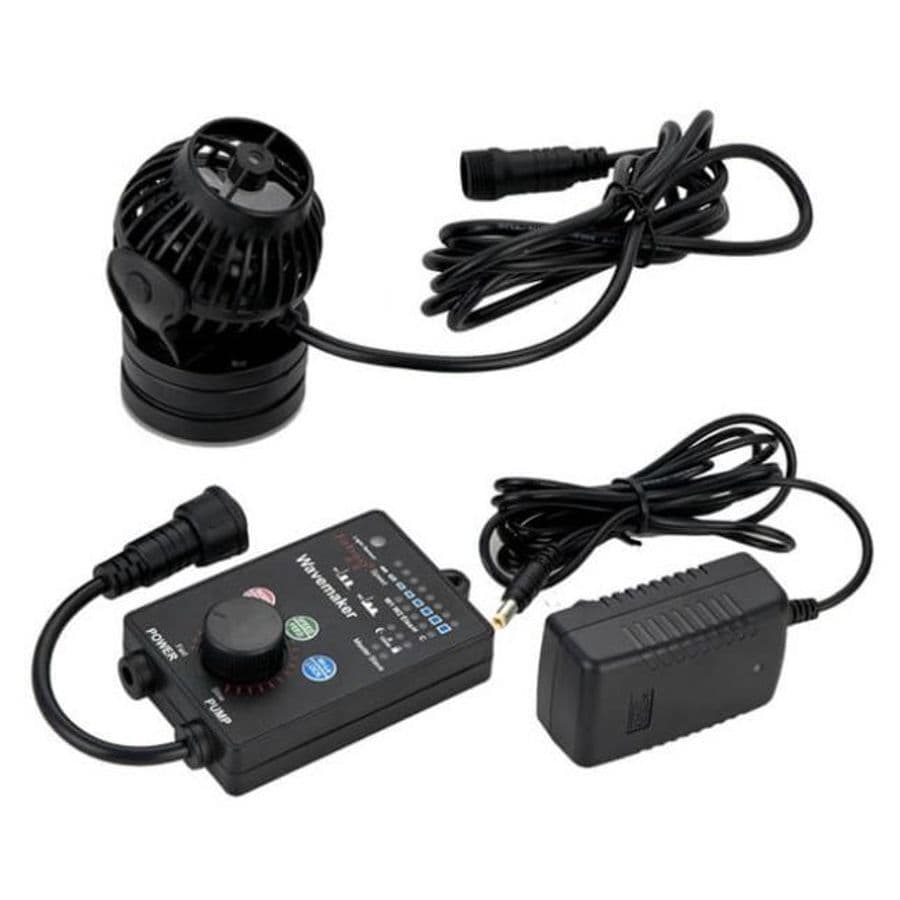
Every coral you'll ever keep comes down to three things, and almost every coral death traces back to one of them. Light feeds the coral, because the algae living in their tissue (called zooxanthellae) photosynthesize and feed the host. Flow brings them food and oxygen and carries away waste so they don't sit in their own gunk. And stable water chemistry keeps them building skeleton instead of stressing.
The word that matters most is stable. Corals would rather have steady, slightly imperfect water than water that's perfect on Tuesday and swinging on Thursday. A salinity of 1.025 that never moves beats a 1.026 that drifts to 1.023 every week. This is the single biggest mindset shift from fish-only keeping.
As you climb the ladder, the demands on all three levers go up and your room for error goes down. Soft corals forgive a lot. SPS forgive almost nothing. Where you are on that ladder should match how dialed-in your tank and your habits are. How cool a coral looks at the store is a bad reason to skip rungs.
Step one: soft corals (start here, no exceptions)
Soft corals don't build a hard skeleton, and most of them are hard to kill. This is where everyone should start. The classic beginner group is mushroom corals (discosoma and rhodactis), zoanthids and palythoas ('zoas' and 'palys'), green star polyps (GSP), and leather corals (toadstool, kenya tree). They tolerate lower light, gentler flow, and water that isn't dialed in to the decimal.
Put them low-to-mid in the tank to start, in moderate, indirect flow. They don't need you to dose anything special and they don't need target feeding to survive, though many will respond to it. If a coral can teach you to read your tank without punishing you, it's one of these.
Two honest warnings. GSP and some leathers spread aggressively and take over rock, so give them their own island. And palytoxin in zoas and palys is a real thing: don't handle them with open cuts, never boil rock with them on it, and wear gloves and eye protection if you're fragging. That's worth knowing about, and it's no reason to be scared off.
Step two: LPS (large polyp stony) — and start feeding
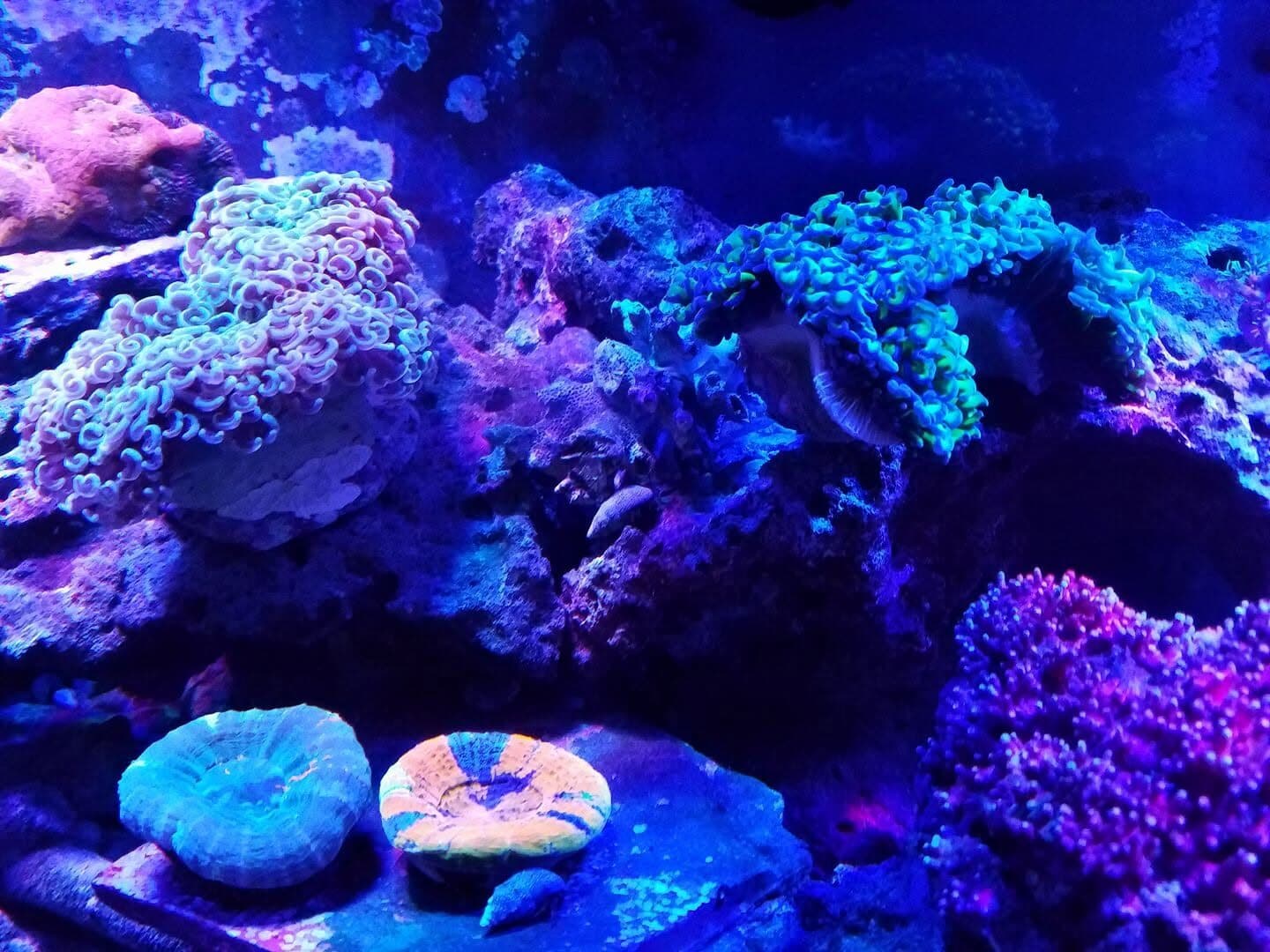
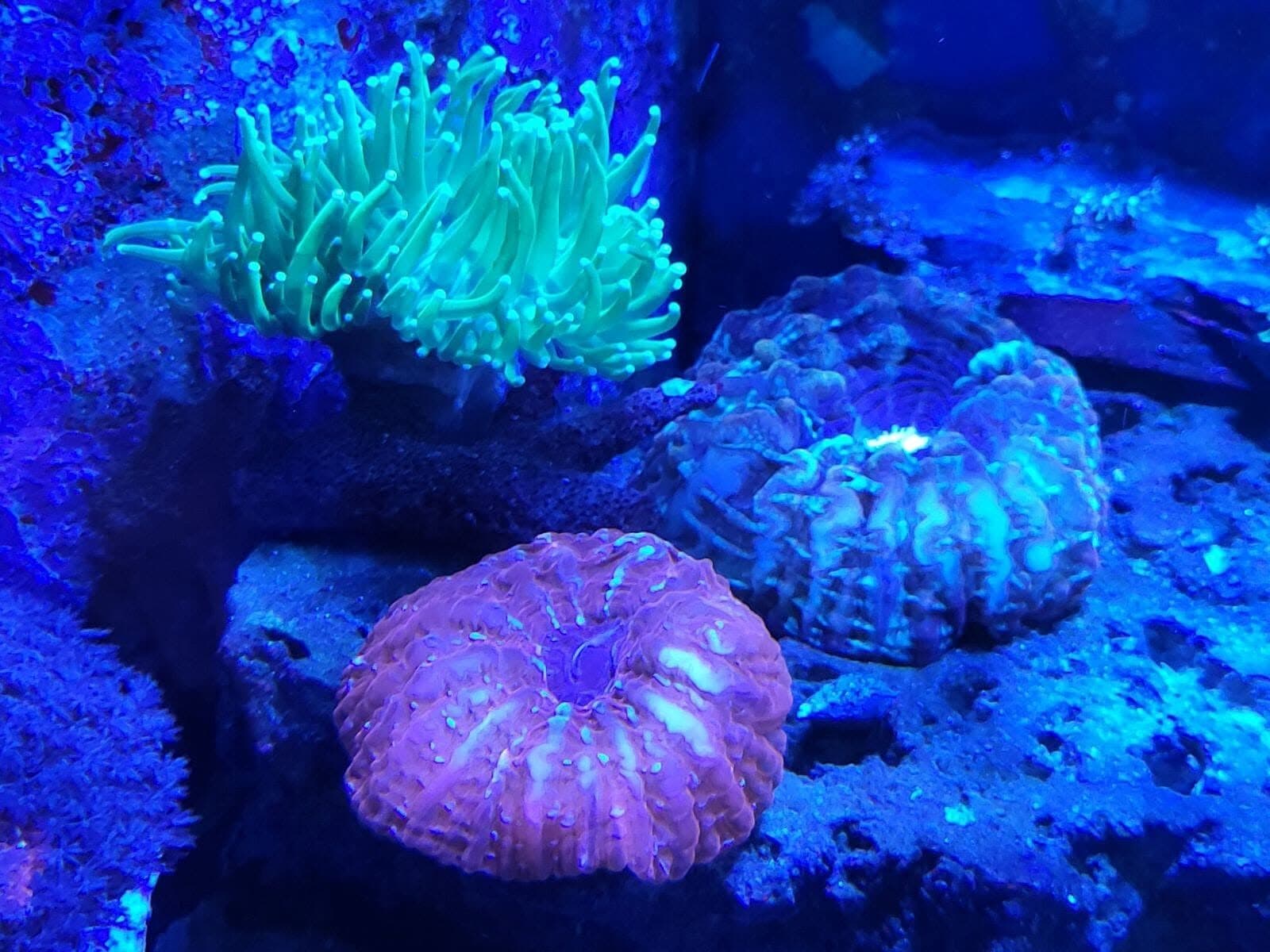
Once soft corals are thriving and your parameters have held steady for a couple of months, step up to LPS. These build a calcium-carbonate skeleton with big fleshy polyps: hammers, frogspawn and torches (the euphyllia family), candy cane (caulastrea), duncans, acans and favia or brain corals. They want moderate light and moderate, gentle flow. Blast a torch with a powerhead and it'll never open.
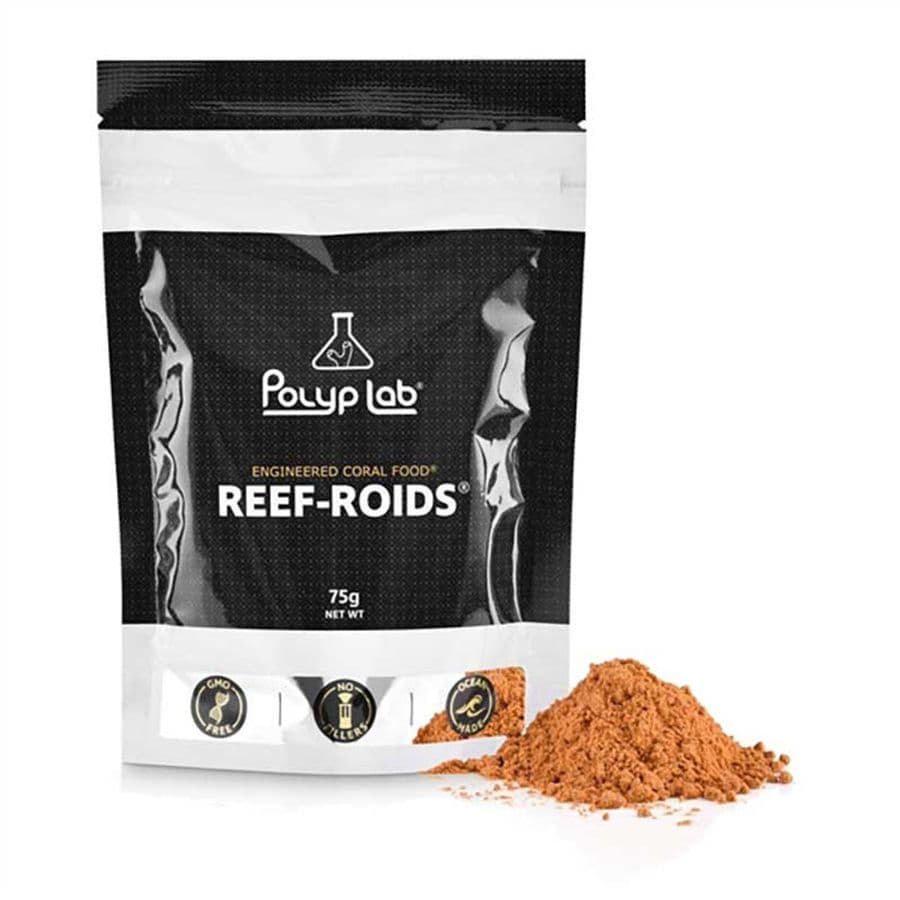
This is the level where feeding starts to matter. LPS have real feeding tentacles and respond well to small meaty foods (mysis, finely chopped seafood, or a prepared coral food) target-fed a couple of times a week. They'll live off light alone, but they grow and color up faster when fed.
Because LPS build skeleton, they start pulling calcium, alkalinity and magnesium out of your water. In a lightly stocked tank, weekly water changes often keep up. As you add more, you'll need to test and possibly dose those three. This is the moment to read our reef chemistry section below and get in the habit of testing.
Step three: SPS (small polyp stony) — the top of the ladder
SPS are the corals people picture when they imagine a reef: acropora, montipora, birdsnest, stylophora. They're also the ones that demand the most. With one fair exception: encrusting and plating montipora (montipora capricornis especially) are a lot more forgiving of light and nutrient swings than acropora, and many reefers treat them as the SPS entry point. Acropora is the coral to hold off on until your tank has been rock-stable for many months and you're comfortable testing and dosing. There's no shame in never going there. Plenty of beautiful, mature reefs are all soft coral and LPS.
SPS want three things at high intensity: high PAR (strong light, placed up high in the tank), high turbulent flow (they need water ripping past them to stay clean and fed), and pristine, rock-steady chemistry. Nutrients should be low but not zero, and your alkalinity, calcium and magnesium need to stay in a tight band day to day. With acropora especially, even a 1 to 2 dKH (degrees of carbonate hardness) swing in a single day can stress them and dull their color, and a fast crash of several points is often what browns out or kills a colony outright. The goal is to hold alkalinity within roughly half a point to a point over the course of a day. A steady number matters more than a perfect one.
At this level a calcium reactor or a doser usually replaces water changes as your way of keeping the big three steady, and you're testing alkalinity often, sometimes daily. If you're reaching for SPS, see our saltwater sump guide for the 125-gallon reef, because the equipment room is where these tanks are actually won.
Acclimate to light slowly (the mistake everyone makes)
Here's the one that kills more new corals than pests: people buy a coral grown under one light, bring it home, and drop it right under their own lights at full blast. The coral bleaches or browns out within days, and they think they did something wrong with their water.
Corals adapt their tissue to a given light intensity, and they don't switch fast. When you add a new coral, start it lower in the tank and run your lights at reduced intensity, then raise the coral or the light gradually over two to three weeks. If you have a programmable light, dialing the intensity up slowly is the cleaner way to do it.
Let the coral tell you when to stop; a schedule can't. Pale or bleaching tissue means too much light too fast. Polyps staying closed or stretching way out reaching for light can mean too little. Move things an inch at a time and give it a few days to respond before you judge.
Coral aggression: who can sit next to who
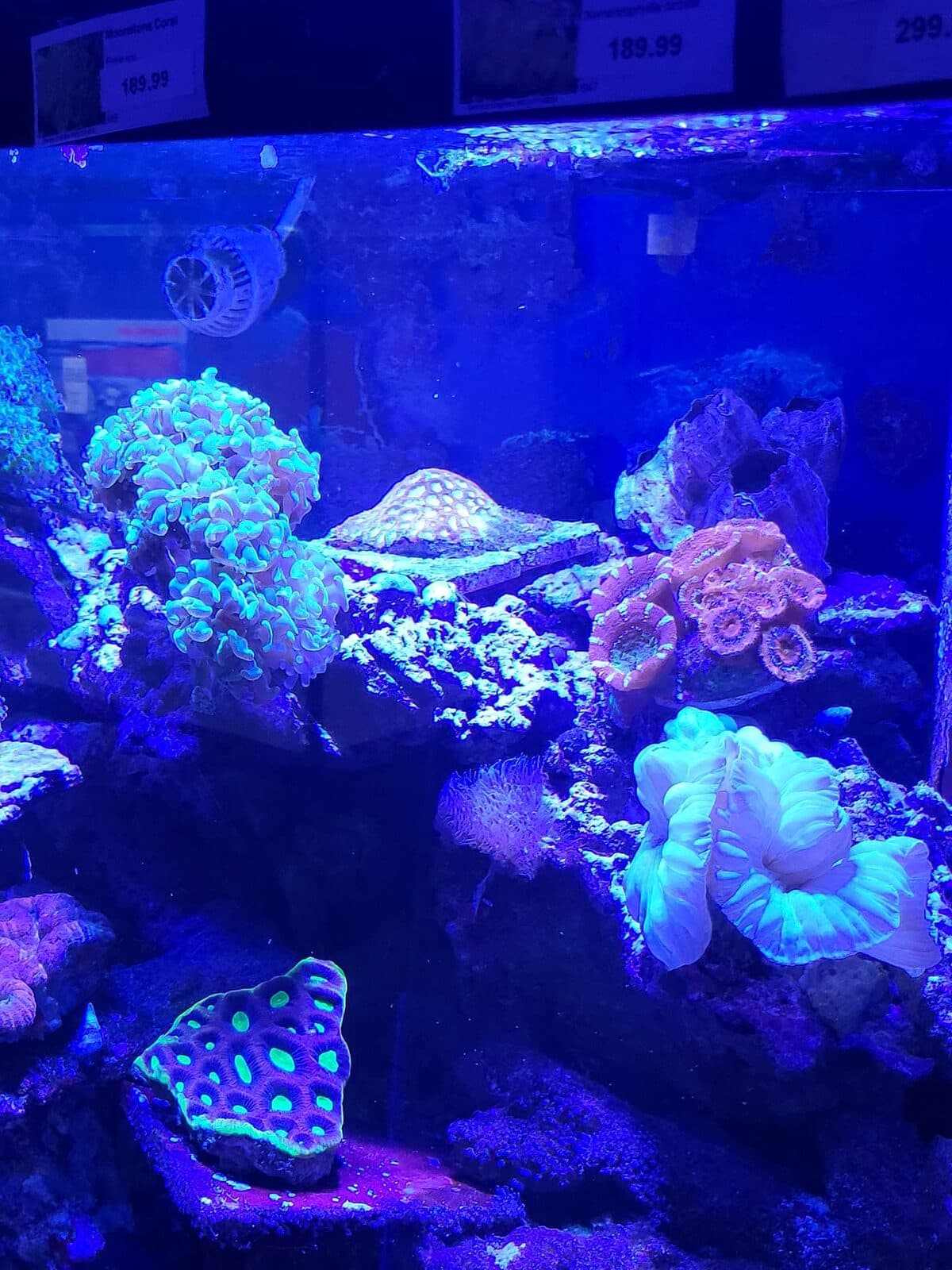
Corals are animals, and a lot of them fight for space. The most common surprise for new reefers is the sweeper tentacle: long stinging tentacles that some corals (euphyllia like hammers and torches especially) extend at night to sting whatever's downstream of them. You'll place two corals six inches apart, and a week later one is melting on the side facing the other.
The rule of thumb is to give corals room and watch the flow direction, since flow carries those tentacles and the chemicals some softies put out. Torches and frogspawn are some of the worst offenders. Many leathers wage chemical warfare instead, releasing compounds that stunt their neighbors, which is one more reason good flow and carbon help.
When in doubt, leave more space than looks necessary and rearrange while colonies are small. It's a lot easier to move a frag than to save a colony that's been getting stung for a week.
Quarantine and dip every coral before it touches your tank
Coral pests ride in on the coral or even the frag plug: acropora-specific red bugs, montipora-eating nudibranchs, acro-eating flatworms, zoa-eating nudibranchs and sundial snails, plus aiptasia or bubble algae hitchhiking on the rock. Some problems are bacterial rather than a critter, like the white raised bumps people call zoa pox. One unquarantined frag can introduce a problem that takes months to beat. The cheap insurance is a coral dip.
Dip every new coral in a commercial coral dip before it goes in the tank: swish it per the product's directions, inspect the plug, and pick off or cut away anything you don't like. Better yet, run new corals through a separate observation or quarantine tank for a few weeks so anything you missed shows itself before it reaches your display. Our guide on quarantining new and sick fish covers the QT (quarantine tank) setup, and the same thinking applies to corals.
Follow the dip product's label for dose and time exactly. Too strong or too long stresses the coral, too weak does nothing. If you're not sure which dip to grab or how hard to dip a delicate coral, ask us at the counter and we'll point you at something that matches what you're adding.
Local help: bring your numbers in
Reef chemistry is the part people get anxious about, and it's the part we can take off your plate. Every item on this list is something you can pick up from us here in Erie, and if your numbers feel off, bring them in and we'll read them with you. When you're stepping up from soft corals to LPS or SPS, bring your alkalinity, calcium and magnesium numbers and we'll help you figure out what, if anything, to dose.
We also can't promise we have every specific coral or pest med in stock on a given day. Livestock and specialty meds move fast, and we'd rather tell you straight than have you drive over for nothing. Call ahead at (814) 456-9445 and we'll tell you what's actually in the building.
Common questions
- What is the easiest coral for beginners?
Soft corals are the easiest place to start. Mushrooms, zoanthids, green star polyps, and leather corals tolerate lower light, gentler flow, and water that isn't dialed in perfectly, so they forgive the mistakes every new reefer makes. Get a few of those thriving before you move up to LPS or SPS.
- What's the difference between soft, LPS, and SPS corals?
It's a difficulty and demand ladder. Soft corals have no hard skeleton and are very forgiving. LPS (large polyp stony, like hammers and torches) build skeleton, want moderate light and flow, and like to be fed. SPS (small polyp stony, like acropora) build dense skeleton and demand high light, high flow, and pristine, rock-steady chemistry. Climb it in that order, though forgiving montipora is a fair first SPS.
- Do I need to feed my corals?
Soft corals don't need target feeding to survive, though many respond to it. LPS like hammers, torches, and acans grow and color up noticeably faster when target-fed small meaty foods a couple of times a week. All corals also get energy from light through the algae in their tissue, so feeding is a boost on top of that, not their only food source.
- Why is my new coral not opening up?
The usual suspects are too much light too fast, too much direct flow, or stress from being moved. Start new corals lower in the tank under reduced light and gentle flow, then acclimate them up over two to three weeks. If it's an LPS like a torch, a powerhead blasting it directly will keep it shut. Give it several days to respond before changing anything else.
- How do I keep corals from stinging each other?
Give them space and pay attention to flow direction. Some corals, especially euphyllia like hammers and torches, extend long sweeper tentacles at night to sting neighbors downstream, and some leathers release chemicals that stunt nearby corals. Leave more room than looks necessary, rearrange while colonies are small, and run carbon to help with the chemical warfare.
- Do I have to quarantine or dip corals?
Yes, dip every coral before it enters your tank. Coral pests like flatworms, nudibranchs, sundial snails, and red bugs, plus aiptasia and bubble algae, hitchhike in on corals and frag plugs, and one bad frag can cause months of trouble. Use a commercial coral dip per its label, inspect the plug, and ideally run new corals through a separate observation tank for a few weeks.
- What lighting do I need to grow corals?
It depends where you are on the ladder. Soft corals and many LPS do well under modest reef LED or T5 lighting. SPS like acropora need high-PAR (strong) light with corals placed up high in the tank, and a single small fixture covers only a small footprint at that intensity, so wider tanks need more than one. Bring your tank size in and we'll help match a light to what you actually want to keep.
- What water parameters do corals need?
Stable salinity around 1.025, temperature in the upper 70s, and steady alkalinity, calcium, and magnesium. Soft corals tolerate some drift; SPS need those numbers held in a tight band day to day, with acropora wanting alkalinity to move no more than a point or so over a day. The watchword is stability, not chasing a perfect single reading. If your numbers feel off, call us in Erie and we'll talk them through with you.