
Saltwater Fish
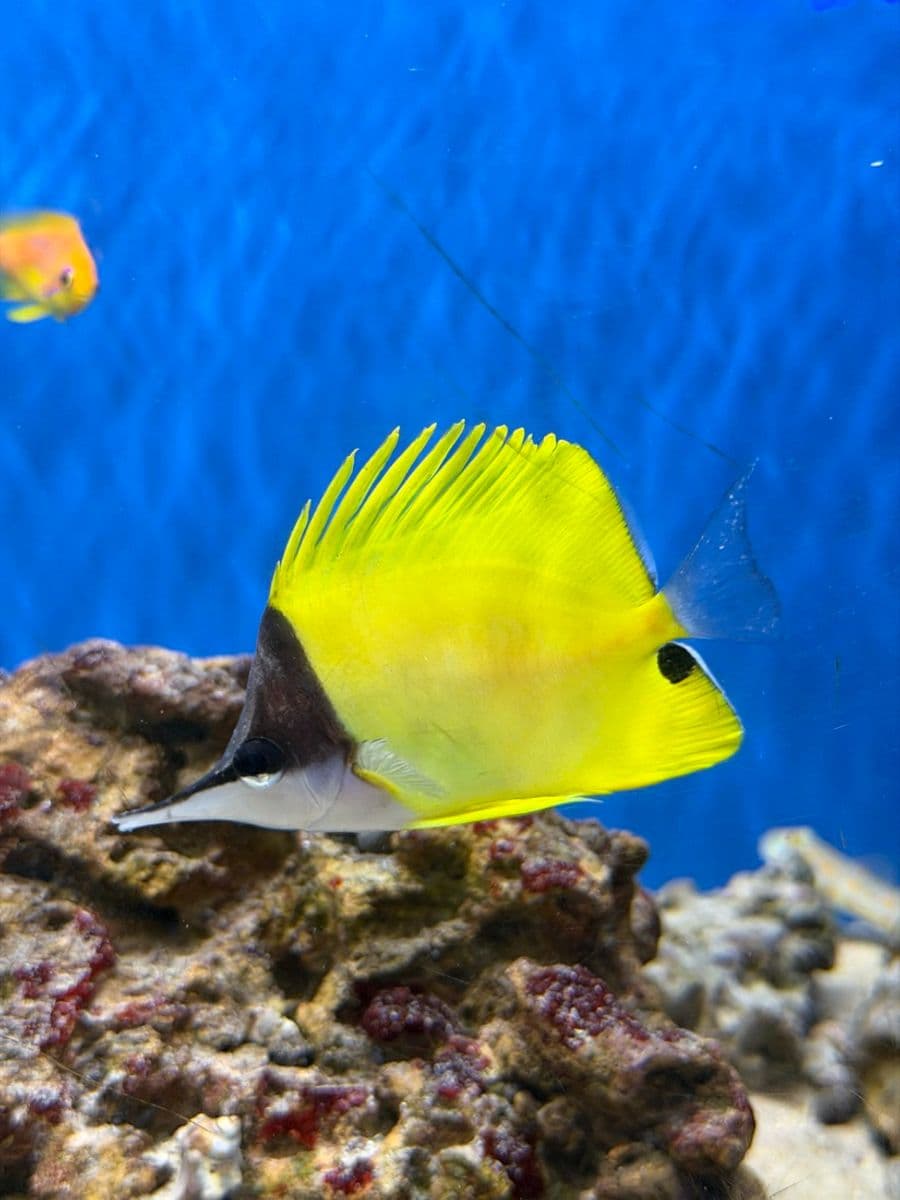
Yellow Long-nosed Butterflyfish.
A bright yellow butterflyfish with a long, slender snout for picking food out of the rockwork. One of the hardier, more peaceful butterflies, and reef-safe with caution; give it a mature 75-gallon-plus tank with live rock to forage over.
In-store purchase only. Live fish, coral, and invertebrates are sold at our Erie store only. They cannot be bought online, and we do not ship live animals under any circumstances.
Live fish are priced per supplier batch — prices may vary. Call to confirm current pricing.
- Condition
- new
- Fulfillment
- Local pickup — Erie, PA
Live animals are sold in store only — we do not ship fish, coral, or invertebrates. Every animal is acclimated and health-checked in-house before it reaches the sales floor. This is a species we carry — it's most likely in the tanks around delivery days, but live stock changes daily. Please call (814) 456-9445 to confirm availability before you drive in.
Care at a glance
What to know before you take one home.
- Care level
- Intermediate
- Temperament
- Peaceful
- Community
- Community safe
- Adult size
- 8"
- Min tank size
- 75 gallons
- Diet
- Carnivore
- Scientific name
- Forcipiger flavissimus
Good tank mates
Generally peaceful and one of the calmer butterflyfish, it suits a fish-focused community with tangs, wrasses, larger clownfish, and other mellow saltwater fish, and it usually ignores most corals. It is only reef-safe with caution: it will pick at ornamental shrimp, feather dusters, tubeworms, and some soft coral and clam mantles, so keep it out of tanks centered on those inverts. Avoid very aggressive or bullying tankmates that may outcompete this slow, deliberate feeder.
Good to know
Its long, tweezer-like snout is built to reach into rock crevices and coral branches for tiny invertebrates other fish can't get to.
Stock and individual temperament vary — call (814) 456-9445 for pairing advice before you buy.
Good tankmates
Plays well with.
Species we’d keep in the same tank, with why each pairing works. Stock and individual temperament vary — call (814) 456-9445 to confirm before you buy.
New to stocking a tank? Read our guide on which fish live together.
Ultra Black Ice
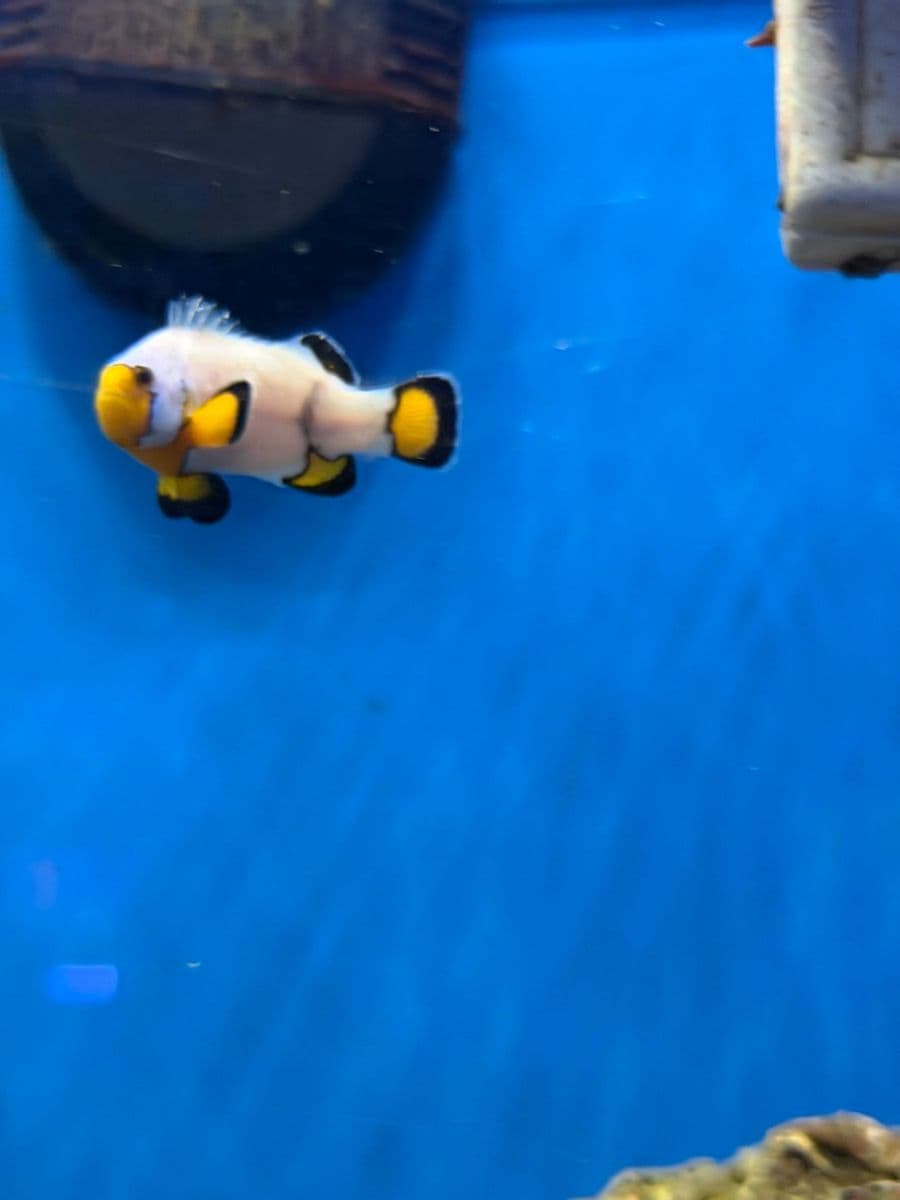
A genuinely peaceful, small (max 3 in.) species with no history of nipping or aggression toward butterflyfish. It occupies a completely different niche — hovering near an anemone or a fixed territory — while the butterflyfish roams the rockwork. No size mismatch; no feeding competition. One of the most reliable community choices for a 75–125 gallon marine system.
Royal Gramma
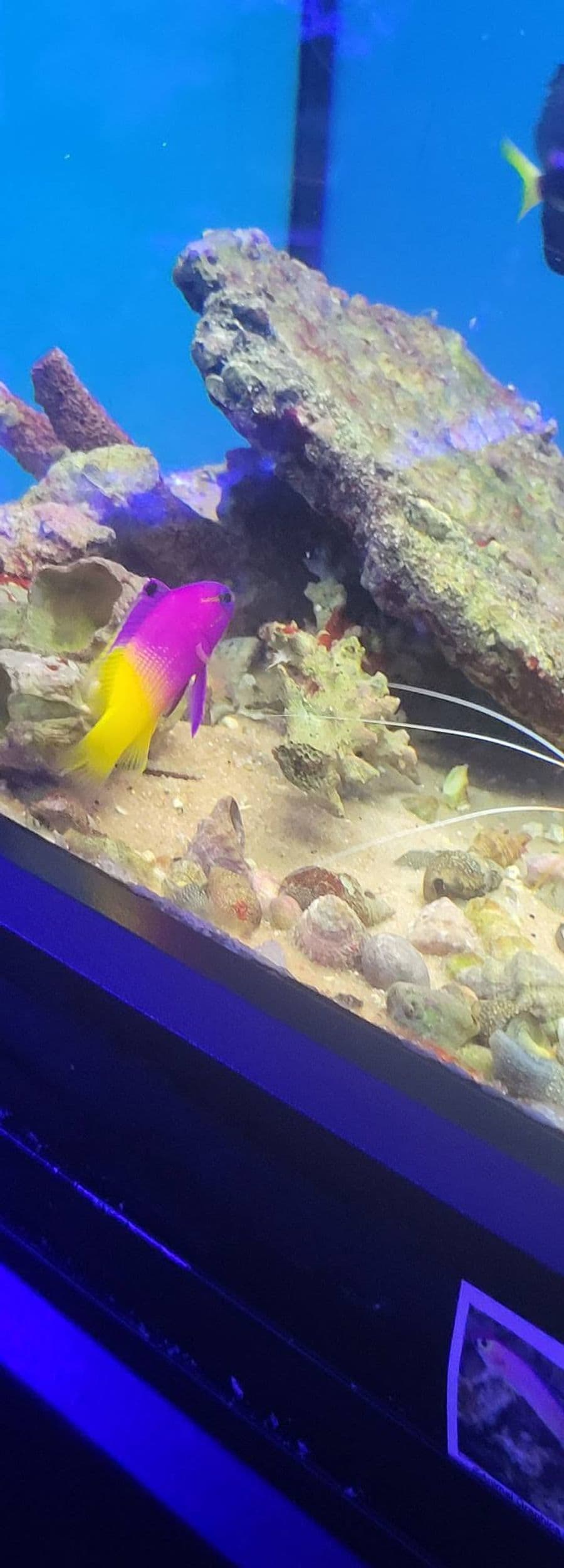
A fully reef-safe, peaceful cave-dweller that stays under 3 inches and occupies rockwork crevices — a niche the roving butterflyfish ignores. No territorial aggression toward larger, visually dissimilar fish. The size difference (3 in. vs. 6 in.) is not a predation risk because the butterflyfish's elongated snout is adapted for picking invertebrates from crevices, not capturing fish.
Firefish Goby
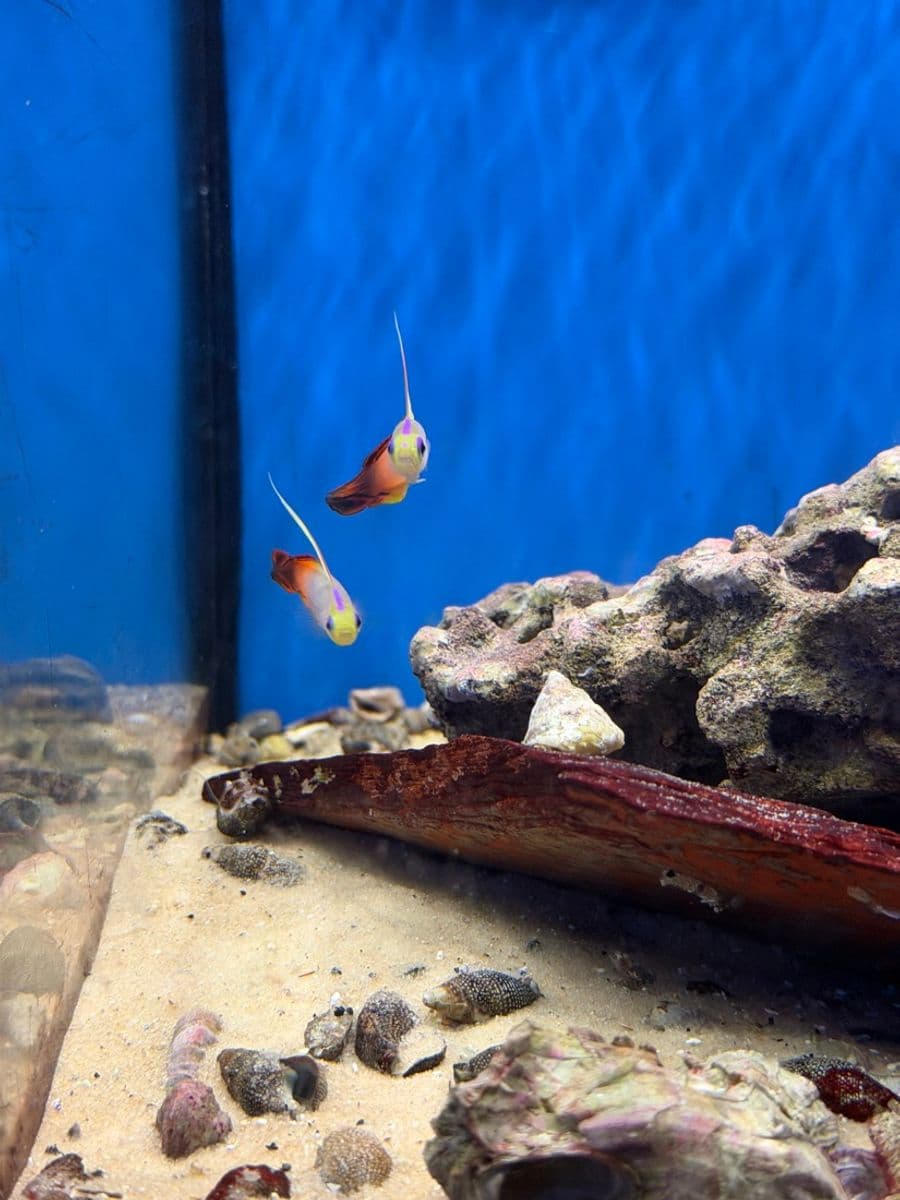
A gentle mid-water hoverer (~3 in.) confirmed compatible with multiple butterflyfish species in published compatibility charts. The Yellow Longnose Butterflyfish feeds by probing rock crevices for small crustaceans — its specialized snout makes it incapable of hunting free-swimming fish the size of a Firefish Goby. In a 125-gallon system with ample rockwork, the Firefish has sufficient refuge to manage its skittish nature without being harassed by the calm butterflyfish.
- B
Blue Tang
Generally peaceful toward non-surgeonfish tankmates; its open-water algae grazing does not conflict with the butterflyfish's long-snout invertebrate foraging. No fin-nipping tendency toward chaetodontids documented. Both species share a 100–125 gallon minimum, so tank-size requirements align. Introduce the tang after the butterflyfish to reduce any territorial posturing.
- F
Foxface Rabbitfish
Peaceful toward all dissimilar species; its venomous dorsal spines deter harassment without the rabbitfish posing any threat to the butterflyfish. Both species share a 125-gallon minimum tank requirement. No documented aggression between rabbitfish and chaetodontids, and their feeding niches (macroalgae vs. benthic invertebrate picking) do not overlap.
- F
Flame Angelfish
Despite being correctly classified as semi-aggressive (not 'mild-tempered' as sometimes described), the Flame Angelfish directs that aggression almost exclusively at other dwarf Centropyge angelfish. Toward dissimilar species — including butterflyfish — it is generally tolerant, and industry sources explicitly list butterflyfish among compatible tankmates. Minimum tank size (55–75 gal) is well within a 125-gallon system. Introduce the butterflyfish first to avoid the angel claiming the whole tank.
Visit the store
660 East 14th Street,
Erie, PA.
Mon–Fri 12–6 · Sat 11–4 · Sun closed. Call ahead on livestock — what's on the floor rotates.