
Saltwater Fish
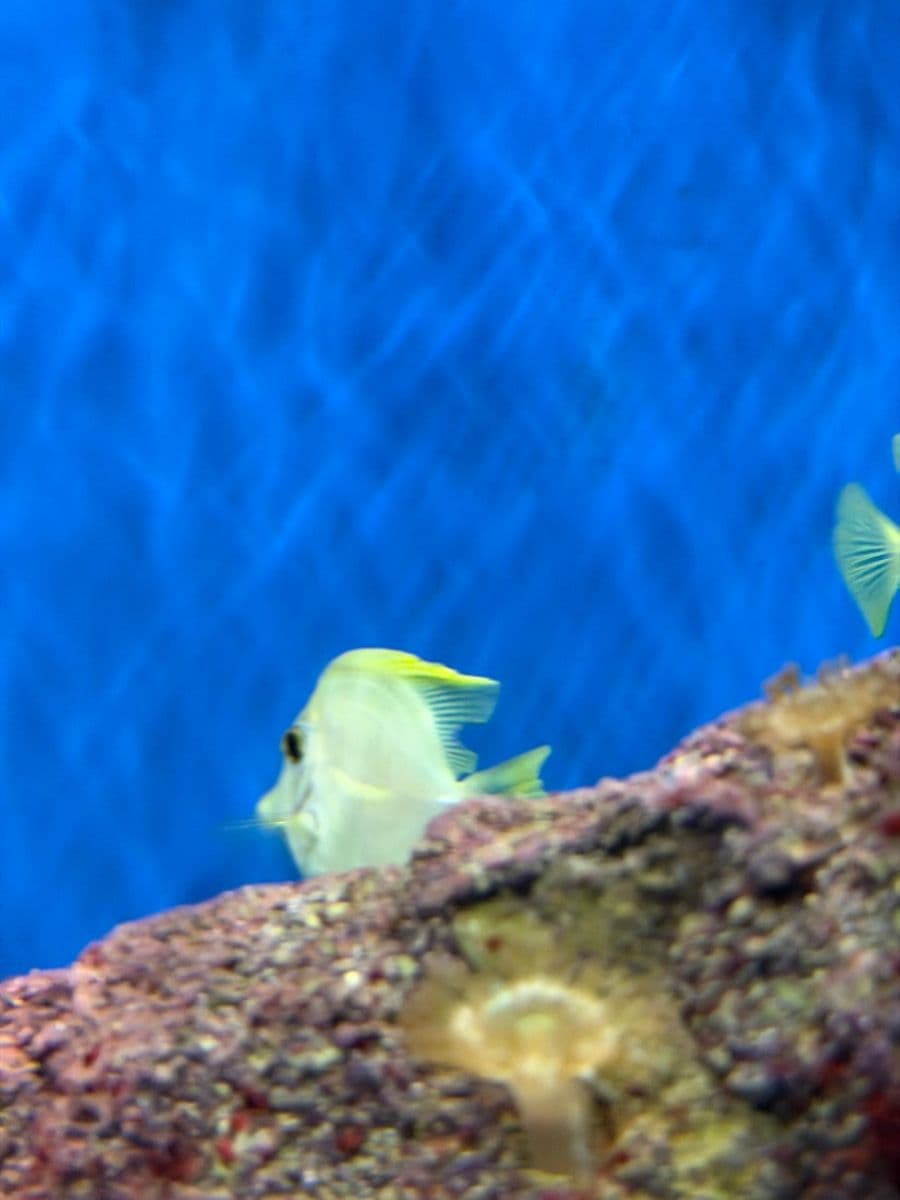
Yellow Tang.
The iconic reef fish — a slice of pure highlighter-yellow gliding over the rockwork. Reef-safe and a tireless algae grazer; it needs open swimming room, so give it a 100-gallon-plus reef with plenty of rock to graze. A bright, active centerpiece.
In-store purchase only. Live fish, coral, and invertebrates are sold at our Erie store only. They cannot be bought online, and we do not ship live animals under any circumstances.
Live fish are priced per supplier batch — prices may vary. Call to confirm current pricing.
- Condition
- new
- Fulfillment
- Local pickup — Erie, PA
Live animals are sold in store only — we do not ship fish, coral, or invertebrates. Every animal is acclimated and health-checked in-house before it reaches the sales floor. This is a species we carry — it's most likely in the tanks around delivery days, but live stock changes daily. Please call (814) 456-9445 to confirm availability before you drive in.
Care at a glance
What to know before you take one home.
- Care level
- Intermediate
- Temperament
- Semi aggressive
- Community
- Semi community
- Adult size
- 8"
- Min tank size
- 55–100 gal by age
- Diet
- Herbivore
- Scientific name
- Zebrasoma flavescens
Grows into its tank
Juvenile (sold at ~2")55 galAdult (up to 8")100 galGood tank mates
Gets along with most non-tang reef fish like clownfish, wrasses, angelfish, and gobies, but is territorial toward other tangs and especially toward other yellow or Zebrasoma tangs that share its body shape. If you want more than one tang, add them at the same time in a large tank with lots of rockwork to break up sightlines, otherwise keep it as the only tang. It needs swimming room, so it suits bigger reef systems rather than nano tanks.
Good to know
Yellow tangs carry a sharp, scalpel-like spine on each side of the tail base, the trait that gives surgeonfish their name, and they can flash these blades sideways to fend off rivals.
Stock and individual temperament vary — call (814) 456-9445 for pairing advice before you buy.
Good tankmates
Plays well with.
Species we’d keep in the same tank, with why each pairing works. Stock and individual temperament vary — call (814) 456-9445 to confirm before you buy.
New to stocking a tank? Read our guide on which fish live together.
Ultra Black Ice
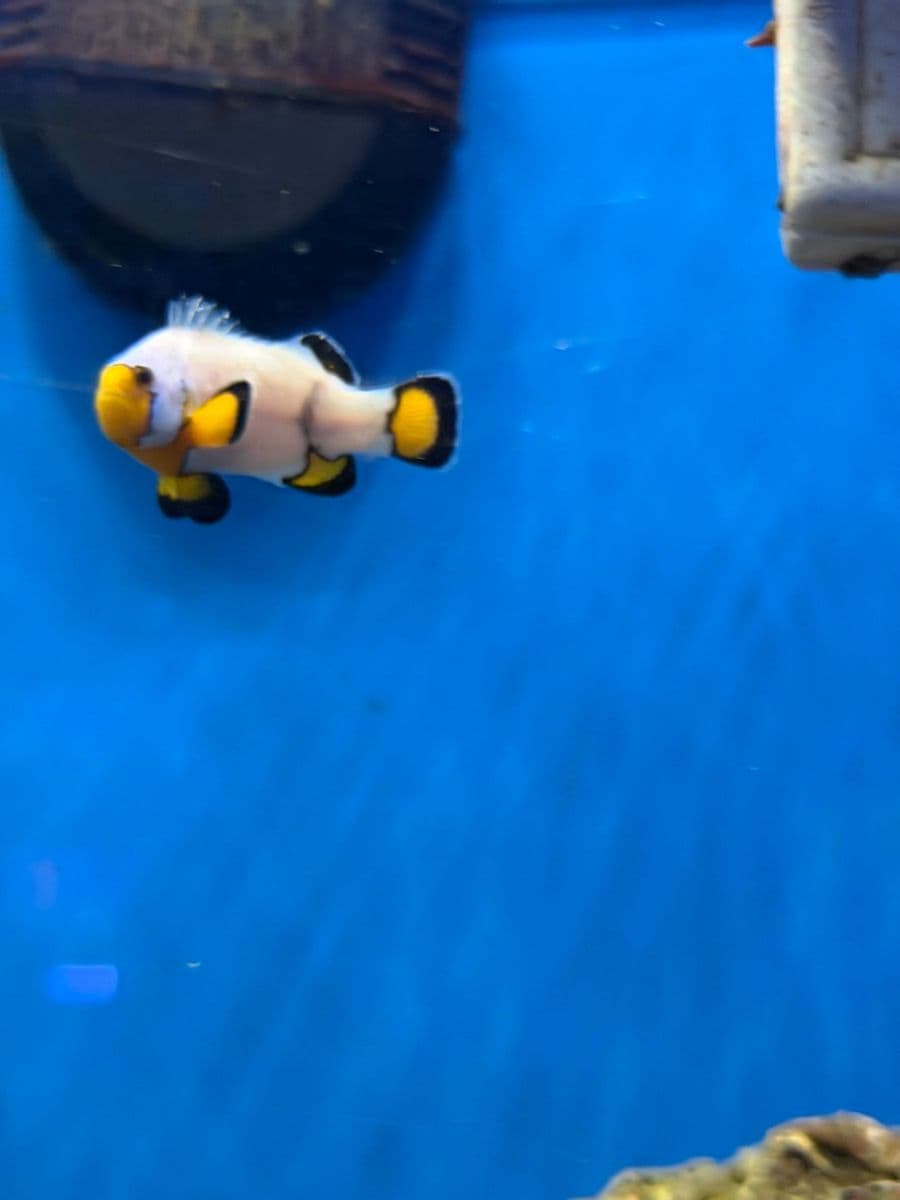
A peaceful, small reef fish that occupies a fixed territory near a host anemone or proxy structure in the lower-to-mid column, with no niche overlap with the Yellow Tang's open-water algae-grazing lanes. The two species are visually and behaviorally distinct enough that the tang's territorial triggers are never activated. Well-documented compatible pairing in tanks 55 gallons and up.
Royal Gramma
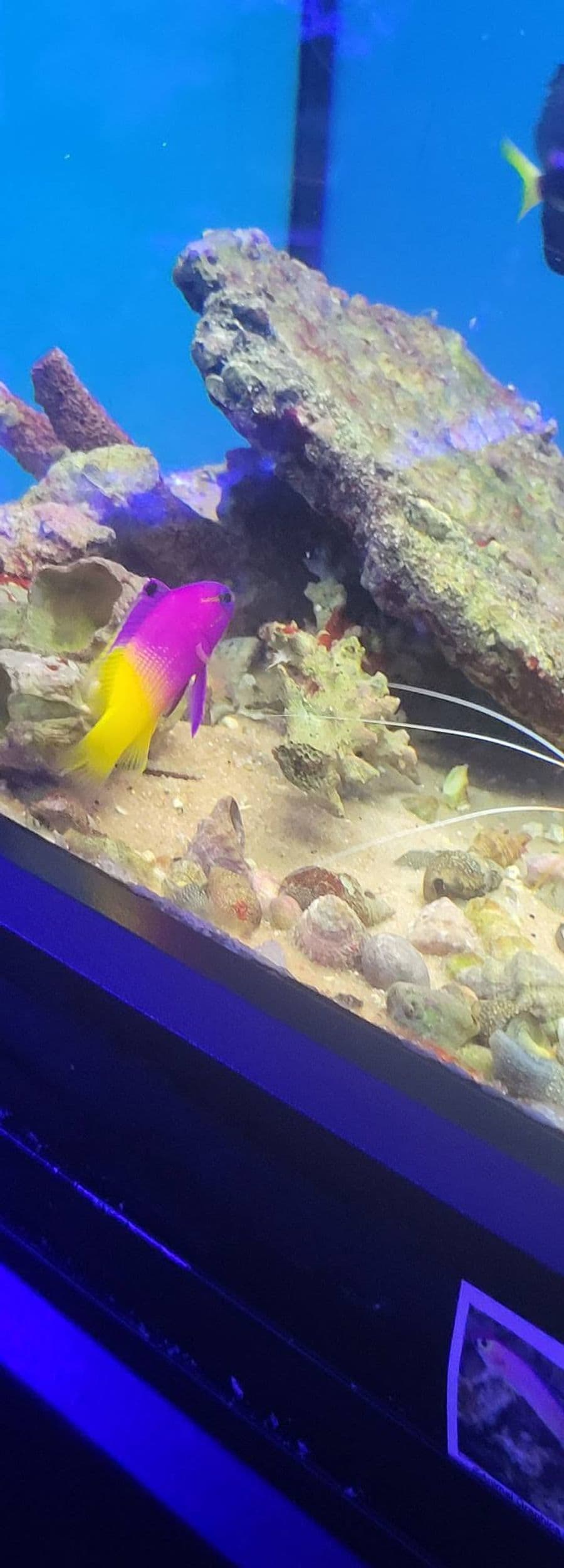
A cave-sheltering basslet that stays deep in rockwork and rarely enters open water — the exact opposite of the Yellow Tang's grazing territory. It shows territorial aggression only toward look-alikes (purple fish, Royal Dottybacks), not toward tangs. The saltwateraquariumblog author confirms personal success keeping Royal Gramma alongside a Yellow Tang, and the pairing is corroborated by Fishkeeping World and other published care guides.
- F
Flame Angelfish
Fish-to-fish compatibility with Yellow Tang is well-supported: the two occupy different feeding zones (angel grazes rock faces and benthic invertebrates; tang patrols open water) and are visually distinct, which avoids the tang's shape- and color-based territorial triggers. The Flame Angel's semi-aggressive label means brief chasing during introductions is possible, especially in smaller tanks; add it last and provide 65+ gallons with ample rockwork. Note for reef keepers: this species is rated 'reef safe with caution' due to potential nipping at soft corals and clam mantles — that is a coral concern, not a tang-compatibility concern.
- M
Melanurus Wrasse
An active but non-aggressive wrasse whose elongated, streamlined body plan is wholly distinct from the tang's oval disc form — the tang's primary aggression trigger (visual similarity to other tangs) is absent. The wrasse is bold enough to deter any initial tang posturing without escalating; long-term cohabitation is routine and documented across multiple reef-keeping forums and care guides. Ensure adequate tank size (55+ gallons) and provide sandy substrate for the wrasse to sleep in.
- E
Engineer Goby
A peaceful, substrate-burrowing carnivore that occupies the sand bed and rock base — territory the Yellow Tang never contests. The species can reach 13 inches as an adult and will consume fish that fit in its mouth, so it must not be paired with slim, small fish (firefish, small dartfish). However, the Yellow Tang's wide, laterally-compressed disc body is far too large in cross-section to be at predation risk, even from a full-grown specimen. The pairing is widely kept without documented aggression. Confirm tank is 55 gallons minimum and that other tank residents are not slender fish under 2 inches.
Visit the store
660 East 14th Street,
Erie, PA.
Mon–Fri 12–6 · Sat 11–4 · Sun closed. Call ahead on livestock — what's on the floor rotates.