What this covers
Testing & monitoring water
Reading the numbers in your water, so you fix problems before you can see them.
18 in the shop
Nitrate & phosphate control
What's left over after the cycle. Let it climb and it feeds algae.
8 in the shop
Saltwater mixing & salinity
Mixing saltwater to the right strength, and keeping it there as water evaporates.
3 in the shop
Coral & reef chemistry
Corals build their skeleton out of calcium, alkalinity, magnesium and trace elements.
37 in the shop
Your water can look crystal clear and still be quietly stressing or killing your fish. Chemistry is invisible, which is exactly why testing exists. The good news is you do not need a chemistry degree or a shelf full of kits. A small set of numbers tells you almost everything about whether a tank is safe and stable, and once you know what each one means you can read your tank in a couple of minutes. Here is the short list, what each reading is telling you, and how often to check it.
| Reading | What it tells you | Where you want it | How often |
|---|---|---|---|
| Ammonia | Toxic waste from food and fish | Zero, always — any reading means trouble | Weekly when new, then every couple of weeks |
| Nitrite | Toxic mid-cycle product | Zero, always in a cycled tank | Weekly when new, then every couple of weeks |
| Nitrate | Whether your water changes keep pace | Low and steady | Before every water change |
| pH | How acidic or alkaline the water sits | Stable — stability beats chasing a number | Same time of day (it drifts daily) |
| Salinity | How salty the water is (marine only) | Held steady at seawater strength | Every water change and top-off |
| Calcium | Feeds coral skeletons (reef only) | Held stable by dosing | On a schedule once you keep coral |
| Alkalinity | Buffers the water and feeds coral (reef) | Held stable by dosing | On a schedule once you keep coral |
| Magnesium | Keeps calcium and alkalinity stable (reef) | Held stable by dosing | On a schedule once you keep coral |
The core readings every tank needs
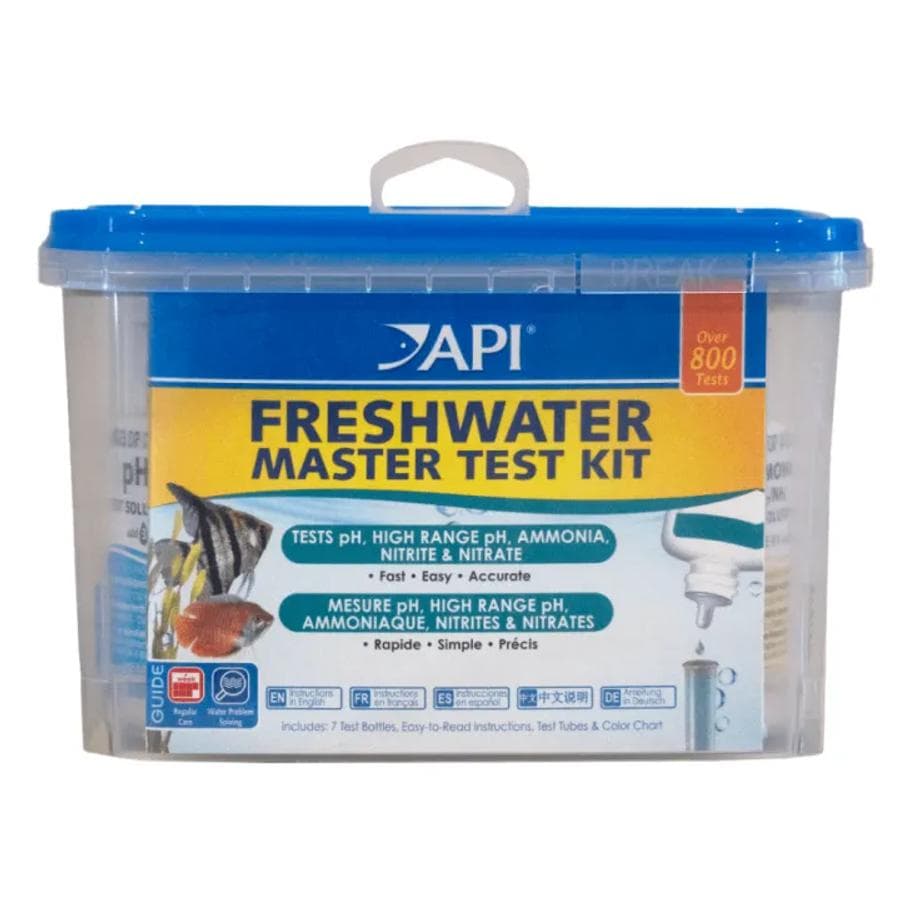
Four numbers cover the basics for any aquarium. Ammonia and nitrite are the toxic pair, and in a properly cycled tank both should read zero at all times. If either one shows up, something is wrong: the tank is not finished cycling, the filter took a hit, or the bioload outran the bacteria. Nitrate is the third number, and it is the one that slowly climbs between water changes. The fourth is pH, which tells you how acidic or alkaline the water sits. With pH, stability matters more than chasing a specific target, because most fish adapt to a steady value but suffer when it swings around. A liquid master kit reads all four and is the single tool that tells you whether your water is actually safe.
Nitrate: your maintenance gauge
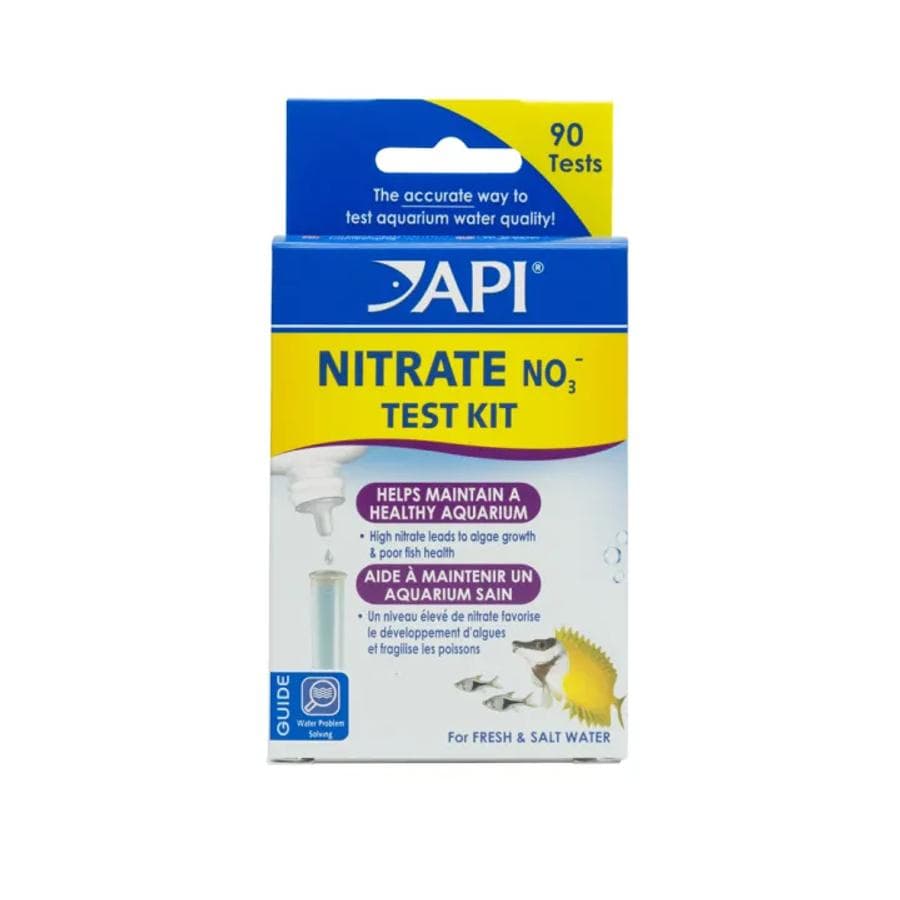
Of the four, nitrate is the one you watch over time rather than in a panic. Your filter bacteria turn fish waste into nitrate, and nothing in a normal tank removes it, so it builds up until you change water. That makes nitrate a direct readout of whether your maintenance is keeping pace. Test it before a water change, and if the number sits low and steady you are on schedule. If it keeps creeping up week to week, change more water or change it more often. Our water change guide covers the routine that keeps this number where it belongs. A standalone nitrate kit is handy because it works for both freshwater and saltwater, so you can use the same bottle across every tank in the house.
Saltwater adds one more: salinity
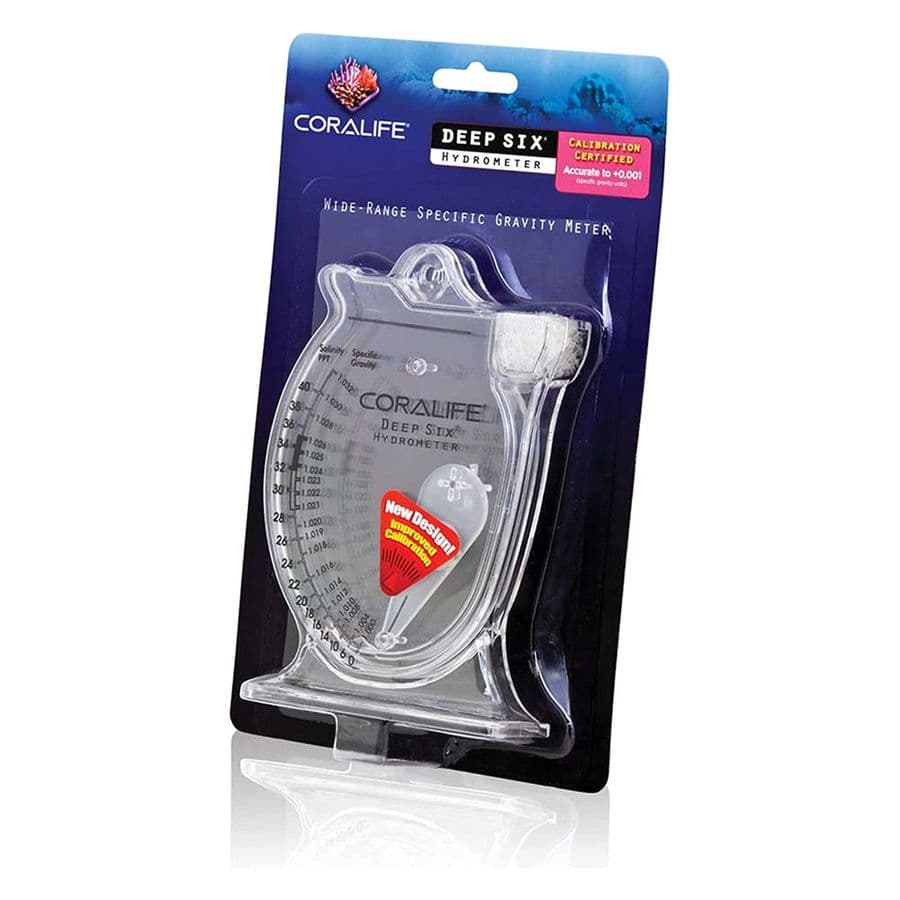
A marine tank needs everything above plus salinity, which is simply how salty the water is. Fish are reasonably forgiving of small drifts, but you still want to hold a steady level and match it whenever you do a water change or top off evaporation. Most reef tanks aim for natural seawater strength. You can read salinity with a hydrometer for a quick check, or step up to a refractometer for more precision. Either way, salinity is a number you will check at every water change, so having a tool parked next to the tank pays for itself fast.
Reef tanks add three more numbers
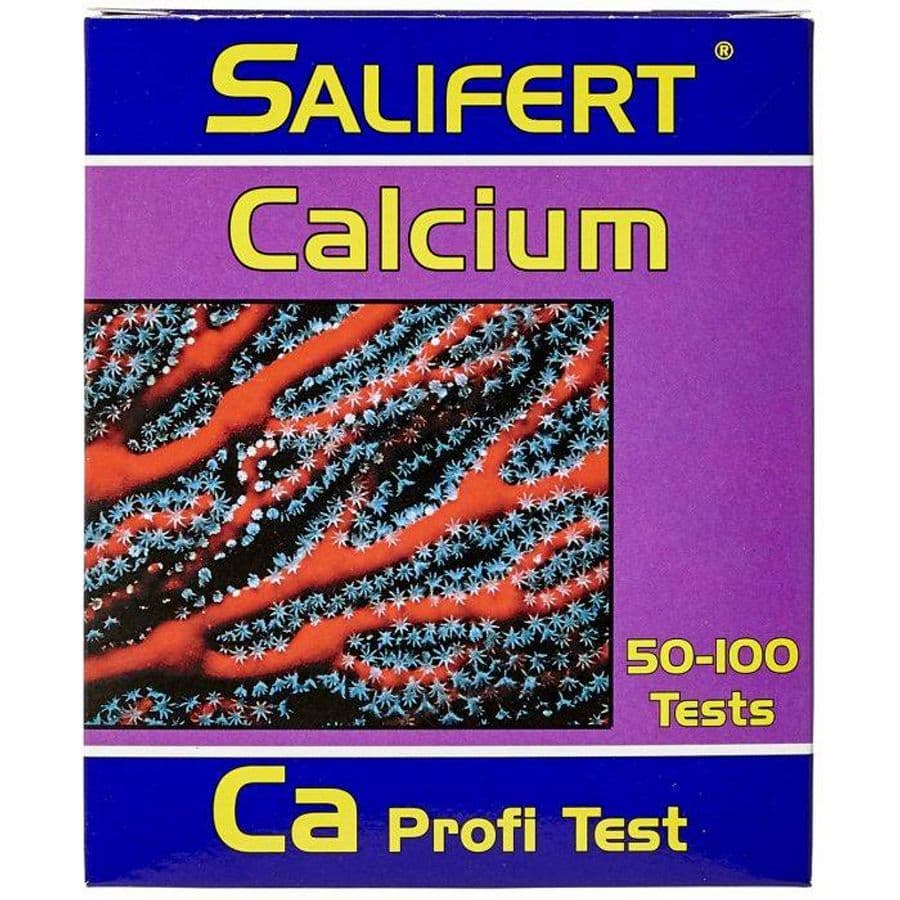
If you keep corals, three more numbers come into play, because growing coral skeletons pull minerals out of the water as they grow. Calcium and alkalinity are the big two, with magnesium as the supporting player that keeps the other two stable. Corals consume these steadily, so a reef keeper tests them on a schedule and tops them back up by dosing. You do not need to think about any of this on a fish-only tank, but the moment you add your first coral, these become the readings that decide whether it thrives or slowly wastes away. Reef test kits are built for finer precision than the basic kits, since small changes here matter to a coral.
How to test well, and how often
A few habits make your numbers trustworthy. Use liquid drop kits rather than paper strips, since strips drift as they age and read poorly on nitrate especially. Test at roughly the same time of day, because pH naturally rises and falls over a daily cycle. Write your readings down so you can see a trend forming instead of reacting to a single odd result. For frequency, test weekly while a tank is new or recently changed, then ease off to every couple of weeks once it has proven stable, and always test when something looks off. If a reading ever has you stumped, call us in Erie at (814) 456-9445 or stop by with your numbers and we will help you make sense of them.
Common questions
- What should I test in my aquarium?
For any tank, test ammonia, nitrite, nitrate and pH. A saltwater tank adds salinity. A reef tank with corals also needs calcium and alkalinity, plus magnesium. Most fishkeepers start with a freshwater master kit and add others as needed.
- How often should I test my water?
Test weekly while a tank is new or just after a change, then drop to every couple of weeks once it is stable. Always test when a fish looks unwell or something seems off. Reef keepers test calcium and alkalinity more often because corals use them up.
- Are test strips good enough?
Liquid drop kits are worth the small extra effort. Paper strips drift as they age and read poorly on nitrate and nitrite, which are exactly the numbers you most need to trust. If you do use strips, confirm anything surprising with a liquid test.
- What is a good nitrate level?
Low and steady is the goal. Freshwater fish tolerate higher nitrate than reef tanks do, but in every case a climbing nitrate reading means your water changes are not keeping up. Test before a change and use the trend to set your schedule.
- Can I get my water tested without buying a kit?
Call us at (814) 456-9445 and ask — if you are stopping by anyway, ask about bringing a sample in. Either way we will help you sort out what a reading means before you invest in your own kits.
Questions?
Talk it through with our team.
Bring your tank size and what you're keeping — we'll help you sort it out at the shop, 660 East 14th Street in Erie, or over the phone.