
Saltwater Fish
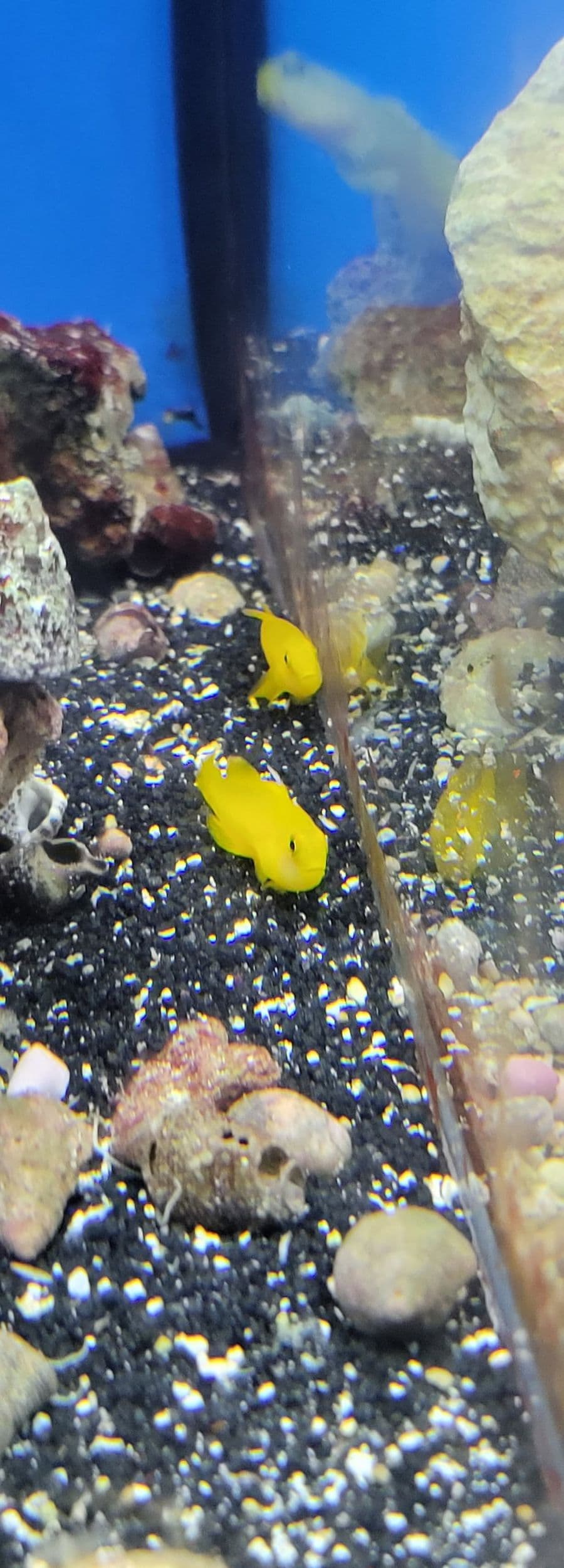
Yellow Clown Goby.
The yellow clown goby is a 1.5-inch lemon-yellow nano reef fish that perches in coral branches like a little ornament and gets away with it partly by secreting a toxic skin mucus that makes it unpalatable to predators. Peaceful, reef-safe, and beginner-friendly; a 10-gallon-plus system with branching rock or coral and a tight lid is all it needs.
Prices change with size and with each shipment. Call to check today's price.
Call (814) 456-9445We keep this species. What's in our tanks changes with every delivery, so call (814) 456-9445 before you drive in. We never ship live animals.
- Condition
- new
- Fulfillment
- Local pickup — Erie, PA
We never ship fish, coral, or invertebrates — every animal here is one you meet in person. Each one is acclimated and health-checked in-house before it goes out into the display tanks. This is a species we keep, and what is swimming on any given day changes with the deliveries, so please call (814) 456-9445 before you drive in.
Care at a glance
What to know before you take one home.
- Care level
- Hardy, and forgiving of the swings a new tank throws at it.
- Temperament
- Leaves tankmates alone.
- Community
- Safe in a mixed tank with other peaceful species.
- Reef safe
- Leaves corals and invertebrates alone.
- Adult size
- 1.5"
- Min tank size
- 10 gallons
- Diet
- Eats meat — frozen or live, not flake alone.
- Scientific name
- Gobiodon okinawae
Good tank mates
A tiny, peaceful goby that suits nano and community reef tanks with other calm fish like firefish, smaller gobies, and clownfish. It mostly perches on branching corals and rock and is reef-safe with most corals, though it may rest on SPS (small-polyp stony) like Acropora and lightly nip or irritate the polyps, so watch placement in an SPS-heavy tank. Keep it away from large or aggressive fish that will eat or bully something this small, and house only one per tank unless you have a confirmed pair.
Good to know
Yellow clown gobies secrete a bitter, toxic skin mucus that makes them unpalatable to many predators, which is part of why such a small, slow fish survives out in the open on coral branches.
What is in the tanks and each animal’s temperament vary — call (814) 456-9445 for pairing advice.
Good tankmates
Plays well with.
Species we’d keep in the same tank, with why each pairing works. What is in the tanks and each animal’s temperament vary — call (814) 456-9445 for advice on pairing.
New to stocking a tank? Read our guide on which fish live together.
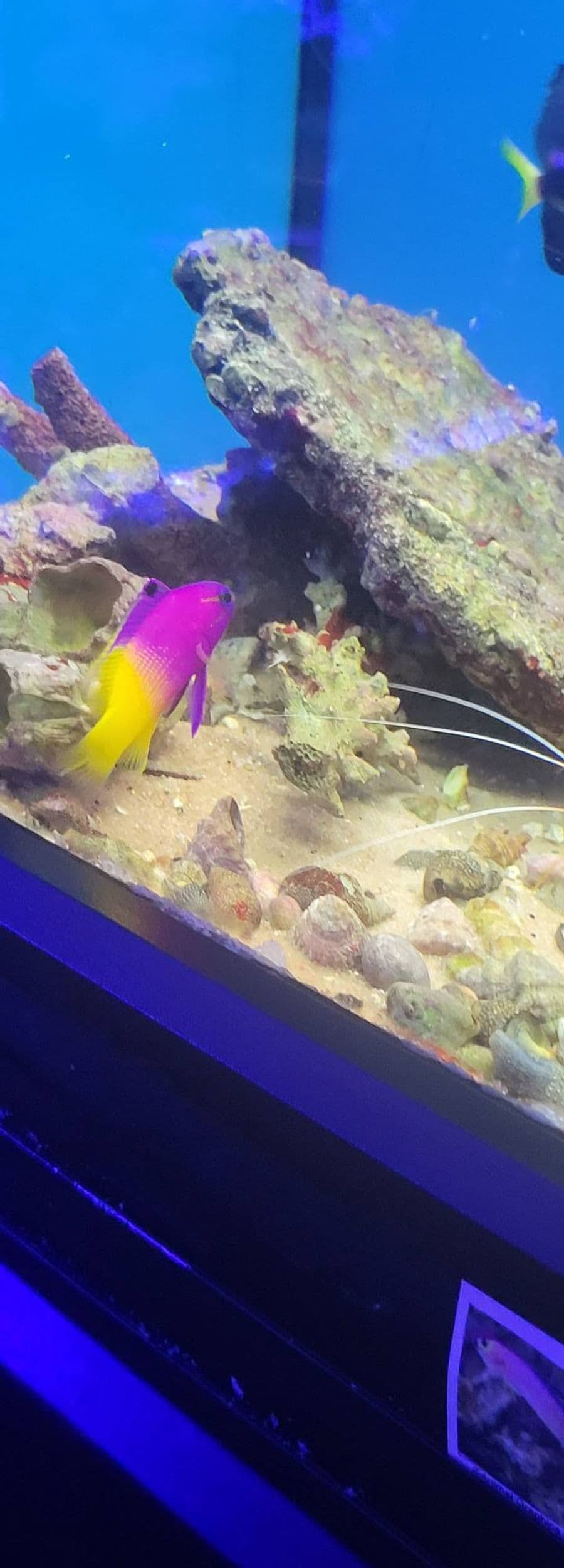
Royal Gramma
Peaceful toward dissimilar tankmates and explicitly documented as compatible with small gobies. Occupies cave and overhang territory rather than coral surfaces, so it does not compete with or harass a coral-perching Gobiodon. Territorial aggression is directed only at conspecifics or similarly-shaped fish invading its cave, not at a goby sitting on an Acropora colony.
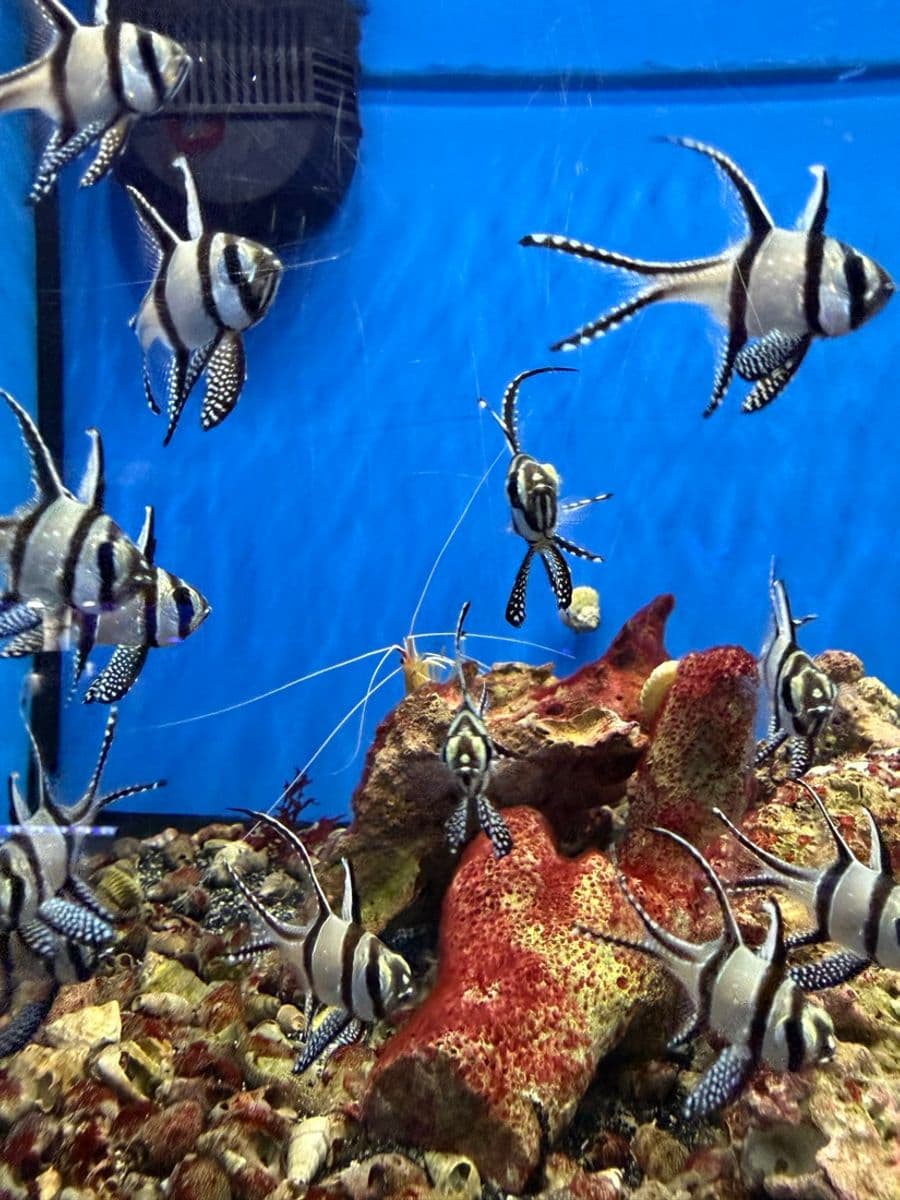
Banggai Cardinalfish
Peaceful toward gobies and blennies. Conspecific skirmishes exist (male-male) but the fish poses no aggression toward a Yellow Clown Goby. Fully reef-safe, slow-moving, and shares compatible saltwater parameters.
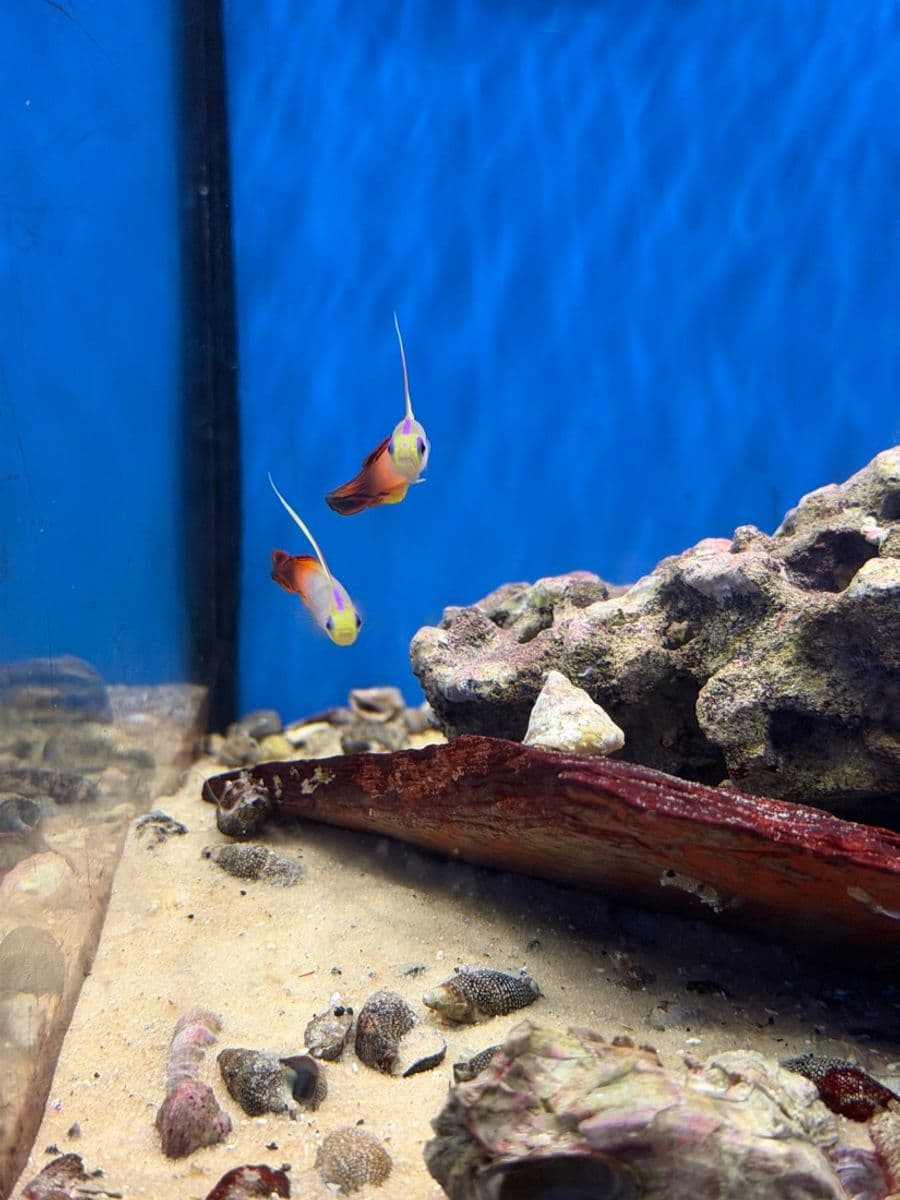
Firefish Goby
Peaceful toward all fish outside its own species; conspecific aggression exists but is irrelevant when paired with a Yellow Clown Goby. Reaches about 3 inches, reef-safe, and occupies a mid-water hovering niche that creates no territorial conflict with a coral-perching goby.
- T
Tailspot Blenny
Peaceful, reef-safe, and primarily herbivorous. Tops out at 2.5 inches and grazes rockwork rather than competing for coral perching spots. No documented aggression toward gobies; occupies a different ecological niche in the tank.
- Y
Yellowhead Jawfish
Confirmed docile burrower that remains in sandy substrate and poses no predatory or territorial threat to a coral-perching goby. Requires 5–7 inches of mixed-grain sand substrate, but that husbandry need does not create any conflict with the goby. Small gobies make compatible tankmates.
Visit the store
660 East 14th Street,
Erie, PA.
Mon–Fri 12–6 · Sat 11–4 · Sun closed. Call ahead on livestock — what's on the floor rotates.