
Saltwater Fish
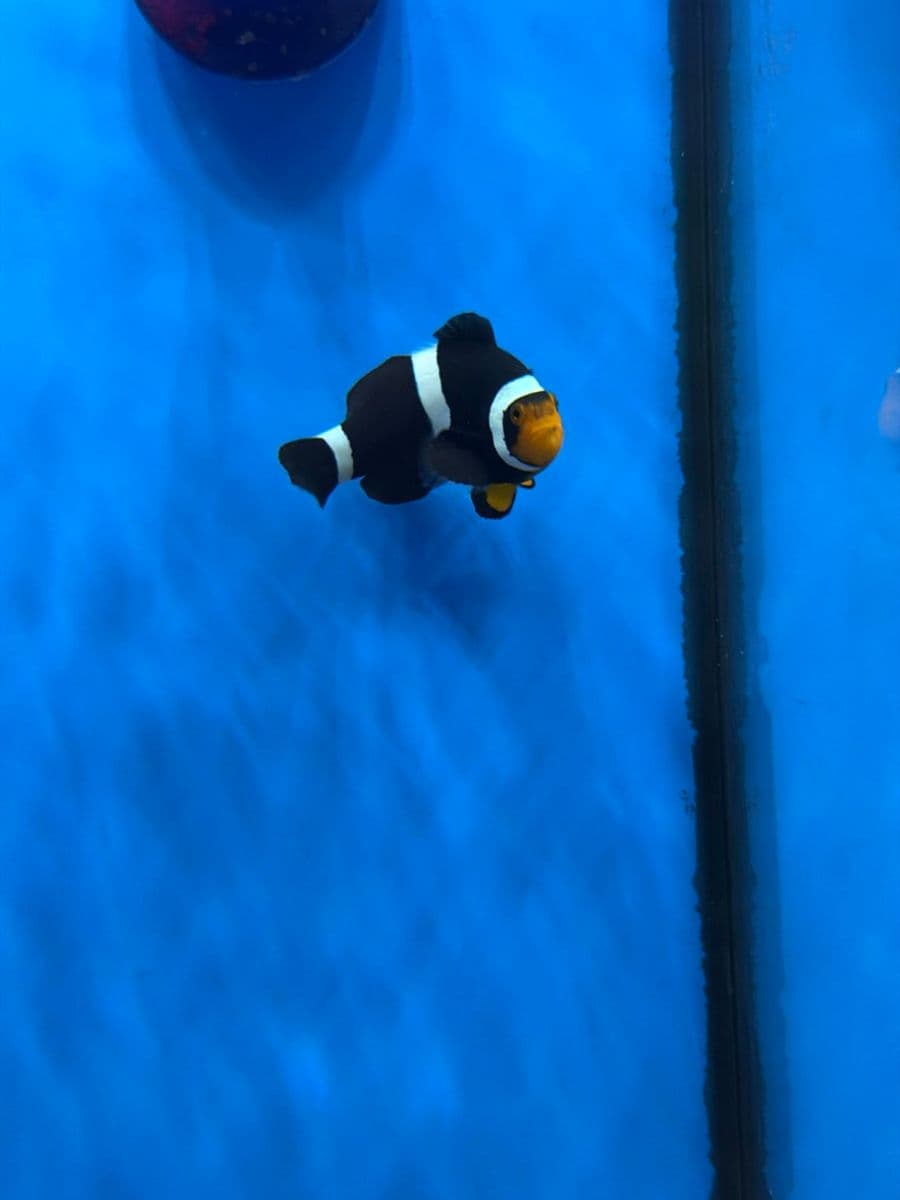
Midnight Clown.
An all-black 'midnight' ocellaris clownfish — sleek, dark, and dramatic. Beginner-friendly and reef-safe, with the same hardiness and charm as the classic clown; it'll readily host in an anemone or soft coral.
Prices change with size and with each shipment. Call to check today's price.
Call (814) 456-9445We keep this species. What's in our tanks changes with every delivery, so call (814) 456-9445 before you drive in. We never ship live animals.
- Condition
- new
- Fulfillment
- Local pickup — Erie, PA
We never ship fish, coral, or invertebrates — every animal here is one you meet in person. Each one is acclimated and health-checked in-house before it goes out into the display tanks. This is a species we keep, and what is swimming on any given day changes with the deliveries, so please call (814) 456-9445 before you drive in.
Care at a glance
What to know before you take one home.
- Care level
- Hardy, and forgiving of the swings a new tank throws at it.
- Temperament
- Will chase or nip if it feels crowded.
- Adult size
- 3"
- Min tank size
- 20 gallons
- Diet
- Eats meat and greens both.
- Scientific name
- Amphiprion ocellaris
Good tank mates
A solid-black color form of the ocellaris clownfish that is peaceful and reef-safe, mixing well with chromis, firefish, gobies, basslets, and most calm community fish. Keep just one or a single bonded pair per tank, since clownfish can be scrappy toward other clowns once paired up. Avoid large predators and very aggressive fish; like all clowns they can get a little feisty defending a host anemone or a chosen corner.
Good to know
Midnight clowns are an all-black variant of the same species as the common orange ocellaris, and all clownfish begin life as males with the largest, dominant fish of a pair becoming the female.
What is in the tanks and each animal’s temperament vary — call (814) 456-9445 for pairing advice.
Good tankmates
Plays well with.
Species we’d keep in the same tank, with why each pairing works. What is in the tanks and each animal’s temperament vary — call (814) 456-9445 for advice on pairing.
New to stocking a tank? Read our guide on which fish live together.
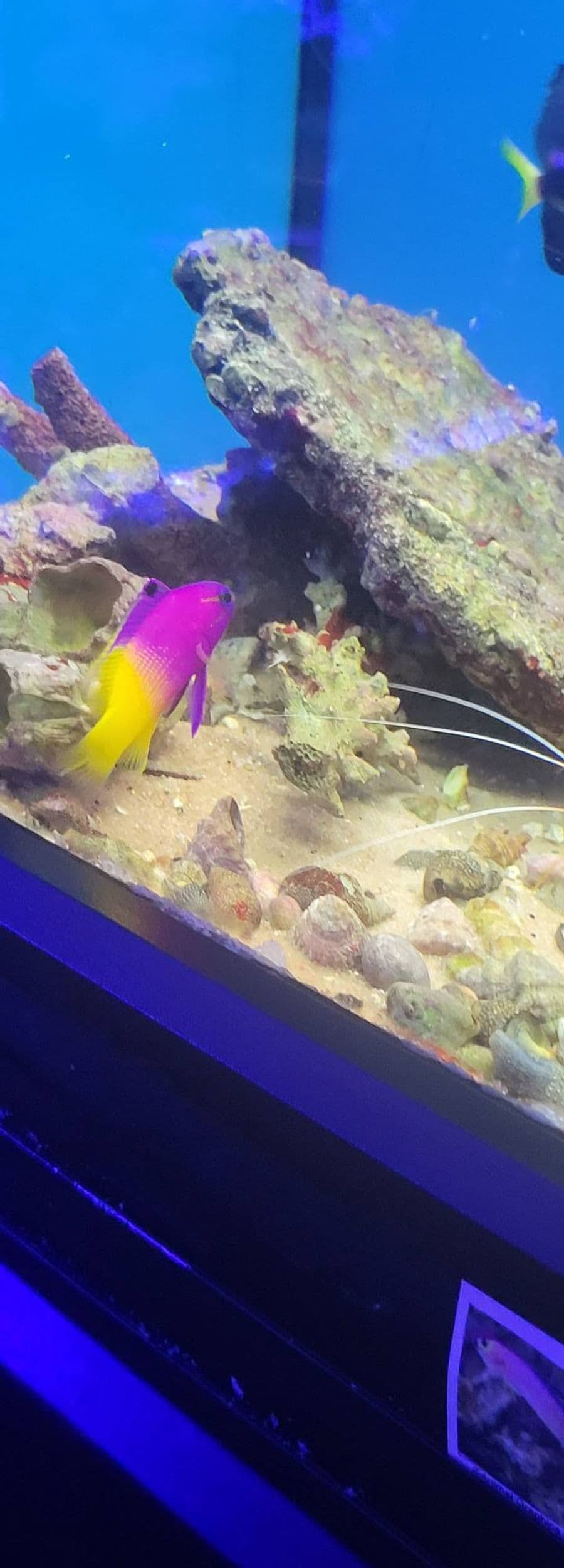
Royal Gramma
Occupies a distinct cave/rockwork niche well below and separate from the clownfish's mid-water territory; they coexist peacefully in tanks with sufficient rockwork and volume (30 gal+). Note: in nano tanks under 20–25 gal, clownfish can bully or injure grammas, so adequate tank footprint is required.
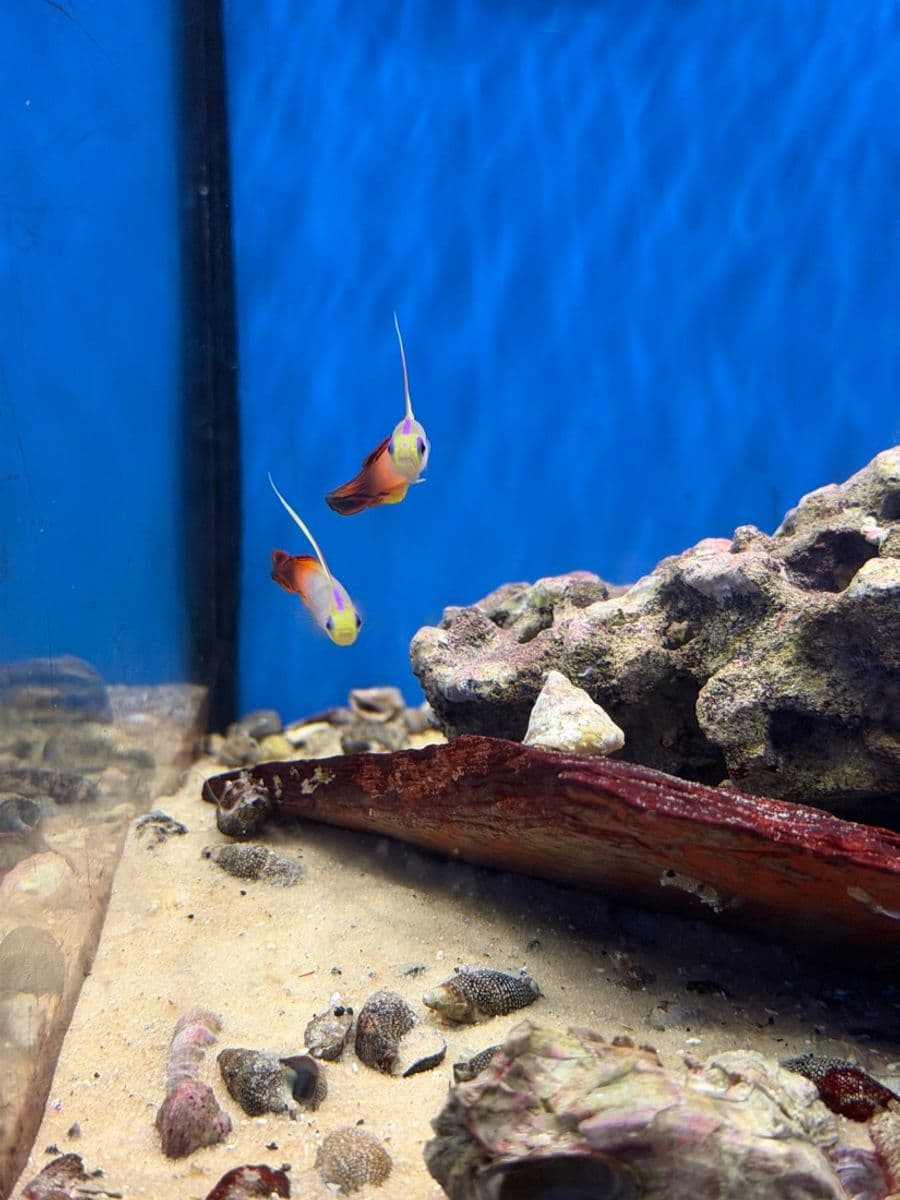
Firefish Goby
Hovers near the substrate in a completely different spatial zone than the clownfish; Amphiprion ocellaris is one of the more docile clownfish species and this pairing works well, from 29-gal biocubes to 75-gal community reefs. Isolated cases of aggressive individual clownfish exist but are the exception, not the rule for ocellaris specifically.
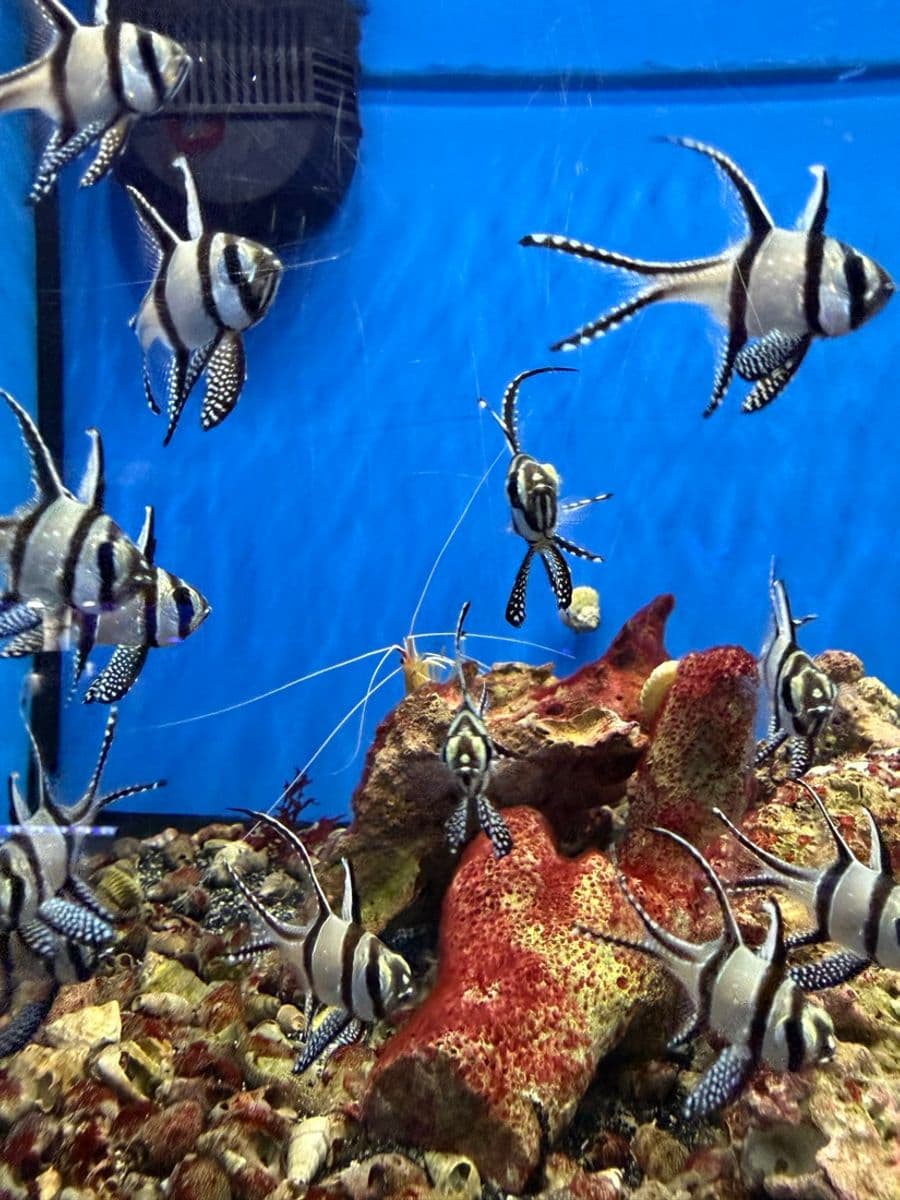
Banggai Cardinalfish
Slow-swimming, passive reef fish with no documented aggression toward clownfish; hovers quietly near rock structures, completely ignoring clownfish territory. Conspecific aggression (male-to-male) is the only real behavioral concern and is managed by keeping singly or as a bonded pair.
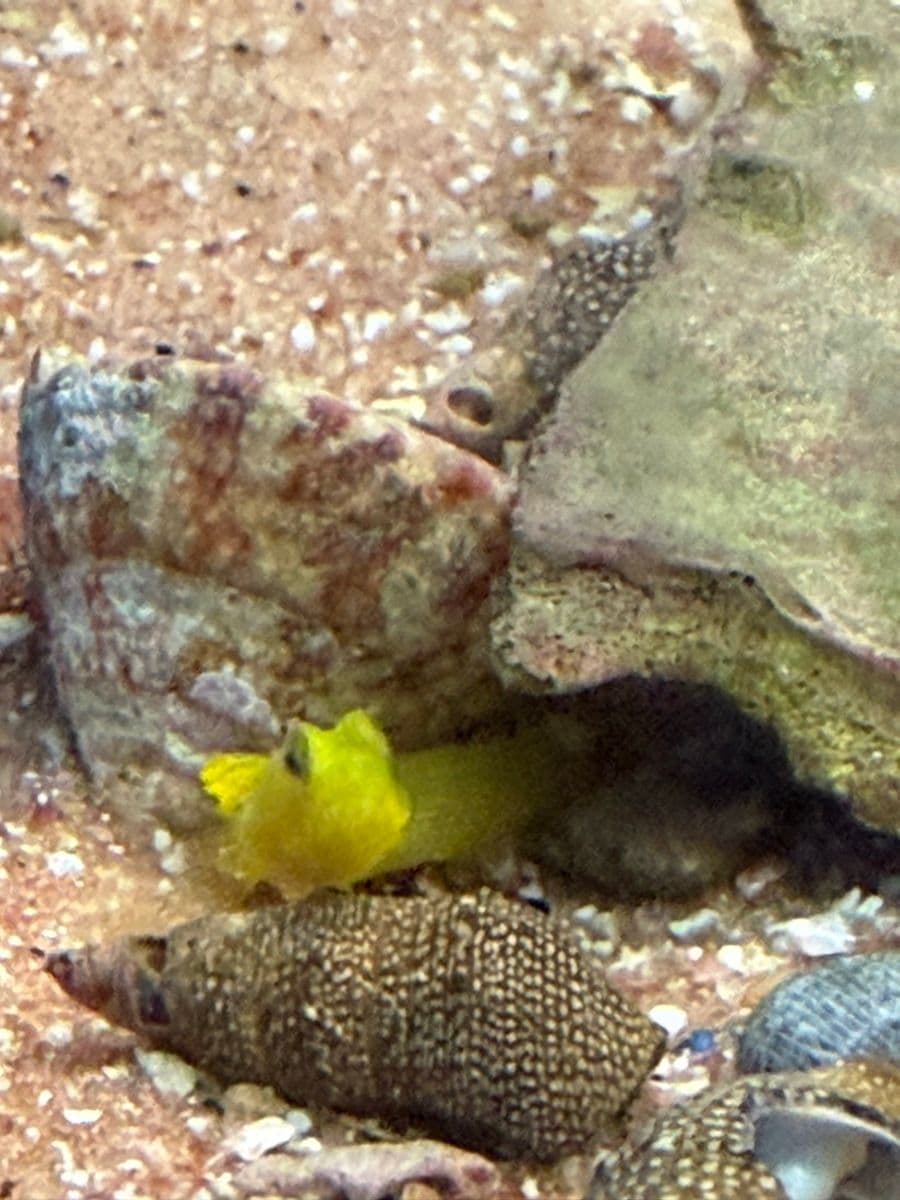
Yellow Watchman Goby
Bottom-dwelling sand-sifter that occupies the substrate zone with no overlap in territory or diet with mid-water clownfish; reef-safe, non-aggressive toward unlike species, and widely recommended as a clownfish tankmate in community reef setups.
- T
Tailspot Blenny
Peaceful algae-grazer that perches on rockwork; no fin-nipping or aggression toward clownfish. Occasional coral nipping when underfed is noted for the Ecsenius genus but is a coral husbandry concern, not a clownfish compatibility issue. Reef-safe and clownfish-compatible.
Visit the store
660 East 14th Street,
Erie, PA.
Mon–Fri 12–6 · Sat 11–4 · Sun closed. Call ahead on livestock — what's on the floor rotates.